Sitting in style in the central nave
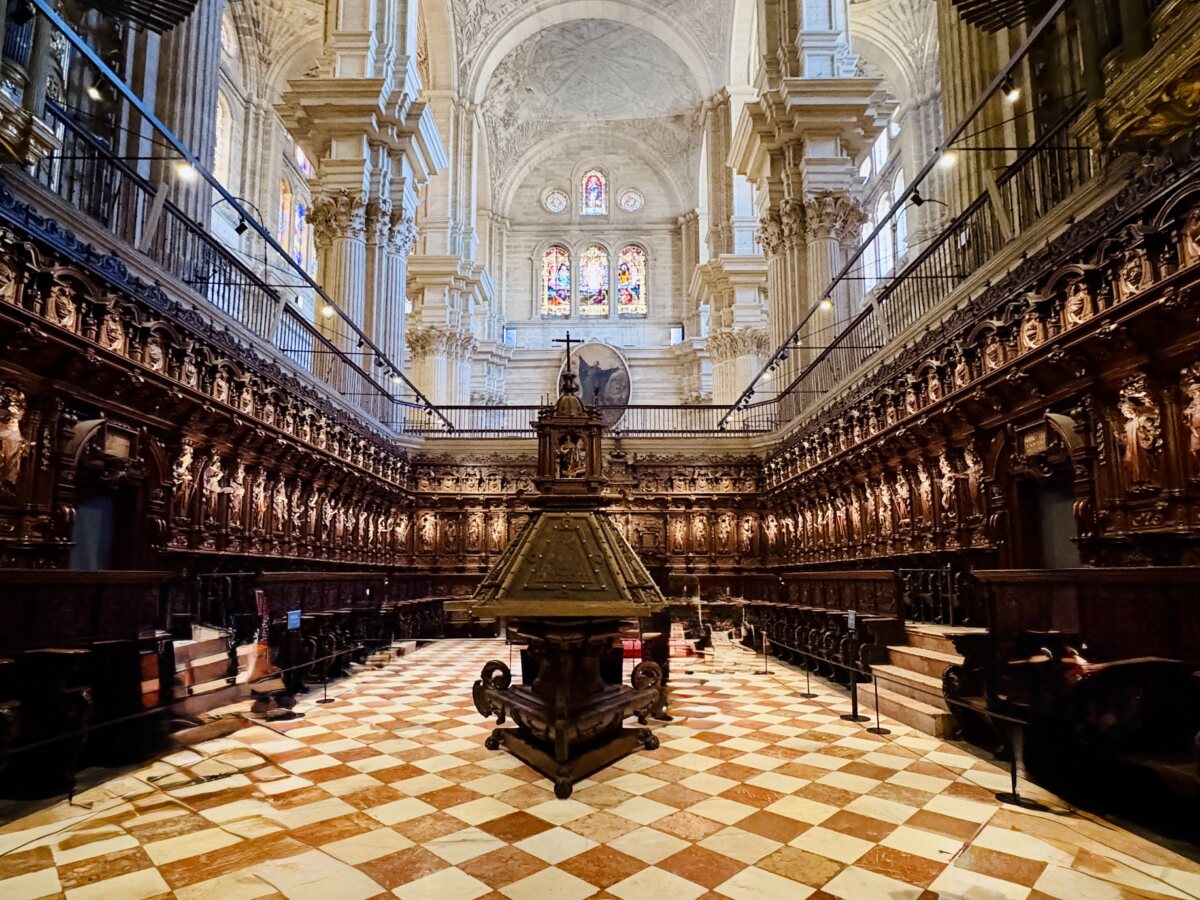
If you wander into the central nave of Málaga Cathedral, you will quickly spot the choir, or the coro. It sits right in the middle of the building, which might seem like an odd place to park a choir. In Spanish cathedrals, this layout was standard practice. It kept the clergy close to the action while making sure everyone else felt slightly excluded. The setup proved that church authorities loved a good VIP area long before modern concert venues invented them.
Masterpieces carved out of wood
The choir stalls, known as the sillería del coro, line both sides of the space. This wooden seating is widely considered one of the finest masterpieces of Spanish Baroque wood carving. Craftsmen spent decades chipping away at dark wood to create intricately detailed relief figures and statuary. Luis Ortiz de Vargas began the project in 1633, and José Micael Alfaro later chipped in. Pedro de Mena took over around 1658 and added forty superb wooden statues of saints. The sheer level of detail suggests the carvers were either deeply devout or severely overworked.
The giant music stand in the middle
Standing proudly in the center of the patterned marble floor is a massive structure called a facistol. This is not just an overly dramatic piece of furniture. It is a giant choir lectern designed to hold heavy, hand-illuminated chant books. Back in the day, printing individual sheet music for everyone was far too expensive. The singers all gathered around this single central stand to read the notes together. It was a clever solution, provided nobody forgot their reading glasses.
An acoustic hub for the ages
Beyond the stunning woodwork, the choir area was built for pure sound. Positioning the singers right in the heart of the cathedral allowed their voices to carry through the vast stone arches. Work on the choir area spanned from 1633 until roughly 1660, making it a long and costly investment. The result was a stunning space where art and acoustics met. It remains one of the most impressive historical features inside the cathedral today.