A very scary moment in the dark desert
The discovery of the Seated Scribe in 1850 came with a rather dramatic story. A French archaeologist named Auguste Mariette was excavating the ancient necropolis of Saqqara when his workers uncovered a buried tomb chamber. As they cleared away centuries of sand Mariette peered inside and found himself staring directly into a pair of uncannily realistic human eyes.
The eyes caught the dim candlelight and glinted so brightly that the local workers panicked. They genuinely believed a living spirit was watching them from the shadows of the tomb. Mariette managed to calm everyone down and carefully retrieved the artifact. It was eventually shipped off to Paris where it has spent the last century staring at millions of museum visitors in the Louvre.
The original office worker with a middle age spread
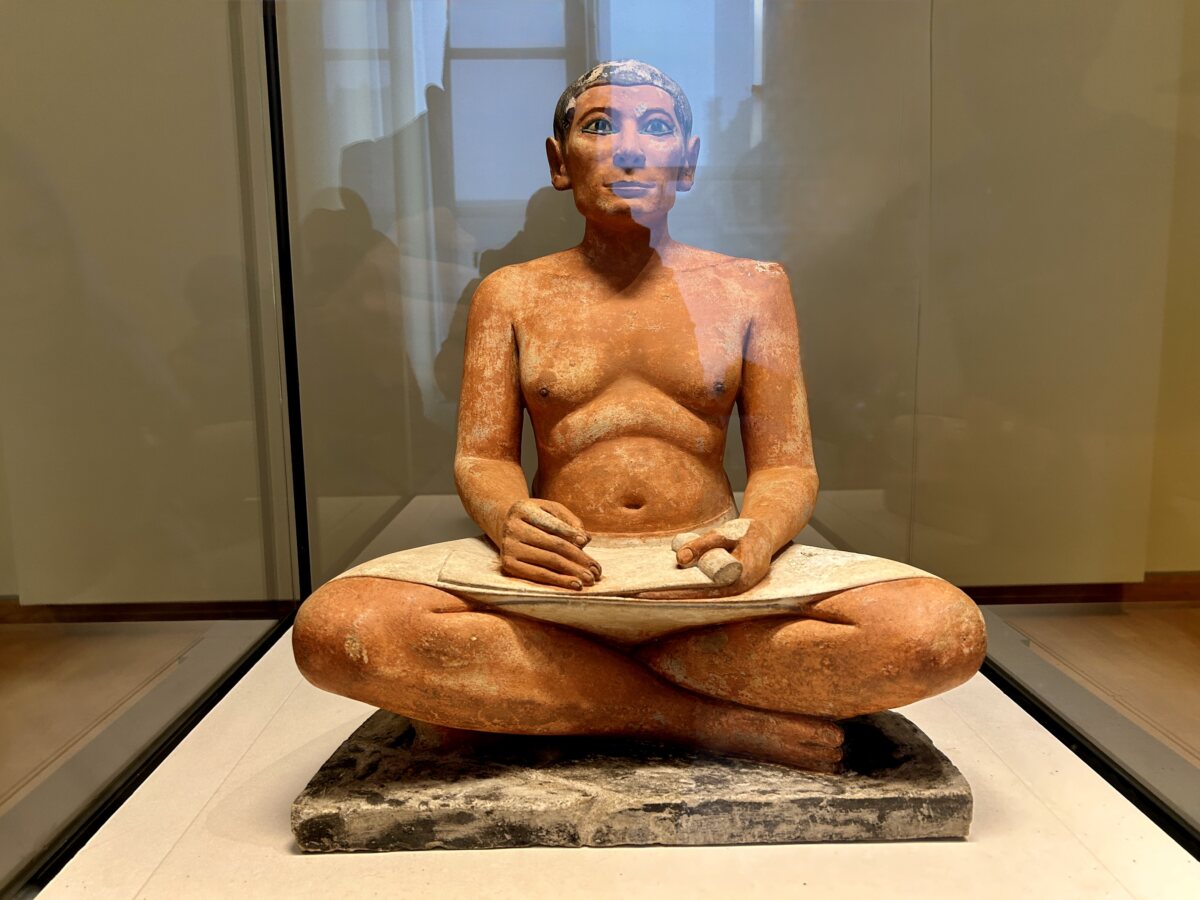
What makes this ancient gentleman so charming is that he looks like a completely normal human being. Most ancient Egyptian statues depict pharaohs as terrifying muscular gods with perfect abs and flawless facial symmetry. The author of this masterpiece chose a far more honest approach for our humble writer.
He sits cross-legged on the floor wearing a plain white kilt while holding a partially unrolled scroll of papyrus. He has visible roll fat around his belly and slightly sagging chest muscles. In modern times this physical shape might suggest a few too many late night snacks. In ancient Egypt a slight belly was a major flex because it meant you were rich enough to sit around doing paper work all day instead of carrying heavy stones in the heat.
The secret behind those terrifying eyes
The absolute party trick of this statue is its intense and almost hypnotic stare. The sculptor used a very complex combination of materials to craft the eyes and create a genius optical illusion. The whites of his eyes are carved from white magnesite that is veined with tiny red lines to mimic real blood vessels.
The irises are made from beautifully polished rock crystal with a layer of organic paint underneath. Copper clips hold the entire eye assembly together from behind the stone head. Because the polished rock crystal catches and bends light the scribe appears to follow your every move as you walk around his display case. It is an impressive engineering feat that still manages to creep out tourists 4000 years later.
An anonymous royal bureaucrat
Despite his worldwide fame nobody actually knows who is this legendary accountant. The original stone base that held his carved titles and personal name was lost during or shortly after his discovery. Archaeologists know he lived around 2600 BCE during the Old Kingdom period.
He was clearly an important figure because only high dignitaries or royal princes could afford such an exceptional tomb statue. He sits patiently with his reed pen missing from his hand waiting for someone to give him his next dictation.