Two massive instruments facing each other
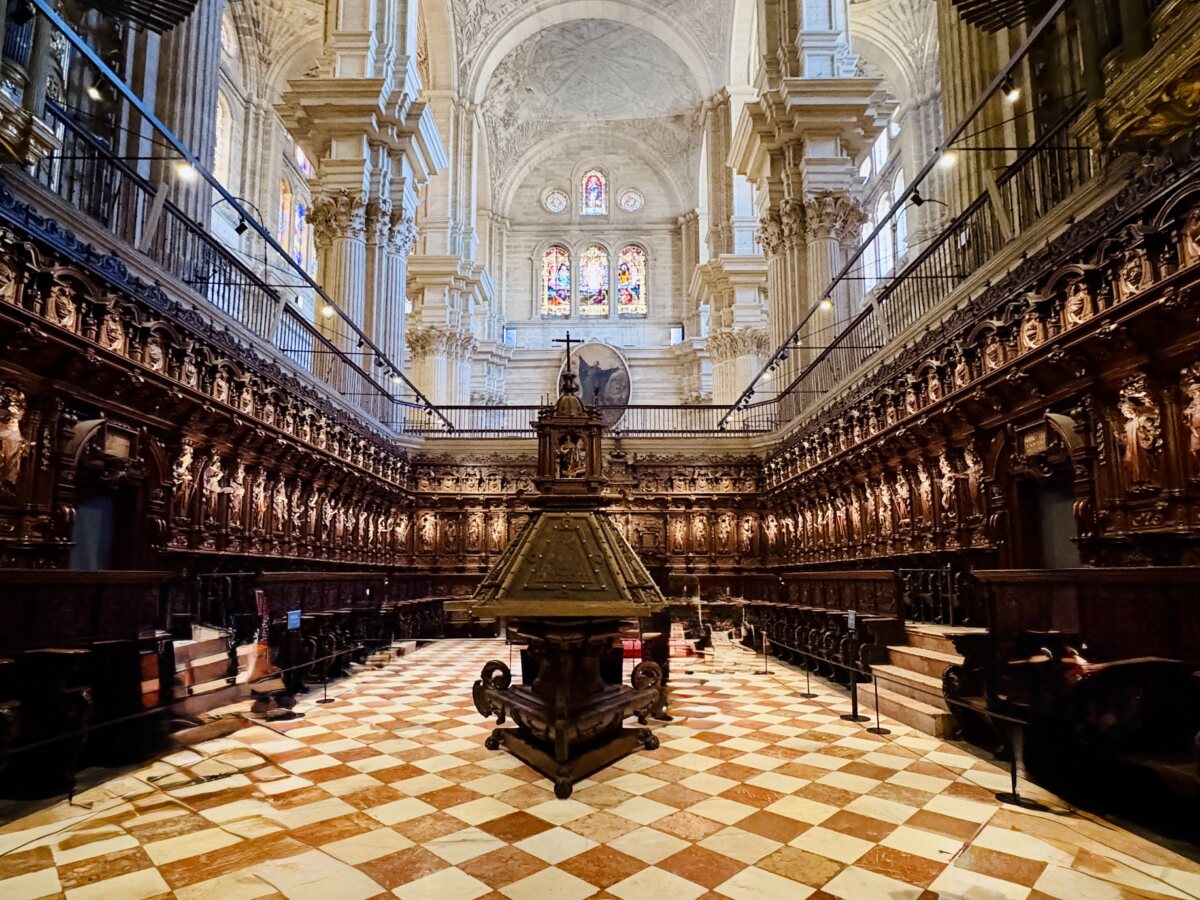
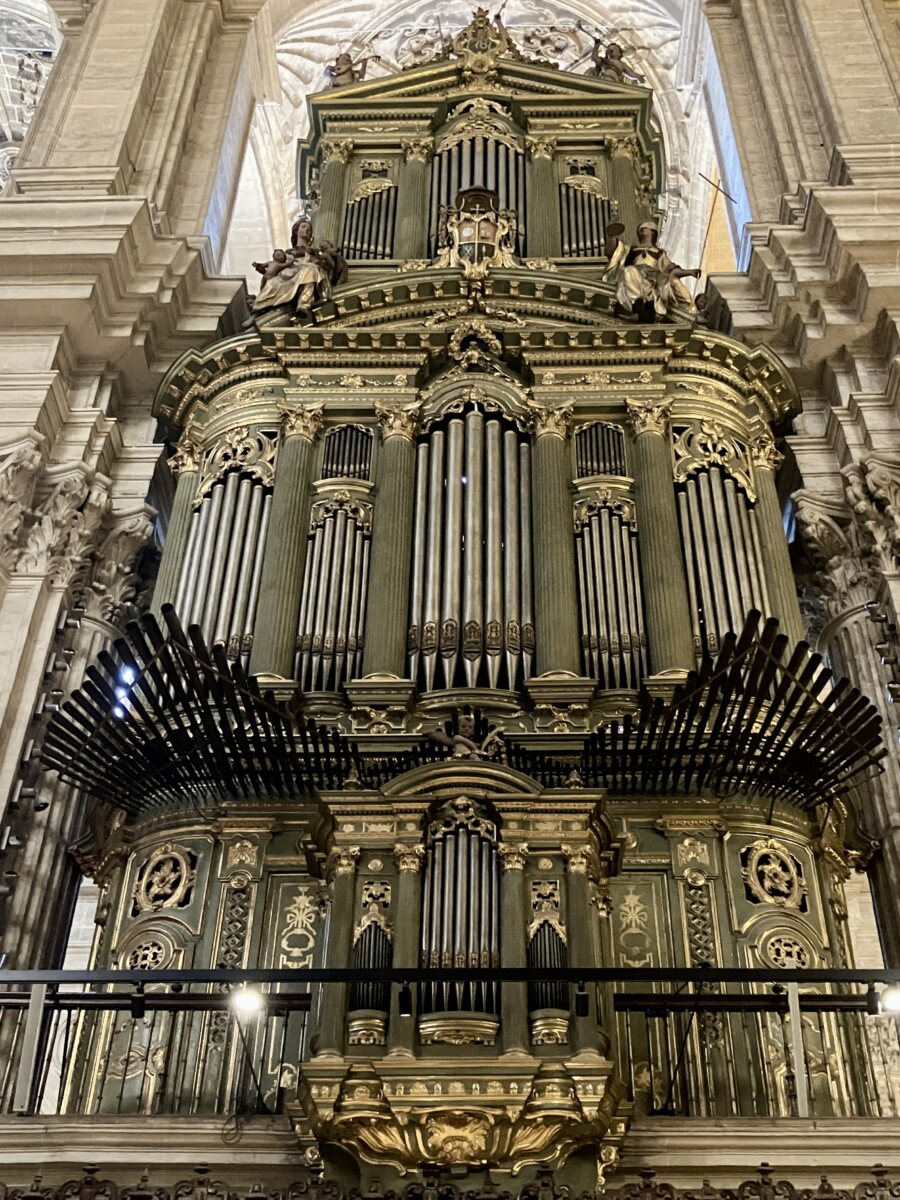
Stepping into the central choir of Málaga Cathedral reveals a truly extraordinary sight. Rising high above the carved wooden choir stalls are two massive identical looking organs. Known as the Gospel Organ and the Epistle Organ they face each other across the central space like giant musical fortresses.
This monumental twin design is a rare luxury for cathedral architecture. Instead of relying on a single instrument the builders decided that two giant organs were necessary to fill the space. The visual symmetry creates a breathtaking wall of timber and metallic pipes on both sides of the choir.
Built by masters of the eighteenth century
These instruments represent the absolute golden age of Spanish organ building. Master organ maker Julián de la Orden constructed them between 1779 and 1783. The monumental wooden cases holding the pipes were designed by the famous Neoclassical architect José Martín de Aldehuela.
Together they created a pair of instruments that were both visual masterpieces and acoustic powerhouses. The carved woodwork framing the pipes matches the incredible artistic detail found throughout the cathedral choir. It took years of meticulous hand labor to assemble these complex mechanical giants.
Trumpets sticking out like horizontal cannons
The most striking visual feature of these organs is the set of pipes projecting horizontally straight into the air. These outward facing pipes are known as horizontal reeds or en chamade. They resemble a bank of brass trumpets pointing directly at the congregation.
This horizontal layout is a signature hallmark of traditional Iberian organ architecture. It allows the bright trumpet sounds to launch directly into the vast stone nave without losing any volume. When the organist pulls out all the stops those horizontal pipes produce a staggering sound that can shake the dust off ancient monuments.
Staggering scale and living history
The sheer scale of these twin organs is almost impossible to comprehend. Each individual instrument contains over four 4.700 pipes and around 70 stops. Combined they feature nearly 10.000 pipes filling the upper air of the cathedral.
What makes them even more remarkable is their incredible state of historic preservation. They still retain their original 18th century mechanical action and dual facades that face both the choir and the side aisles. They remain living breathing monuments to the brilliant engineering of 18th century Spain.