Born at the bottom of a prehistoric ocean
The dramatic stone pillars, dark crevasses and narrow gorges of the Müllerthal did not appear by magic. About 200 to 250 million years ago, this entire region sat deep beneath a tropical sea. Over millions of years, layers of sand, lime and marine sediment accumulated on the seabed and gradually hardened into massive layers of rock.
The defining feature of the area is Luxembourg sandstone, a particularly firm yet porous stone formation. When the prehistoric ocean finally retreated, it left behind a massive elevated plateau of solid rock sitting on softer layers of marl and clay. It was the ultimate blank canvas for millions of years of extreme natural sculpting.
Nature’s slow chisel of rivers and frost
Once the seabed became dry land, water took over as the master architect. Rivers like the Sauer and the Black Ernz carved deep, twisting valleys straight into the sandstone plateau. As water seeped down through porous cracks in the stone, it hit the impermeable layer of clay below, creating underground streams and softening the foundation.
During freezing ice ages, water trapped inside the vertical cracks expanded rapidly as it turned to ice. This intense pressure split giant blocks of stone away from the main cliffs, causing them to tilt, slide and collapse down the slopes. This process created famous geological features like the Wollefsschlucht gorge and the pitch black Kuelscheier cave passage.
A official UNESCO global geopark with legendary status
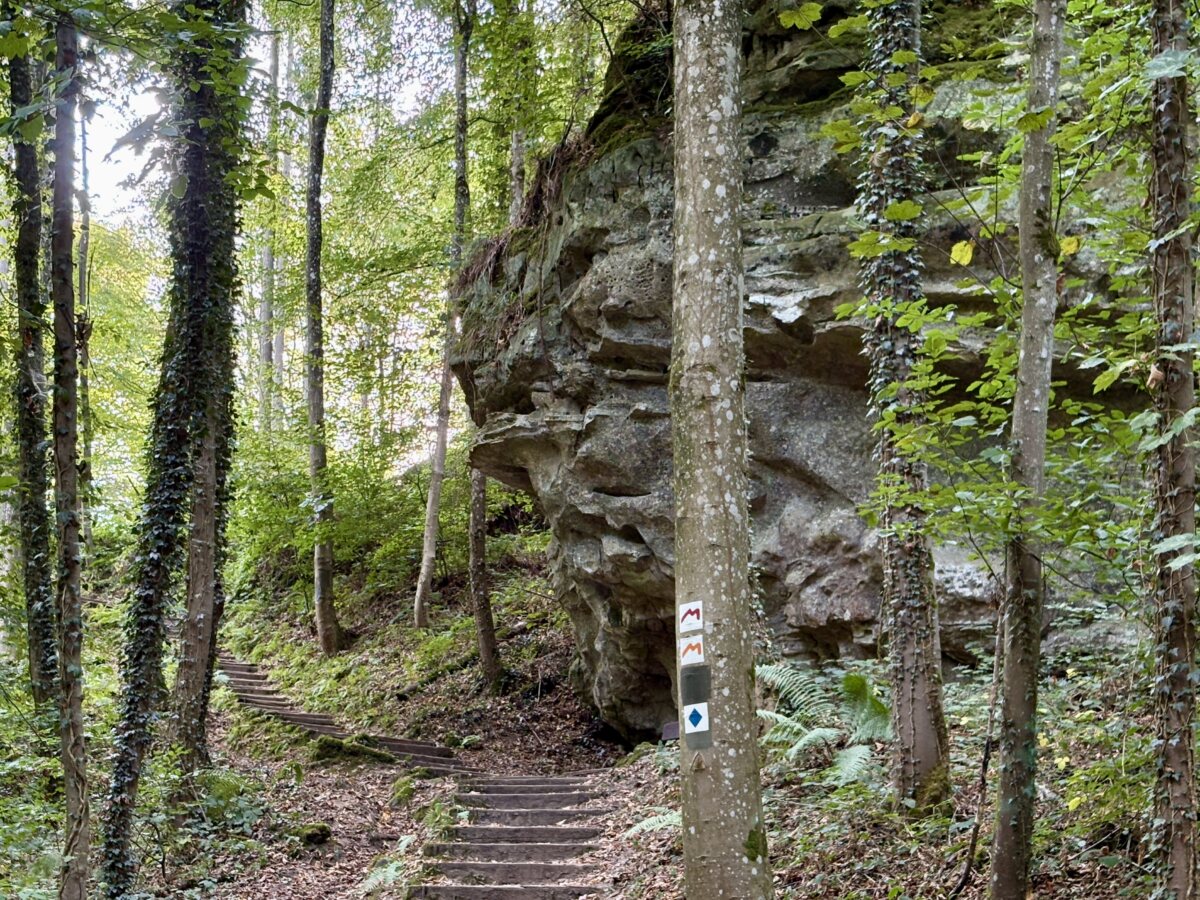
The sheer concentration of weird and wonderful stone shapes earned the Müllerthal region its affectionate nickname as Little Switzerland. Walkers exploring the area encounter towering stone mushrooms, narrow crevices barely wide enough for a backpack, and natural amphitheatres carved out by centuries of human stone quarrying.
This exceptional geological heritage gained international recognition when the region officially joined the UNESCO Global Geoparks network. The combination of lush green beech forests, damp mossy ravines and massive grey sandstone cliffs creates an environment found almost nowhere else in Western Europe.
Why hiking through the rocks feels like entering another world
Walking along paths like the Mullerthal Trail puts you face to face with stone walls rising over 50 metres above your head. The porous nature of the sandstone acts like a giant sponge, filtering water and feeding crystal clear springs that cascade down rock faces.
These cool, damp rock labyrinths create microclimates where rare ferns, lichens and mosses thrive despite summer heatwaves outside the gorges. The rock formations of the Müllerthal are not just pretty scenery for Instagram photos. They represent an extraordinary geological storybook written in sand, water and time.