An unexpected splash of island colour in the north
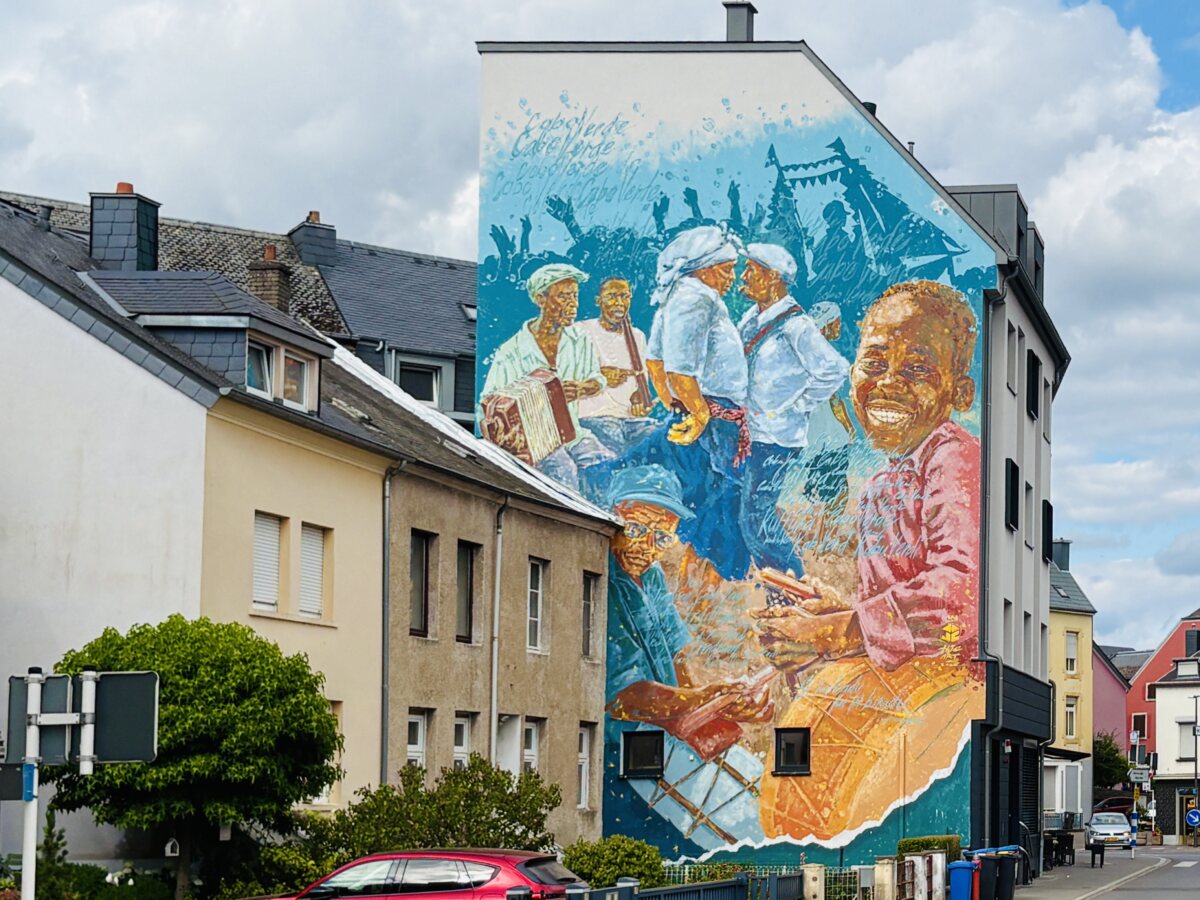
If you happen to stroll down Avenue J-F Kennedy in the northern town of Ettelbruck you will stumble upon a highly impressive piece of street art. The side of the building housing the local restaurant Les Étoiles du Cap Vert features a massive vibrant fresco. This beautiful mural was created by the talented Cape Verdean artist Helder Cardoso.
It does not look like the typical quiet grey architecture that you usually find in northern Luxembourgish towns. Instead it is a highly energetic display that brings a welcome dose of tropical warmth to the Alzette Valley. The local municipality actively backed the creation of this artwork as a clear visual testament to the deep bonds of friendship and integration in the town.
Rhythms and smiles on a concrete canvas
The artwork itself manages to capture the joyous and rhythmic essence of Cape Verdean culture on a regular urban wall. It features beautifully detailed figures playing traditional musical instruments including the accordion which is central to the oral heritage of the Atlantic archipelago. There is also a smiling child on the right side of the canvas who anchors the entire piece with infectious human warmth.
The words Cabo Verde are woven stylistically into the top left background against a dynamic watery blue backdrop. This blue background serves as an intelligent nod to the deep maritime links of the island nation. It is a fantastic piece of cultural celebration that shows exactly how a small European town can embrace its diverse population without losing its own sanity.
The unexpected arrival of the islanders
To understand why this massive mural exists in Ettelbruck you have to look back at the unique history of immigration in Luxembourg. The first wave of Cape Verdeans started arriving in the Grand Duchy during the late 1960s and early 1970s. At that specific time the islands were still a colony of Portugal and the local people legally held Portuguese citizenship.
When Luxembourg signed a major formal labour agreement with Portugal in 1972 they expected a wave of European construction workers. In addition they also received a large group of unexpected African Europeans who were escaping severe droughts back home. The sudden arrival of these black citizens initially provoked some highly conservative and nervous reactions from the local authorities. However the new arrivals quickly rolled up their sleeves and got to work building the infrastructure of the expanding nation.
Counting the community in the Grand Duchy
Over the decades this specific community has grown into a highly integrated and essential part of the local population. Recent official census figures show that there are around 2500 residents holding Cape Verdean nationality in Luxembourg. However when you count the children and grandchildren who now possess full Luxembourgish passports the total community is estimated to be between 7000 and 10000 people.
This means that Cape Verdeans actually outnumber nationalities from much larger global countries in the Grand Duchy. They have contributed heavily to everything from local business to the national football team. The community remains remarkably tight knit and maintains strong ties to both their original Atlantic home.
A great place for a culinary finish
The mural is not just a nice piece of decoration. It acts as a proud statement of belonging for thousands of people who helped shape the modern identity of the region.
Once you have finished admiring the musical figures and the watery blue details on the wall you can simply step inside the building for a warm plate of traditional food. It is a brilliant example of how real integration actually works through mutual respect and excellent street art. It is certainly much more interesting than looking at another boring corporate bank building in the capital city.