A grand history built on older foundations
The story of the Cathedral of Málaga begins in 1487 when Castilian forces conquered the city. The victors immediately claimed the existing Aljama mosque and consecrated it as a Christian church. Real construction on a proper new cathedral began in 1528. The builders originally worked in the late Gothic style. As the decades dragged on, plans changed repeatedly. Work continued right through the 17th and 18th centuries before stopping abruptly in 1782.
The famous case of the missing tower
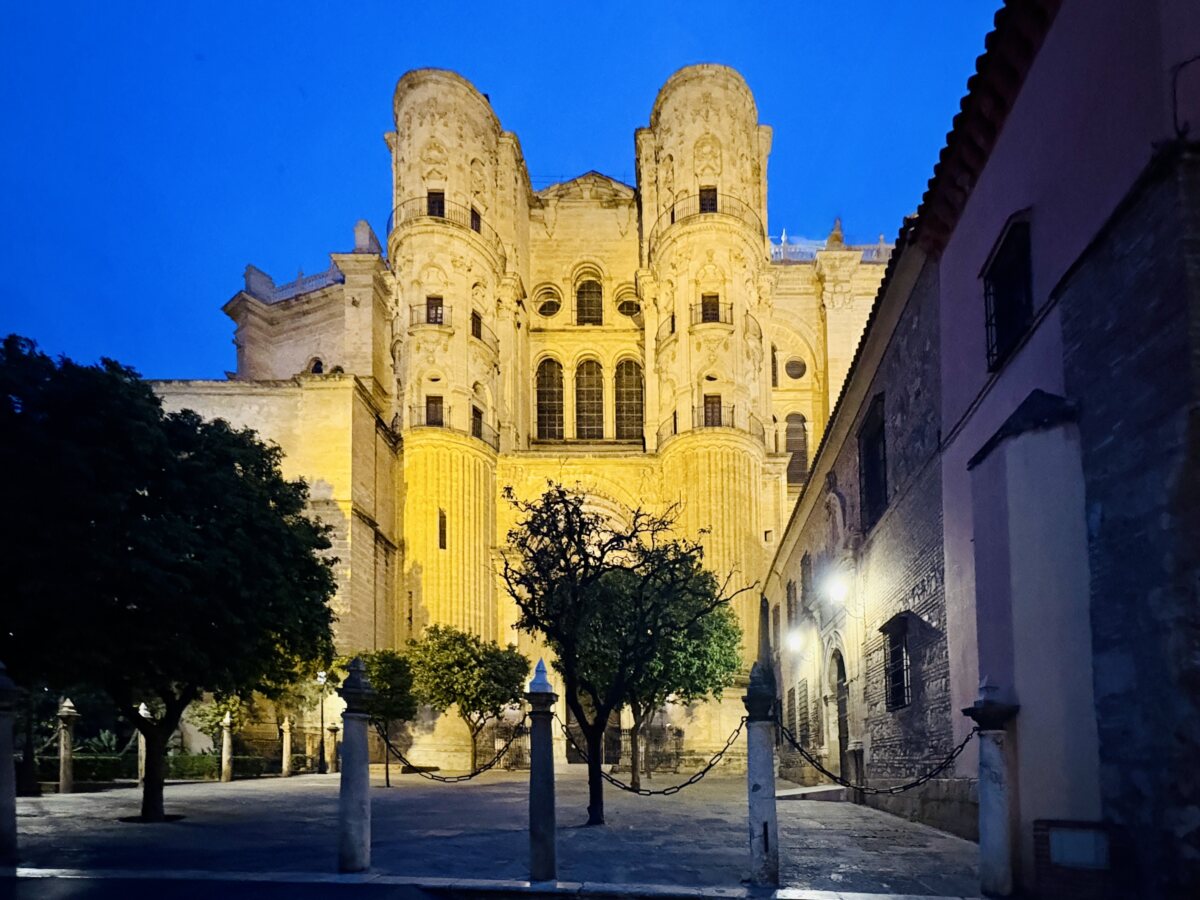
If you look up at the main front of the building, something immediately feels a bit off. The north tower stands proud at 84 metres tall. The south tower is just a stub. This odd look earned the building its famous nickname, La Manquita, which translates to the one-armed lady. Local legend claims the budget for the second tower went off to fund the American War of Independence in the late 18th century. Other historians insist the money was simply spent on urgent local road repairs. Either way, the local authorities ran out of funds and left the building delightfully lop-sided.
A mashup of architectural fashions
The exterior is a visual timeline of changing artistic tastes. Diego de Siloé drew up early ideas, but many architects put their own spin on the project over two centuries. The lower levels showcase heavy stone structures and Renaissance symmetry. The main façade, designed much later in the 18th century by José de Bada, switches to full Baroque drama. It features deep arches, grand marble columns, and carved stone medallions. The main entrance showcases the Annunciation, flanked by Saint Cyriacus and Saint Paula, who are the patron saints of the city.
A side door with a proper Moorish origin
Walking around the outer walls reveals another interesting twist. The northern entrance is known as the Puerta de las Cadenas, or the Door of the Chains. On the opposite side sits the Puerta del Sol, or the Sun Door. Near the sacristy sits the Puerta del Sagrario, which features late Gothic details from the earliest 16th-century build phase. This area still incorporates elements from the old mosque grounds. It serves as a reminder that the cathedral literally swallowed up the city’s Moorish past.
Glowing softly in the Spanish night
While the building looks impressive in the midday heat, it really comes alive after sunset. Modern illumination lights up the warm limestone exterior against the dark night sky. The light accents the stacked Corinthian columns, deep archways, and the lone bell tower. Seeing the cathedral lit up at night makes it look complete and dramatic, helping you forget that the builders packed up their tools and walked away over two hundred years ago.