Building a tower on ancient Roman foundations
When modern builders start laying foundations they usually use concrete and steel. The medieval builders of Sopron had a much easier shortcut. They built the famous Fire Tower directly on top of the ancient Roman city walls.
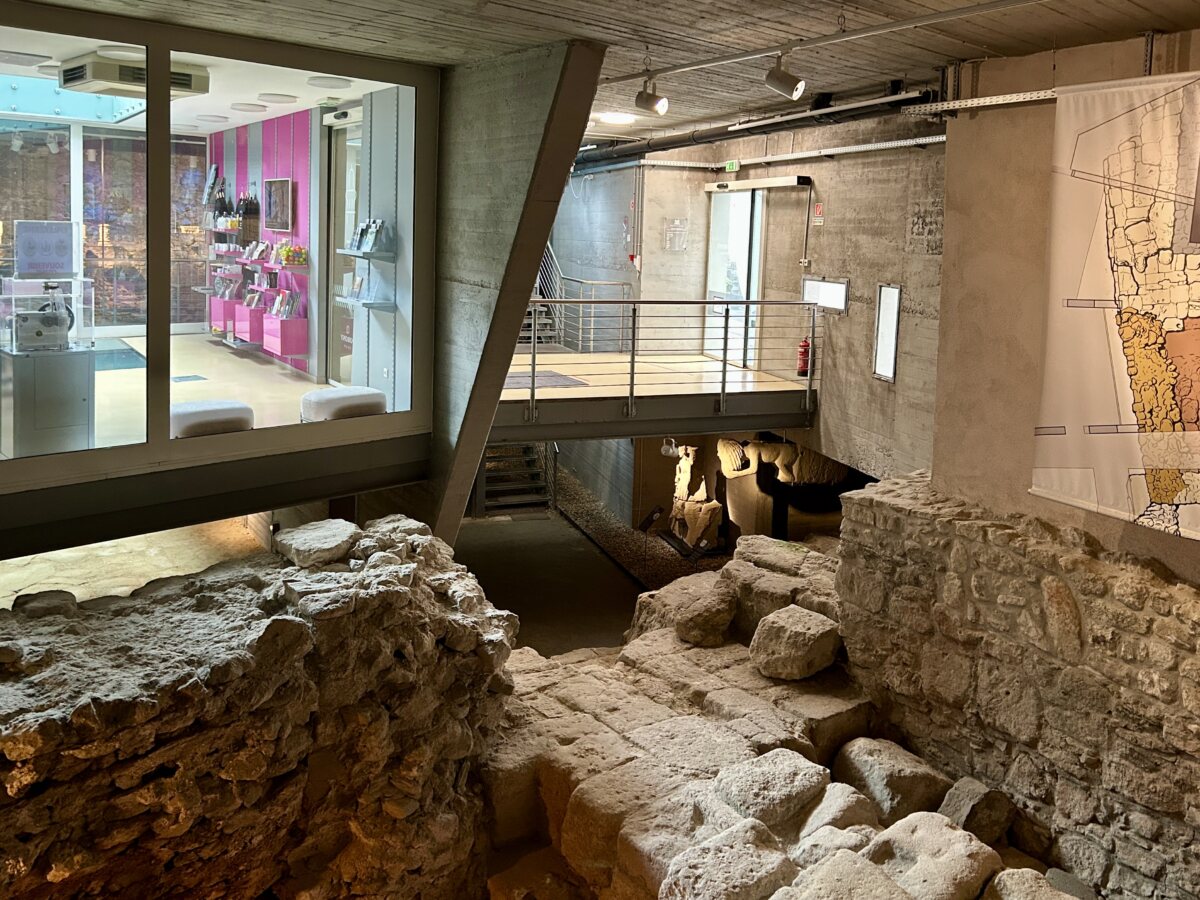
The original stone masonry visible inside the visitor center belongs to Scarbantia. That was the official name of the Roman predecessor of Sopron. These massive stone foundations date back to between the first and fourth centuries. Medieval builders simply added extra stone layers on top to keep the new tower standing strong.
A lapidarium hidden under a concrete walkway
Walking through the visitor center allows you to explore an impressive collection of ancient stonework. The museum arranged a lapidarium display directly under a modern concrete walkway. It features authentic Roman artifacts excavated from around the ancient town forum and city gates.
You can admire detailed tomb markers dedicated to long forgotten citizens. There are also votive altars and carved architectural elements that once decorated grand imperial buildings. It is essentially an open air graveyard of ancient architecture resting peacefully indoors.
Glass floors and medieval layers
A major restoration project finished in 2012 transformed the entire site into a modern entrance. Architects integrated a glass fronted reception area directly around the open excavation site. They created a clever design that merges old stone with sleek steel.
Visitors can now walk across steel bridges and look through glass floors to inspect the structural layers beneath the city. It allows you to peer down through two thousand years of urban history without getting your shoes dirty. Nature and history sit right under your feet while you buy your museum tickets.
The ultimate recycling project
The entire complex serves as a brilliant example of historic recycling. The citizens of Sopron never wasted good stone. When the Roman Empire collapsed local residents simply reused the heavy wall blocks to build new fortresses and houses.
Today those ancient stones form the centerpiece of a polished tourist attraction. It turns out that Roman engineering is practically indestructible. The Romans built those defensive walls to survive barbarian invasions and they ended up surviving modern museum architecture too.