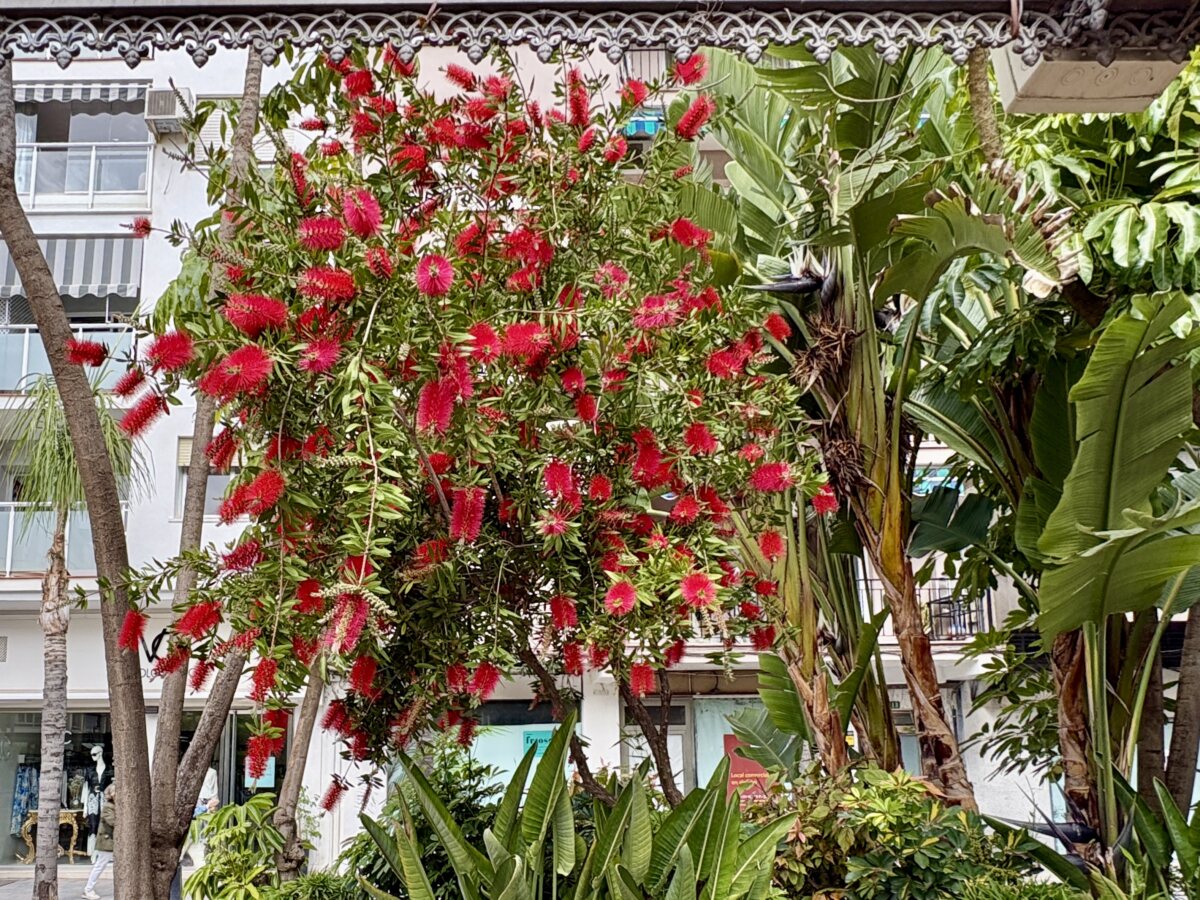
I recently found a rather odd looking plant in Fuengirola, Spain. It looks exactly like something you would use to scrub out a dirty milk bottle. The ressemblance is so strong that even botanists call it the bottlebrush plant. It is quite funny to see a tree covered in what looks like red kitchen accessories.
Australian roots in Spain
While I saw this one in the sunny streets of Andalusia, the plant is actually from Australia. Robert Brown first described the genus in 1814. He probably thought it was a brilliant discovery, but the Australians have been living with these “brushes” for a very long time. They grow all over the place back there. They especially love moist conditions, which is ironic considering how dry most of Australia is.
The name game
The fancy name for this plant is Callistemon. This comes from two Greek words. “Callis” means beauty and “stemon” means stamen. So the name literally translates to beautiful stamen. This is a very polite way of saying the plant has very long and colourful reproductive organs. It is basically showing off its anatomy to the entire street.
A bit of a botanical identity crisis
Botanists seem to have far too much time on their hands. For years they have been arguing about whether this plant is actually a Callistemon or a Melaleuca. Some people say the differences are entirely artificial. Since 1998, there has been a lot of moving plants from one group to another based on DNA evidence. Honestly, to the rest of us, it still just looks like a brush.
How it works
The red parts that look like bristles are actually the stamens. The pollen sits right at the tip. The petals are so small that you can hardly see them. It is as if the plant decided that petals were a waste of energy and went straight for the flashy bits. Most of these plants are red, but some try to be different by being yellow, green, or even pink.
Hard as nails
After the flowers fade, the plant produces woody seed capsules. These little pods sit around the stem like a ring of tiny stones. They are incredibly tough. In many cases, they only open if the plant dies or if there is a fire. It is a bit dramatic to wait for a forest fire just to release some seeds, but that is the Australian way.
Bringing the brush home
People have been obsessed with these plants for a long time. Joseph Banks brought a specimen to London in 1789. It was planted in Kew Gardens. Nowadays, you can find them in gardens all over the world. They are quite hardy and some are even drought resistant. You can even grow them in pots if you want your balcony to look like a display in a hardware store.