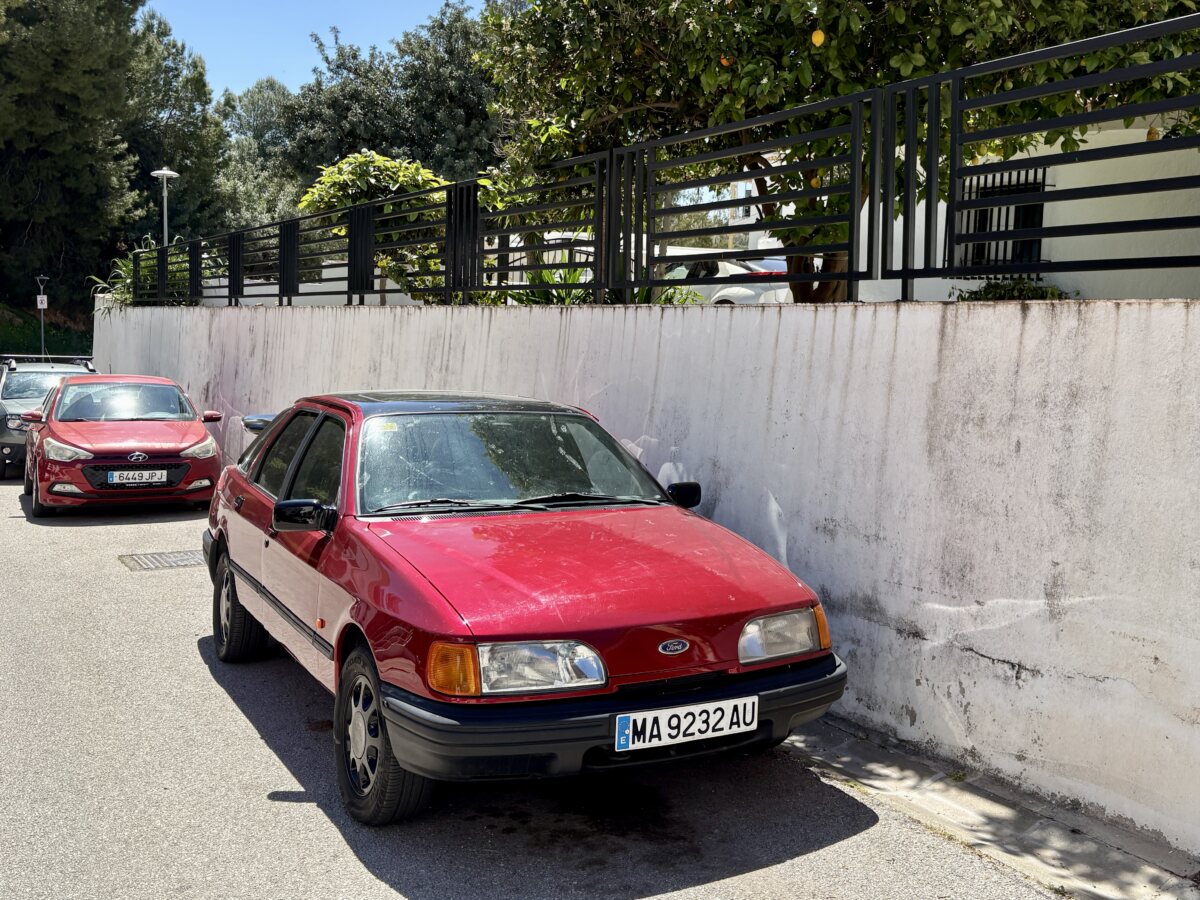
This spotless car in Fuengirola is a masterpiece of early nineties engineering. It is not just about the raw numbers on a page. The way the mechanical parts work together is what makes it special. Everything in this car was designed to be simple and easy to understand. It represents the peak of a time before electronics took over everything. Because it is in such good shape we can really appreciate the clever design choices Ford made back then.
The clever engine design
The two litre engine under the bonnet is known as the I4 DOHC. It was a big step up from the older engines of the seventies. It uses a timing chain instead of a rubber belt. This is a great technical choice because chains rarely snap. This is probably why this specific car may be still running so smoothly in the Spanish heat. The engine also features an early form of electronic fuel injection. This replaced the messy carburettors that used to get clogged with dirt and old fuel.
Aerodynamics and the jelly mould
People used to call the Sierra the jelly mould because of its smooth shape. This was a deliberate technical decision to reduce wind resistance. The car has a drag coefficient of 0.34 which was incredible for its time. This shape helps the car stay stable when the winds pick up along the Málaga coast. It also reduces wind noise inside the cabin. Even the window seals and the curve of the headlights were designed to help the air slip past as quietly as possible.
Suspension for the real world
The suspension setup is quite sophisticated for a family hatchback. It uses MacPherson struts at the front and a semi trailing arm setup at the back. This gives the car a very balanced feel. Because it is rear wheel drive the front wheels are only used for steering. This means you do not get the annoying tugging on the steering wheel that you feel in front wheel drive cars. It makes the car feel very graceful and composed on the road.
The driver experience
Inside the car the technical focus is all on the person behind the wheel. The dashboard wraps around you like a cockpit. All the dials are analogue with physical needles that bounce as you drive. There is a satisfying click to every switch and lever. The steering is power assisted but it still lets you feel every bump in the road. It is a very tactile experience that modern cars cannot replicate with their smooth touchscreens and silent buttons.
Built to last in the sun
One of the most impressive technical aspects of this car is the material quality. Usually the hot Spanish sun cracks plastic dashboards and fades seat fabrics. This pristine example has clearly been treated with respect. The plastics used in the Mk2 were much better than the earlier models. The paint technology had also improved which prevented the car from turning into a pile of rust. It is a surviving example of what happens when good engineering is combined with a very careful owner.