The Hungarian Versailles
Esterházy Castle in Fertőd is often called the Hungarian Versailles. That’s not just a flattering nickname. It’s a full-blown architectural ego trip. Built in the 18th century by Prince Nikolaus Esterházy, this palace was meant to scream wealth, taste and “look how much better I am than you”.
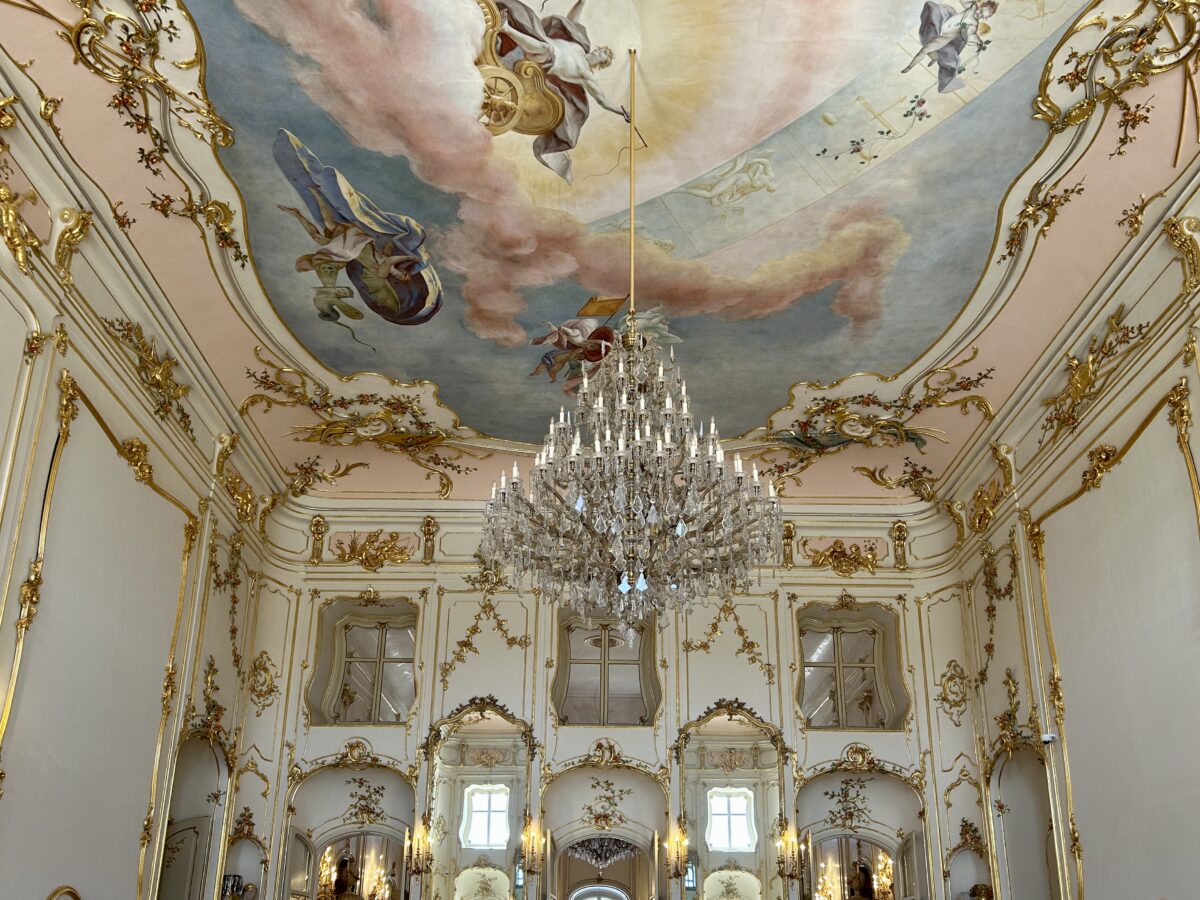
Among its many rooms, the gala or ballroom is the crown jewel. And not because of the floor or the chandeliers. It’s the ceiling that steals the show. Honestly, if you walk in and don’t immediately look up, you’re doing it wrong.
A ceiling worth a crick in the neck
The ceiling of the ballroom is a masterpiece of Rococo art. It’s flamboyant, theatrical and unapologetically over-the-top. Painted by Josef Ignatz Mildorfer, an Austrian artist who clearly didn’t believe in minimalism, the ceiling is a swirling spectacle of mythological drama.
At the centre, you’ll find Apollo in his chariot, galloping across the sky like he’s late for a divine Zoom call. Around him are muses, cherubs and other celestial freeloaders, all floating in a pastel paradise. It’s like someone took a Greek myth, dipped it in gold and glued it to the ceiling.
Who was this Mildorfer guy?
Josef Ignatz Mildorfer was a painter with a flair for the dramatic. He specialised in religious and mythological scenes, which basically means he painted a lot of naked people pretending to be gods. His work in the Esterházy ballroom is considered one of his finest. And rightly so. It’s not every day you get commissioned to paint a ceiling that’s bigger than most flats in Budapest.
Mildorfer’s style was bold and expressive. He loved movement, light and a good dose of heavenly chaos. His brushwork gives the illusion that the figures are actually floating above you. Which is great, unless you’re prone to vertigo.
A room that dances without music
The gala room wasn’t just for showing off. It hosted balls, concerts and all sorts of aristocratic nonsense. Imagine dancing under Apollo’s watchful eye while trying not to trip over your powdered wig. The ceiling added drama to every event.
Even today, the room feels alive. The paintings seem to shift with the light, and the colours still pop like they were painted last week. It’s a testament to Mildorfer’s skill and the absurd amount of money the Esterházy family had lying around.