The national university of Montenegro
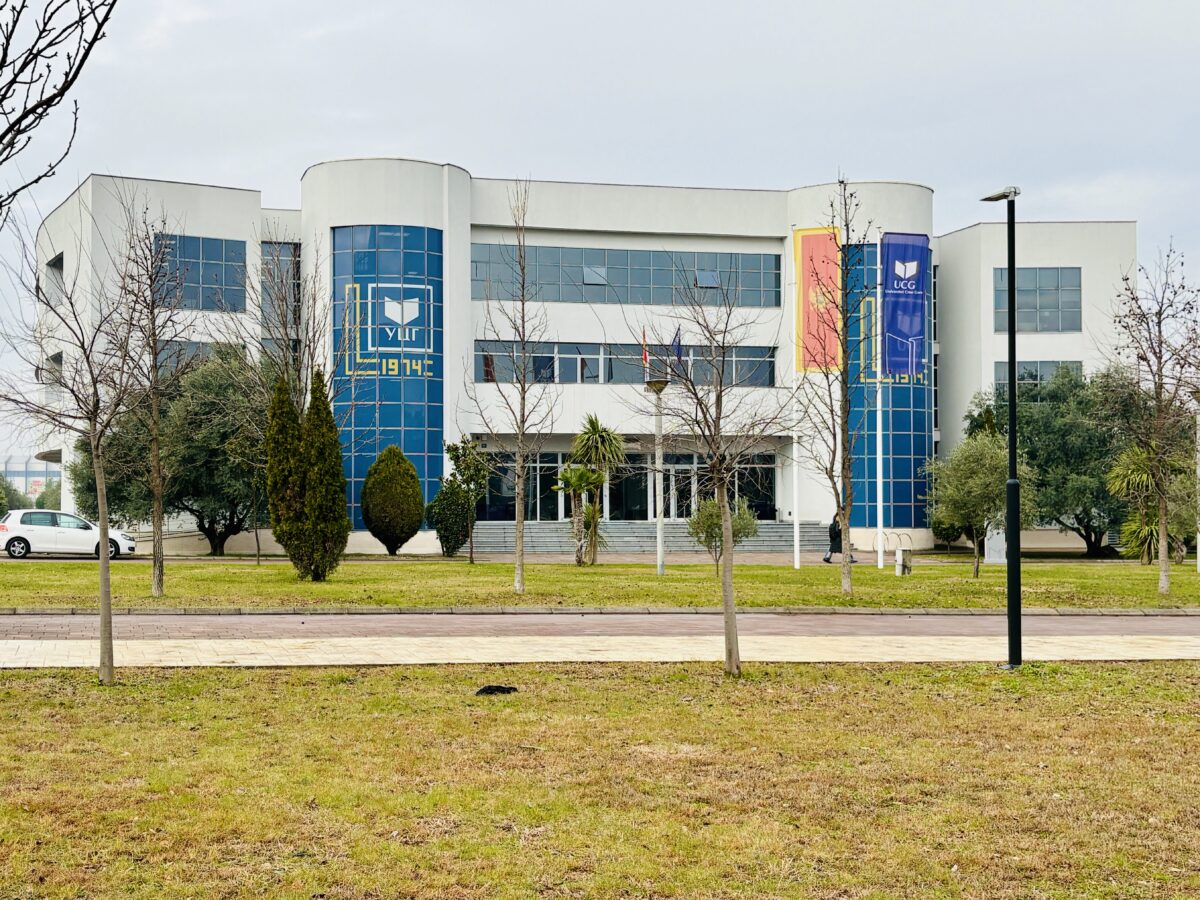
The University of Montenegro is the main public university of the country. It sits in Podgorica and spreads across several buildings that look exactly like you expect from a former Yugoslav capital. Solid. Functional. Slightly grey. The kind of architecture that says knowledge is serious business and decoration is optional.
The university was founded in 1974. At that time Montenegro was part of Yugoslavia. The institution was created to bring higher education closer to the republic and to train the professionals needed for its development. It started with a handful of faculties and a lot of ambition.
A Yugoslav beginning
During the Yugoslav period the university was part of a larger educational network. Students and professors moved between republics. Curricula were coordinated. The idea was to create a shared academic space. It worked reasonably well although the bureaucracy was impressive even by Balkan standards.
The university grew steadily. New faculties were added. Research institutes appeared. The campus became a symbol of modernisation. It was also a place where many Montenegrins experienced their first taste of academic life. Some even enjoyed it.
A new role after independence
After the breakup of Yugoslavia the university had to adapt. Montenegro needed its own national institution. The university became the centre of higher education for the new state. It expanded its programmes and strengthened its research activities. It also had to deal with the usual challenges of transition which included funding issues and the occasional political debate.
Today it remains the largest and most important university in the country. It is the place where future engineers, teachers, lawyers and economists are trained. It is also the place where students learn the fine art of drinking coffee between lectures.
Faculties and fields of study
The University of Montenegro has a wide range of faculties. These include economics, law, engineering, political science, natural sciences, medicine, arts and many more. There are also specialised institutes for marine biology, history and foreign languages.
The campus in Podgorica is the main hub. Other faculties are located in cities such as Cetinje, Kotor and Nikšić. This gives the university a national presence and allows students to study closer to home. It also means that professors spend a lot of time travelling.
Students and rankings
The university has around twenty thousand students. This is a significant number for a country of Montenegro’s size. The student population is diverse and includes many from neighbouring countries. The atmosphere is lively and sometimes chaotic which is exactly what a university should be.
In international rankings the University of Montenegro usually appears in the lower middle range. This is not surprising for a small country with limited resources. What matters more is its role in national development. It trains the workforce. It supports research. It keeps the intellectual life of the country alive.
A campus with character
The buildings may not win architectural awards but they have character. The main campus on Cetinjski Put is surrounded by green areas and busy streets. Students gather in cafés and discuss exams, politics and the price of textbooks. The library is a quiet refuge for those who actually study. The rest rely on luck and caffeine.
The university is also close to several monuments including the huge statue of Petar I Petrović Njegoš in University Park. It gives the campus a sense of history and a reminder that education and nation building often go hand in hand.