The birth of a very recognisable flag
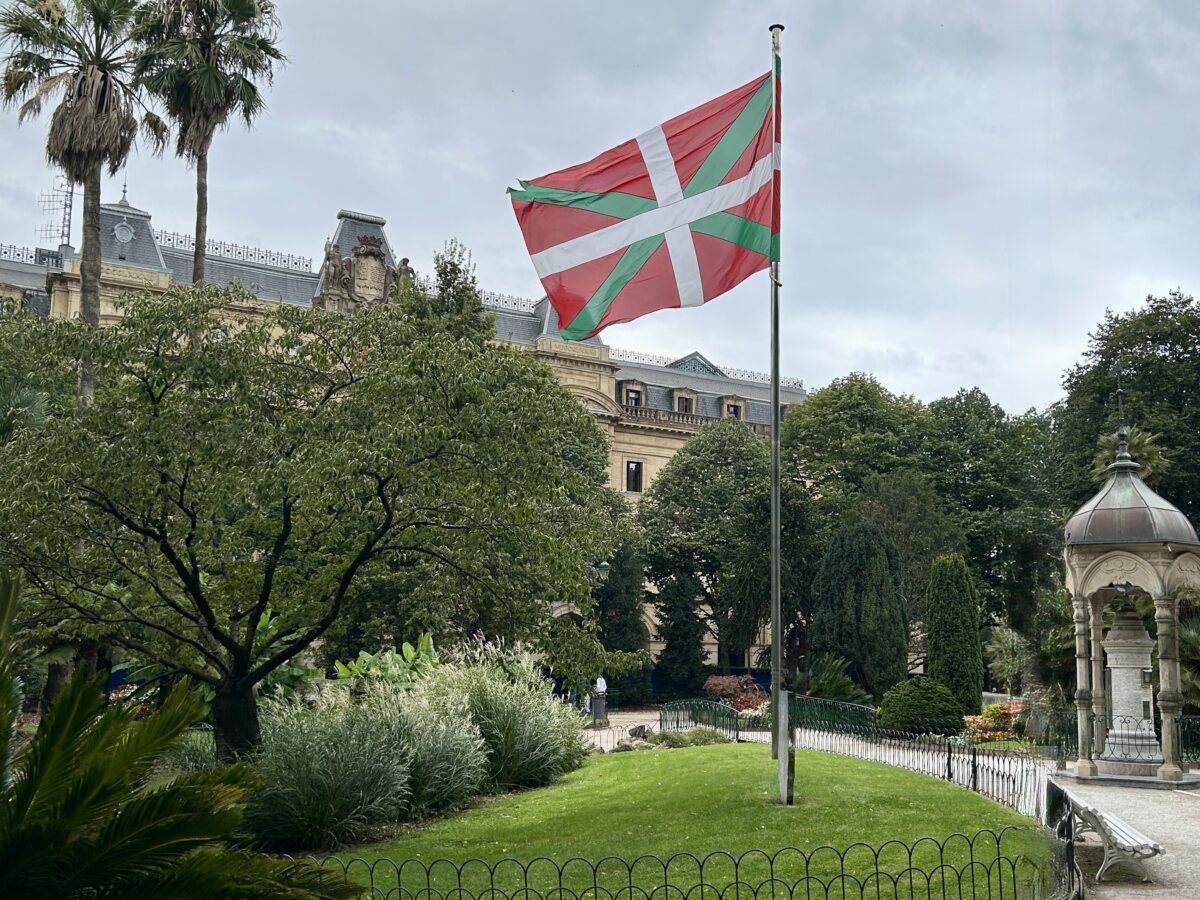
The Basque flag is called the Ikurriña. It looks a bit like someone mixed the Union Jack with a Christmas tablecloth. It was created in 1894 by the Sabino Arana brothers who were very enthusiastic about Basque identity. They designed it first for Biscay but it quickly became a symbol for all Basque territories. The red stands for the Biscayan people. The green cross represents the ancient laws known as the fueros. The white cross symbolises God which was very important to the Arana brothers. The result is striking and impossible to confuse with anything else.
From unofficial symbol to official status
For decades the Ikurriña was used by Basque nationalists but it was not officially recognised. During the Franco dictatorship it was banned. People who displayed it risked trouble and sometimes worse. The flag became a quiet act of resistance. After Franco died things changed. In 1979 the newly created Basque Autonomous Community adopted the Ikurriña as its official flag. It now flies proudly on public buildings and at local festivals. It is a symbol of identity that survived a long and complicated history.
A flag in difficult times
The Basque Country went through a very turbulent period during the years of ETA terrorism. The Ikurriña was often present in demonstrations and political events. Some people saw it as a symbol of cultural pride. Others associated it with separatism and violence. The flag itself was not responsible for any of this but it was dragged into the political storm. Many Basques used it peacefully to show their heritage. Others used it to make political statements. It was a time when even a piece of cloth could start an argument.
The Ikurriña in France
Across the border in the French Basque Country the Ikurriña has a different status. It is not an official flag because France does not recognise regional flags in that way. But it is widely used in cultural events and festivals. You see it at rugby matches and village celebrations. It is a friendly guest rather than an official resident. People use it to show pride in their Basque roots without any political complications. It is part of daily life in a relaxed and cheerful way.
A symbol that keeps its meaning
The Ikurriña represents a culture that has survived invasions and bans and internal conflicts. It is a reminder of a strong identity that refuses to disappear. Whether it hangs on a town hall in Bilbao or waves at a festival in Bayonne it carries the same message.