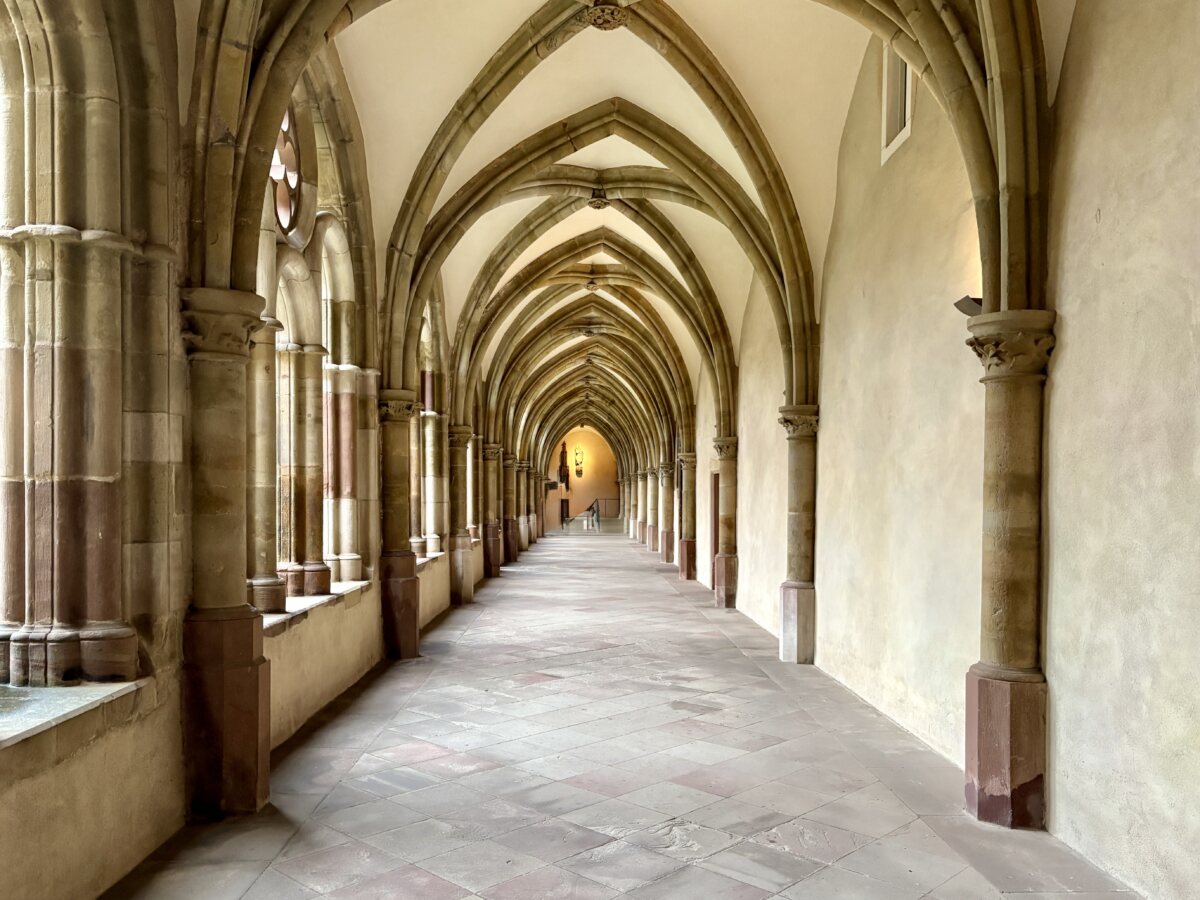
The arcaded walkway or cloister of Trier cathedral is a very quiet place. It connects the cathedral with the nearby Church of Our Lady. You can find it on the south side of the massive stone building. It is the perfect spot if you want to escape the noise of the city. People have been walking here for centuries to think and pray. Now tourists mostly use it to take photos of old stones.
Gothic style with a view
The architecture is mainly Gothic and dates back to the thirteenth century. It features beautiful pointed arches and delicate stone work. The construction took place between 1235 and 1270. It replaced an older Romanesque structure that was probably much less fancy. The builders used red sandstone which gives the whole place a warm feeling. You can look out into the central green courtyard while you walk. It is very symmetrical and pleasing to the eye.
More than just pretty arches
The walkway served many purposes over the years. It was a place for processions and a burial site for important church people. You can still see many tombstones set into the walls and floor. Some of the carvings are quite detailed while others have worn away over time. The builders also added a second floor on the north and east sides later on. This was to house the cathedral library and various administrative offices. It shows that even in the middle ages people needed extra storage space. Real, physical ones.
A bit of architectural survival
The cloister has survived quite a lot of history. It managed to stay mostly intact through various wars and city fires. This is quite a miracle considering how many times people have tried to knock things down in Trier. The stone carvings on the capitals show flowers and human figures. Some of the faces look quite grumpy which is understandable if you have been holding up a roof for eight hundred years. It is a very solid piece of German engineering from a time before power tools existed.