Txik Txak: The Name Says It All
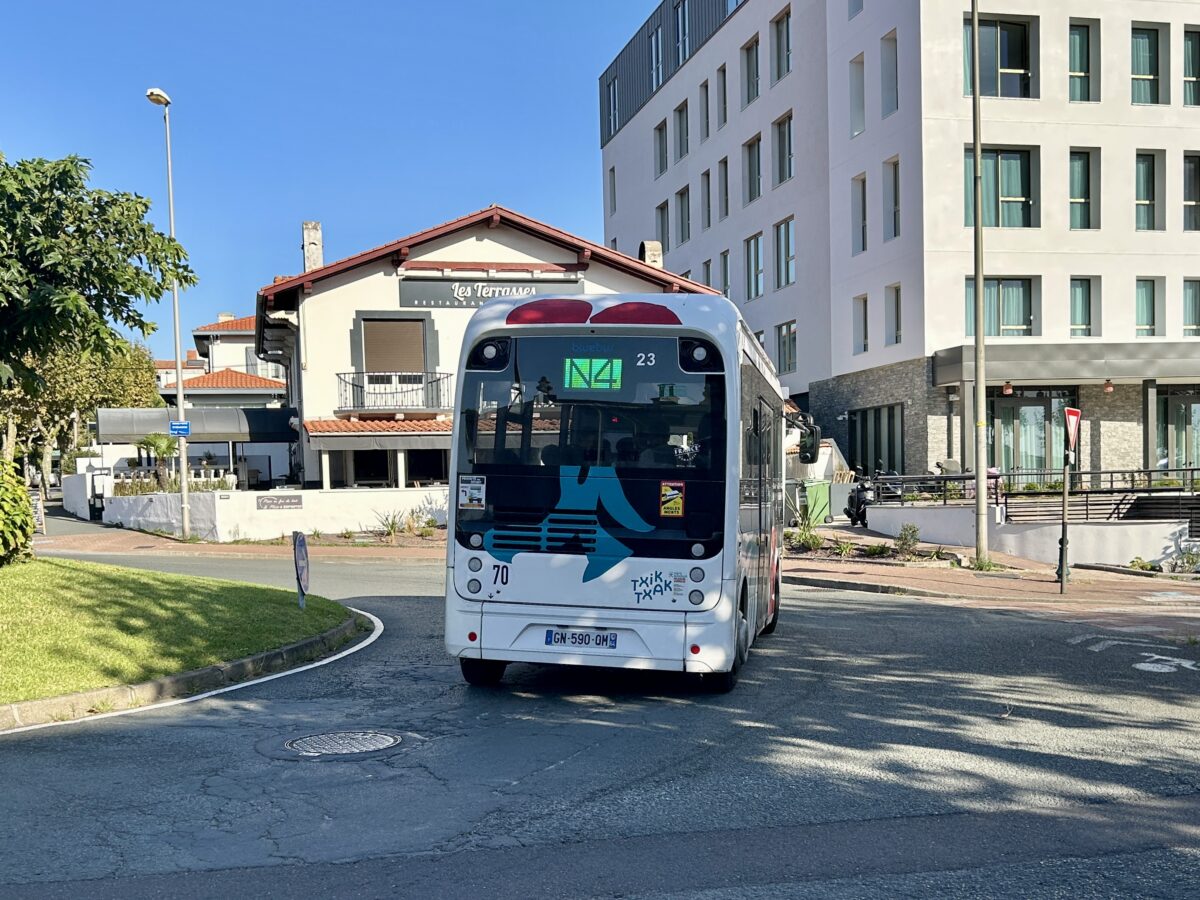
In Biarritz, public transport has a name that sounds like a Basque drum solo. Txik Txak is the network that keeps the city moving, and yes, it’s pronounced exactly how it looks. It covers buses and even free shuttles. The N4 and 23 lines are the stars of the small electric bus show. They zip through the city centre like polite bees, making almost no noise and even less pollution.
The N4, for example, connects Pétricot to Haraout with 18 stops and a schedule that doesn’t make you cry. Buses run every 20 to 30 minutes, which is practically punctual by French standards.
Small, Electric, and Slightly Adorable
These buses are not trying to be impressive. They are small, quiet, and efficient. You could almost miss them if you blink. But they are perfect for the narrow streets and short hops around town. They are 100 percent electric, which means they don’t cough out fumes or wake up pigeons.
They are also free. Yes, free. You can hop on without digging through your bag for coins or pretending to understand the ticket machine. It is public transport without the usual drama.
Biarritz’s Transport Philosophy: Chill but Clever
The Txik Txak network is surprisingly well thought out. It includes urban routes, intercity coaches, and two Tram’bus lines that are fully electric and come with USB sockets. Because apparently, charging your phone while saving the planet is now a thing.
The system runs from early morning until 2 a.m. on some routes. That means you can get home after dinner without begging a friend for a lift.
Compared to Other French Cities
Let’s be honest. France is not exactly famous for its punctual buses or seamless connections. Paris has the Metro, which is fast but smells like existential dread. Lyon has trams that look like they were designed by someone who loves rectangles. Marseille has buses that occasionally show up.
Biarritz, on the other hand, has gone for charm and efficiency. It is not trying to be flashy. It is trying to work. And it mostly does. The electrification is ahead of many other cities, especially when it comes to small-scale, local routes.