The national stage of Montenegro
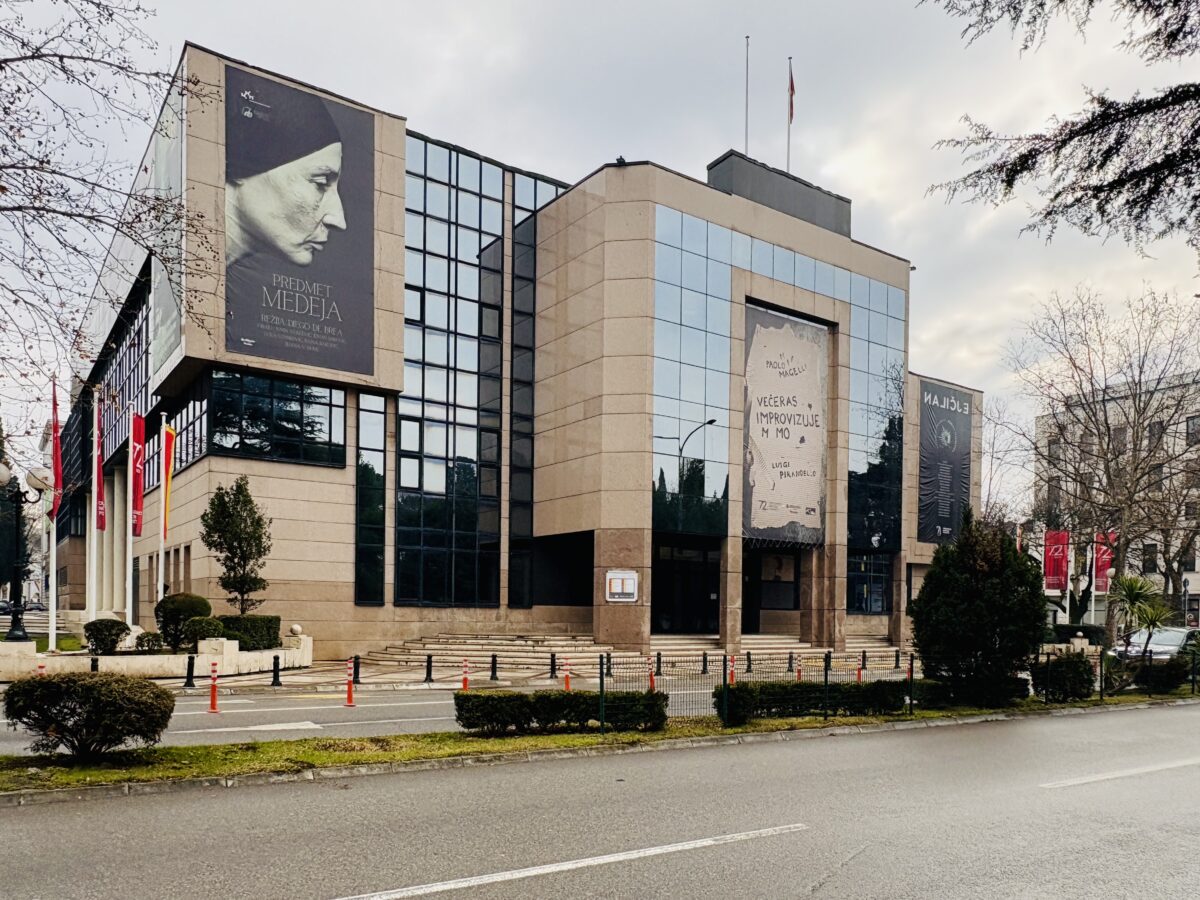
The Montenegrin National Theatre sits proudly in the centre of Podgorica. It is the main cultural institution of the country and the place where actors, directors and audiences gather to enjoy a bit of culture. The building looks modern which is not surprising because Podgorica had to rebuild much of its architecture after the Second World War. The theatre is one of the results of this long process of reconstruction and renewal.
The structure is clean and functional. It does not pretend to be an opera house from Vienna. It prefers a straightforward style that says we are here to work and to perform. The façade is simple and the interior is practical. It is the kind of building that focuses on what happens on stage rather than on marble columns.
A history shaped by Yugoslavia
The theatre was founded in the time of Yugoslavia. It played an important role in the cultural life of the republic. It hosted plays from across the region and helped create a shared artistic space. Actors travelled between republics and audiences enjoyed works from Belgrade, Zagreb and Sarajevo. It was a period when culture tried to hold the country together even when politics did not.
After the breakup of Yugoslavia the theatre had to redefine itself. It became the national stage of an independent Montenegro. This meant new responsibilities and a stronger focus on local stories. It also meant keeping the doors open to international productions which is always a good idea for a small country.
What you can see today
The theatre offers a wide range of performances. There are classical plays for those who enjoy familiar titles. There are contemporary works for those who like to feel clever. There are children’s shows for parents who need an hour of peace. The programme changes often and tries to balance tradition with innovation.
The repertoire includes Montenegrin authors who deserve more attention. It also features international works that bring a bit of the world to Podgorica. The theatre is not afraid to experiment. Sometimes the experiments work. Sometimes they do not. That is the charm of live performance.
A modern building with a lively soul
The building may look modern but it has a lively atmosphere. People gather in the foyer before the show and pretend to read the programme. The bar serves drinks that help everyone survive the interval. The acoustics are good and the stage is flexible.