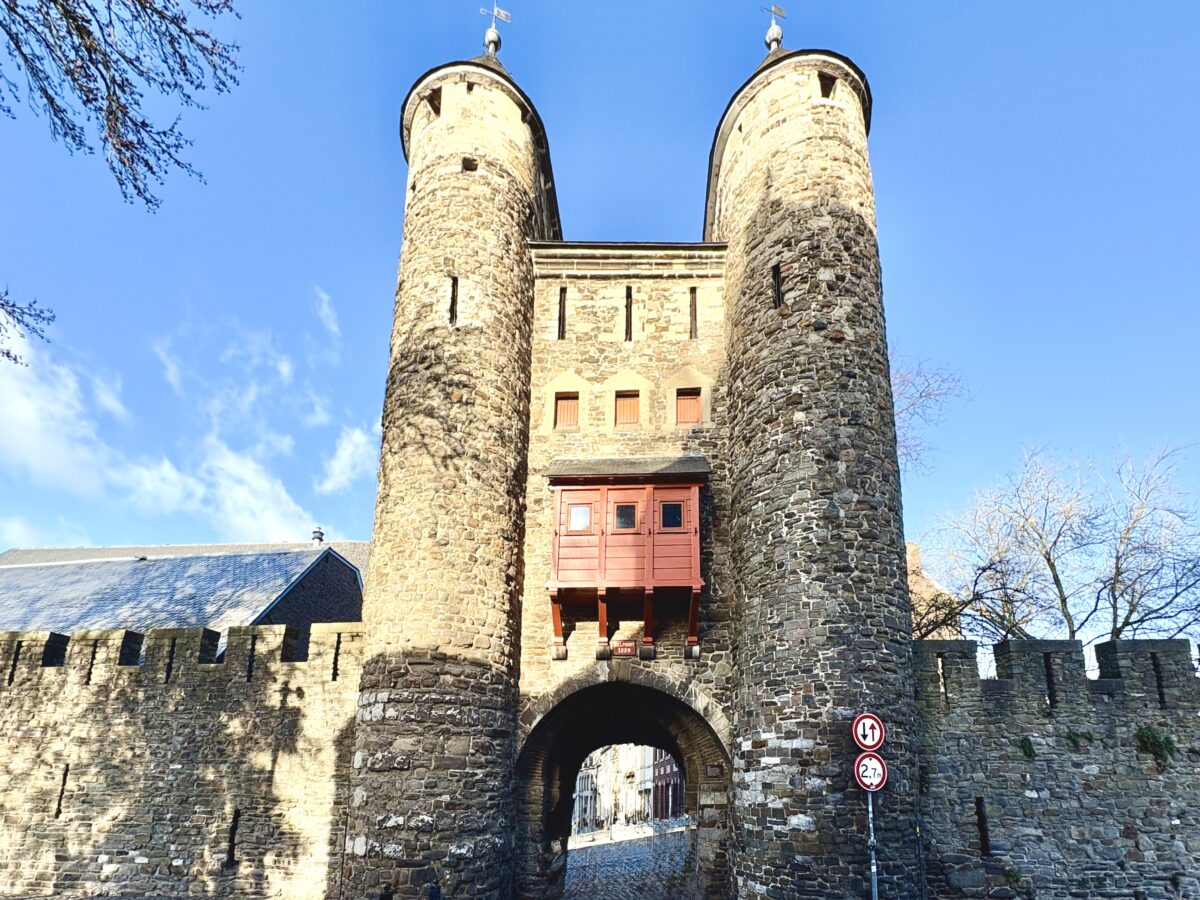
The Helpoort Gate in Maastricht is one of those buildings that looks like it has seen everything. It was built in 1229 which is proudly written on the stone. This makes it the oldest surviving city gate in the Netherlands. It has outlived wars, sieges, renovations and the occasional tourist who insists on taking photos from every possible angle.
The gate stands in the southern part of the old city. It is part of the medieval fortifications that once protected Maastricht. Today it protects nothing except its own dignity but it does that very well.
A bit of medieval history
In the early thirteenth century Maastricht needed stronger defences. The city was an important crossing point on the Meuse River and everyone wanted a piece of it. The Helpoort Gate was built as part of the first stone wall. It served as a defensive entrance and a checkpoint. If you wanted to enter the city you had to pass through it. This was less romantic than it sounds because guards checked goods, collected taxes and made sure no one brought trouble inside.
The gate had two towers and a passageway. It was a solid piece of military architecture. It also had a charming habit of intimidating visitors which was exactly the point.
Life after the Middle Ages
As Maastricht expanded the old walls became less useful. New fortifications were built further out. The Helpoort Gate slowly lost its military purpose. It became a storage building. It became a workshop. At one point it was even used as a residence which must have been interesting for anyone who enjoys living inside a medieval tower.
By the nineteenth century the city demolished many old walls to make space. The Helpoort Gate survived because someone finally realised that destroying the oldest gate in the country would be a terrible idea.
A modern role with medieval charm
Today the Helpoort Gate is a historical monument. Visitors can walk through it and imagine knights, merchants and guards passing by. The surrounding area is peaceful and green. It is a pleasant contrast to the gate’s original purpose which involved less peace and more shouting.
The building houses exhibitions from time to time. It also serves as a reminder that Maastricht has a long and complicated history. The city has changed many times but the gate remains a stubborn witness.