A medieval fortress in the middle of suburbs
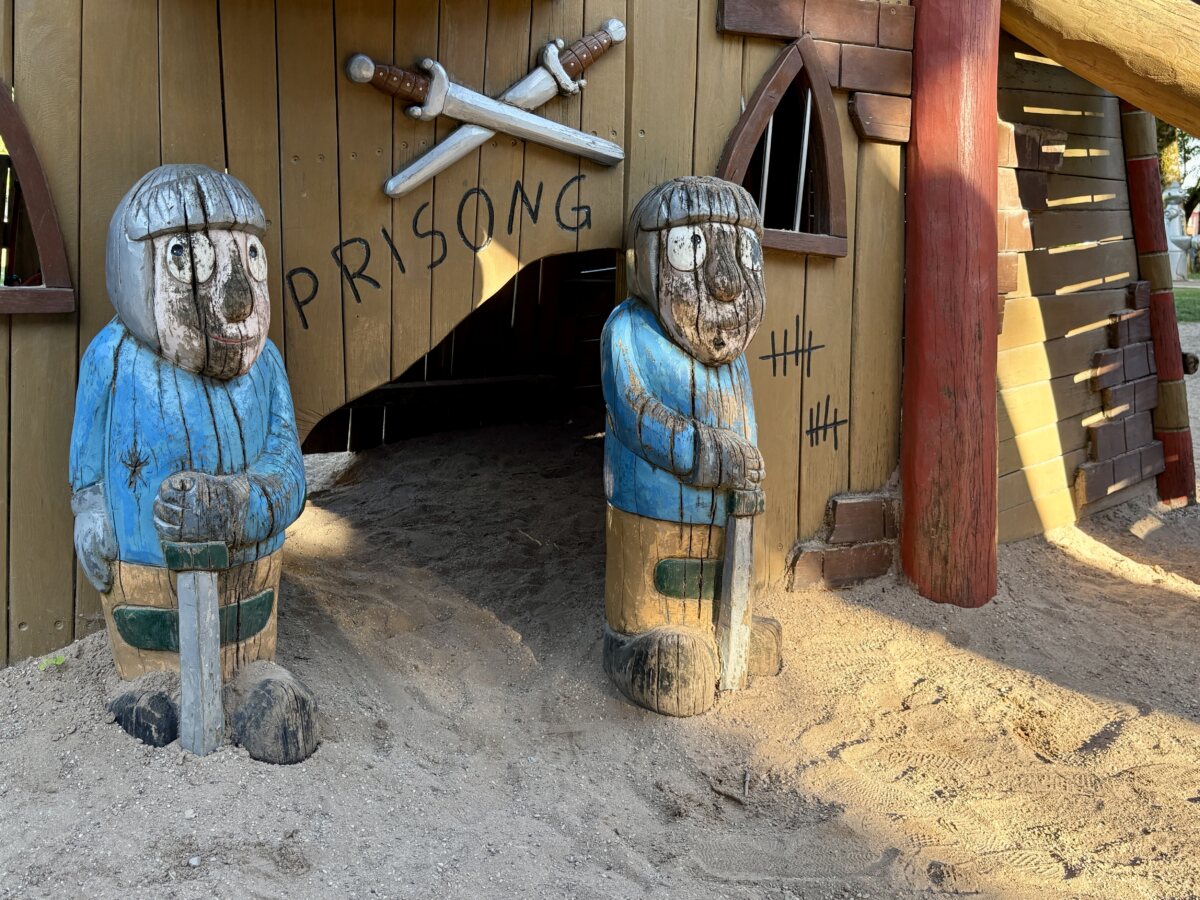
The leafy residential district of Belair hides a rather impressive architectural wonder for the younger generation. The Scheiwisschen playground is not your standard depressing collection of plastic swings and rusty roundabouts. Instead the centerpiece of this park is a massive and beautifully crafted wooden construction designed to look like a historic castle.
It features high wooden towers and winding bridges that allow children to fully act out their medieval knight fantasies. The design is exceptionally creative and keeps children entertained for hours on end.
While the younger visitors are busy defending the wooden walls the older visitors can entertain themselves with a very unique educational feature. The entire structure double functions as an open air language school for anyone paying close attention to the details. It is a highly practical way to combine physical exercise with a bit of unexpected vocabulary training.
What makes this specific playground fascinating is that the various sections of the wooden castle are clearly labelled with their official Luxembourgish names. For instance the dark little area underneath the main tower represents the castle jail and features a sign that reads “Prisong”.
The mysterious linguistic transformation of the letter g
The word “Prisong” perfectly illustrates one of the most amusing and consistent quirks of the Luxembourgish language. If you look closely at the word you can easily spot its obvious French ancestor which is prison.
The local language has a fascinating habit of taking perfectly good foreign words and adding a letter “g” right onto the very end of them. This phonetic adjustment is not just a random spelling mistake made by the playground designers.
In formal linguistic terms this structural phenomenon is a classic example of velarisation where a sound is pushed toward the back of the throat. It is an evolutionary trick that the language uses to naturalise words that it historically imported from Romance languages like French or even neighboring German dialects. The extra letter helps the words fit smoothly into the traditional rhythmic patterns and sentence structures of the local tongue.
Exploring the wider world of modified vocabulary
Once you understand this structural secret you will start noticing this specific ending absolutely everywhere across the country. The French word for concrete is “béton” but it transforms into “Bëtong” in the local dictionary. Yes, the capitalisation of nouns is an import from the German language.
You can also see this specific ending in native words like “gréng” which means green. It is a highly efficient linguistic adaptation system that allows the country to borrow vocabulary or shape its own words while maintaining its distinct Luxembourgish identity.