A country with the euro but without the membership card
Montenegro is one of the rare countries that uses the euro even though it is not part of the European Union. It is not even part of the eurozone. Yet the euro is the only official currency in the country. There is no Montenegrin dinar or any other national money hiding in a drawer somewhere.
This unusual situation started with the German mark. In the late nineteen nineties Montenegro adopted the mark to escape the chaos of Yugoslav hyperinflation. When Germany switched to the euro the country simply followed. It was a practical decision. It was also a polite way of saying that they preferred stable money to political drama.
How the system works in practice
Montenegro uses the euro as if it were a full member of the eurozone. Prices are in euro. Salaries are in euro. Cash machines give out euro. Shops accept nothing else. Tourists are delighted because they do not need to learn a new currency. Economists are slightly confused but they have learned to live with it. It is a bit like living in a house where the neighbours control the water supply but you still manage to take a shower every morning.
Is there a central bank and what does it do
Montenegro does have a central bank. It is called the Central Bank of Montenegro. It does not create money because it cannot. Instead it supervises the banking system. It monitors financial stability. It makes sure that banks behave responsibly which is always a noble ambition.
The central bank also manages the circulation of euro cash inside the country. It ensures that banks have enough notes and coins. It keeps an eye on inflation even though it cannot influence it directly. It is a central bank without the usual central bank powers which must make staff meetings rather interesting.
What happens when Montenegro joins the EU
Montenegro is a candidate country for EU membership. When it joins the EU it will not automatically join the eurozone. Normally a country must go through a process called ERM II before adopting the euro. Montenegro has skipped that part by using the euro from the start.
The European institutions know this. They also know that forcing Montenegro to invent a temporary currency would be absurd. The most likely scenario is that Montenegro will be allowed to keep using the euro until it formally enters the eurozone. It will be tolerated in the same way that one tolerates a guest who has already sat down at the dinner table before being invited.
The curious case of Podgorica cash machines
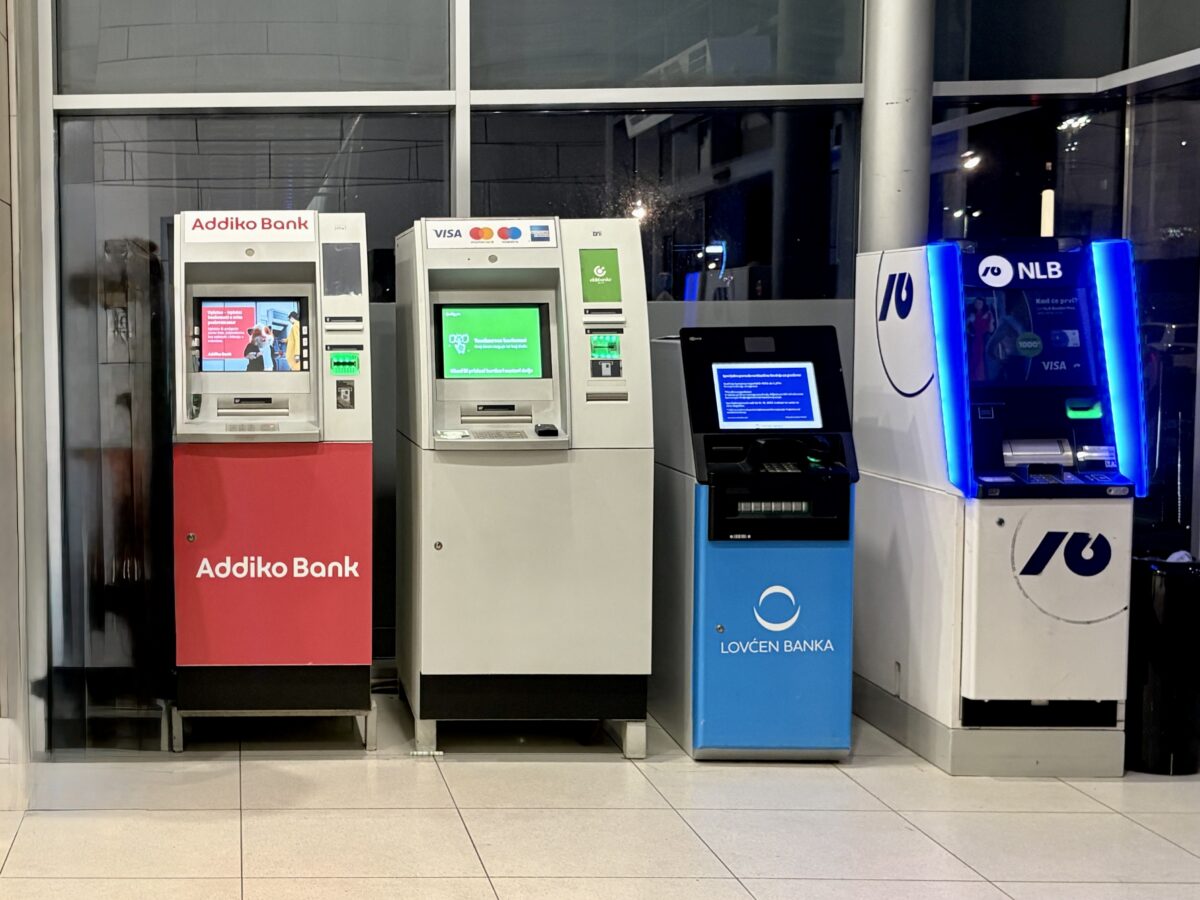
In Podgorica it is common to see several cash machines standing next to each other like a small metallic family. Sometimes three or four banks share the same pavement. It looks like a competition to see which bank can attract the most impatient customers.
There is no special rule that forces banks to place their machines together. It is simply a matter of convenience. Busy areas attract more customers. Banks know this. They place their machines where people walk. If one bank installs a cash machine the others often follow. The result is a cluster of machines that looks like a tiny financial district.
How the euro flows into the country
Since Montenegro does not print its own money the euro enters the country through several channels. Commercial banks import cash from their parent institutions abroad. Tourists bring euro in their wallets. Businesses receive euro payments from international partners. The central bank coordinates the logistics but the actual money comes from outside.
This system works because Montenegro is small and its economy is open. The demand for cash is predictable. The banks know how much they need. The central bank ensures that everything runs smoothly. It is not a perfect system but it is stable enough to keep the country functioning.
In conclusion
Montenegro’s monetary situation is unusual but surprisingly efficient. The country uses the euro without being in the EU. It has a central bank that supervises but does not print. It has cash machines that gather in friendly groups. It has a financial system that works through cooperation rather than sovereignty.
When Montenegro eventually joins the EU the situation will become more official but not very different. The euro is already part of daily life. The country has built its economy around it.
If you enjoy stories of practical solutions and quiet improvisation Montenegro’s monetary system is a charming example. It shows that sometimes the simplest approach is the one that works best.