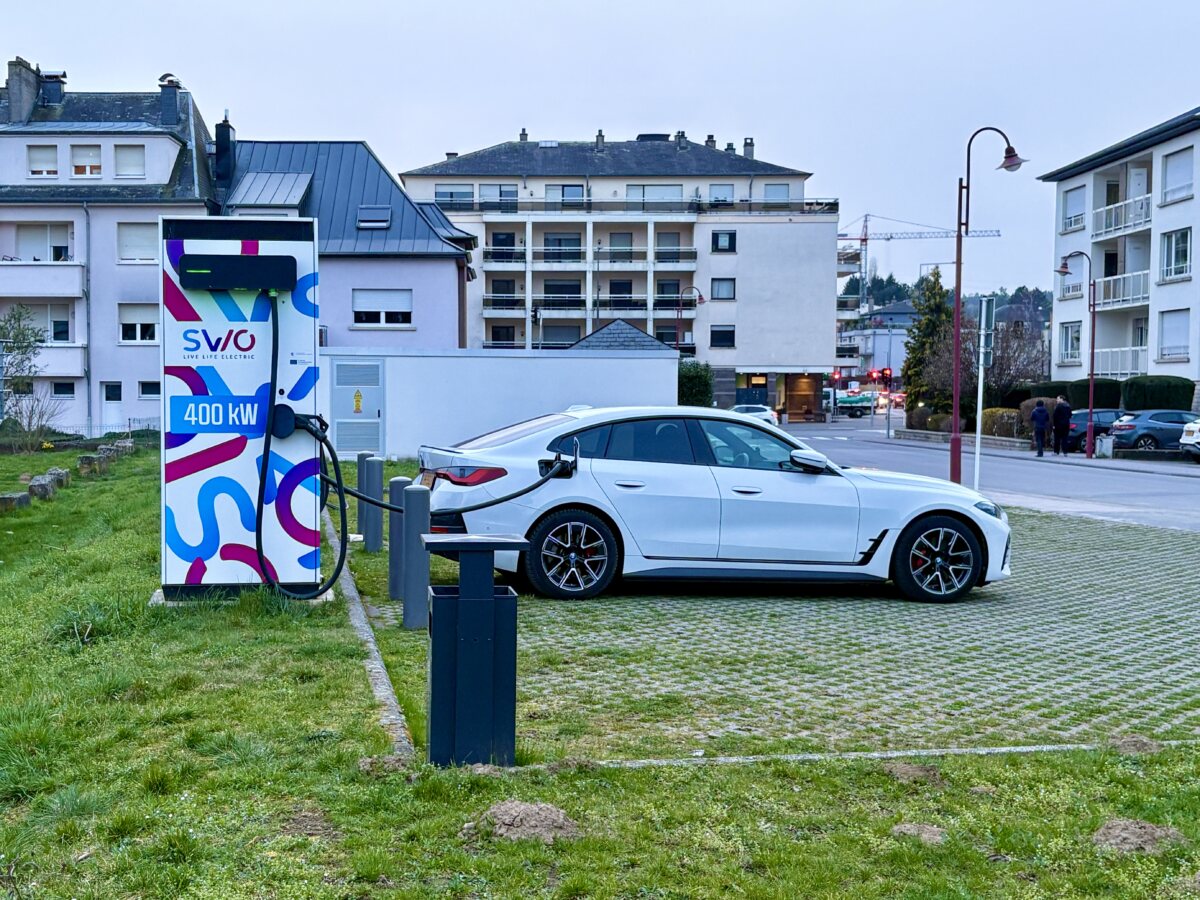
The 400 kW charger in Bereldange, Luxembourg
In front of Losch Bereldange there is a 400 kW charger. It is one of the fastest public chargers in Luxembourg. It looks like a machine that could power a small village. It promises lightning speed. It whispers sweet dreams of a full battery in minutes.
Then reality arrives with a gentle tap on the shoulder.
Most electric cars cannot take anything close to 400 kW. The number is technically correct but practically irrelevant for many drivers. It is a bit like owning a blender that can crush diamonds. Impressive but not very useful on a normal Tuesday.
Are there even stronger chargers?
There are a few experimental chargers in the world that go beyond 400 kW. Some reach 500 kW or even more. They are usually part of pilot projects or used for heavy duty vehicles. They are not common and they are not something you will find next to your local supermarket.
For normal drivers the 350 to 400 kW range is already the top tier. Anything above that is still in the future or in a laboratory where engineers drink too much coffee.
Why cars rarely reach these speeds
Even if the charger is ready to unleash its full power the car often is not. Only a handful of models can take more than 250 kW. Many cars peak at 120 to 150 kW. Some stay far below that. The battery chemistry sets the limit. The cooling system sets another limit. The software sets a third limit. The car is basically full of polite excuses.
Fast charging is also stressful for the battery. Manufacturers know this. They prefer to protect the battery instead of impressing you with a big number for five minutes. It is a long term strategy that saves them warranty claims and saves you from buying a new battery too soon.
The BMW example
The BMW in the photo charged at around 40 kW for one hour. That is roughly ten times slower than the theoretical 400 kW. It is not a mistake. It is not a sign that the charger is broken. It is simply how batteries behave.
There are several possible reasons.
- The battery may have been cold. Cold batteries charge slowly because the chemical reactions inside them move at the speed of a sleepy snail.
- The owner may have limited the charging speed on purpose. Some drivers do this to protect the battery or because they do not need a fast charge.
- The battery may have been nearly full. Charging slows down a lot once you pass 70 or 80 percent. It is like trying to fill a glass without spilling. The last bit always takes longer.
The physics behind the disappointment
Fast charging requires the battery to accept a lot of energy in a short time. This creates heat. Too much heat damages the battery. The cooling system must work hard to keep everything safe. If the system cannot keep up the car reduces the charging speed.
The battery management software constantly monitors temperature, voltage and health. It adjusts the speed every second. It does not care about your schedule. It cares about not exploding. A reasonable priority.
Why the big chargers still matter
Even if your car cannot use the full 400 kW the charger is still useful. High power chargers can serve several cars at once without slowing down. They also prepare the infrastructure for future models that will charge faster.
Electric vehicles are evolving quickly. What seems excessive today may be normal in a few years. The chargers are ready. The cars will catch up eventually.
A realistic view of charging
Electric charging is not magic. It is chemistry and engineering. Big numbers look exciting but the real world is more modest. Charging speeds depend on temperature, battery level, car model and software. Sometimes you get a fast session. Sometimes you get a slow one. Sometimes you get enough time to drink a coffee and question your life choices.
But the technology keeps improving. Chargers get stronger. Batteries get smarter. Cars get better cooling. The future will be faster. For now we enjoy the progress and accept that even a 400 kW charger cannot bend the laws of physics.
At least not yet.