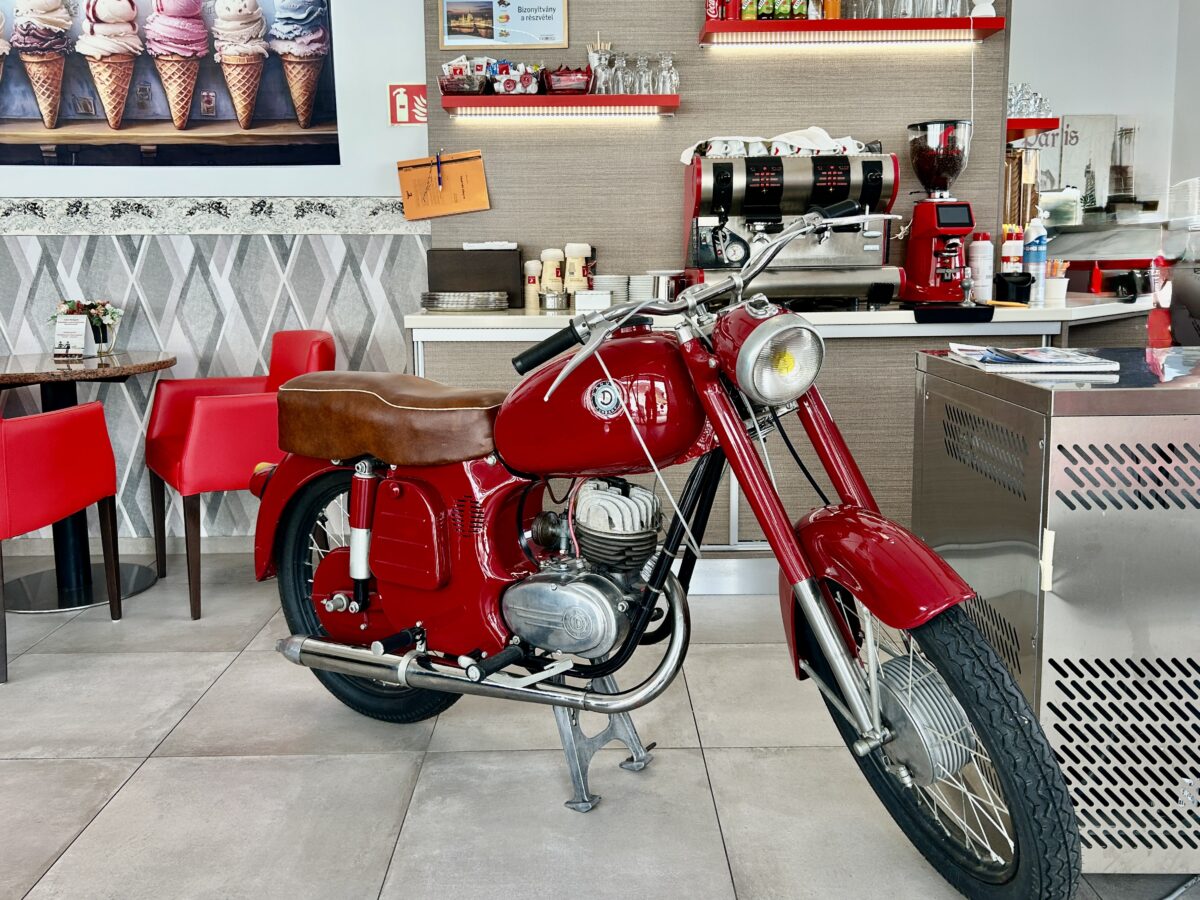
The birth of a Hungarian classic
The Danuvia motorcycle was born in the early 1950s, when Hungary decided it needed its own two-wheeled pride. Production kicked off in 1954, courtesy of the Danuvia Machine Factory in Budapest.
It was not a luxury item. It was built for the average Hungarian who wanted to get from A to B without walking or bribing a horse.
Simple, stubborn and surprisingly stylish
The most famous model was the Danuvia DV 125. It had a 125cc two-stroke engine, a modest top speed, and a sound that could wake the neighbours.
It was reliable, easy to fix, and had just enough chrome to make you feel fancy. Not exactly a speed demon, but it got the job done.
The Pannonia enters the chat
Now, if you were a Hungarian biker in the 1960s, you had two choices: Danuvia or Pannonia. The latter was the cooler cousin.
Pannonia bikes were bigger, with 250cc engines and a bit more flair. They were made by Csepel and had a reputation for being more powerful and slightly more temperamental.
Danuvia was the sensible one. Pannonia was the rebel who wore leather jackets and probably smoked behind the garage.
Production and decline
Danuvia motorcycles were produced until 1966. After that, Hungary shifted focus and the factory moved on to other things.
By then, the Pannonia had taken over the spotlight. Danuvia quietly rolled off into history, leaving behind a loyal fanbase and a lot of fond memories.
The ice cream shop surprise
Fast forward to today, and you can find a beautifully restored Danuvia on display at Kóczán ice cream shop in Bükfürdő.
Yes, really. You go in for a scoop of vanilla and end up face to face with a piece of Hungarian engineering. It is shiny, nostalgic, and probably cleaner than it ever was in the 1960s.