The Porta Nigra: Rome’s Unkillable Gate
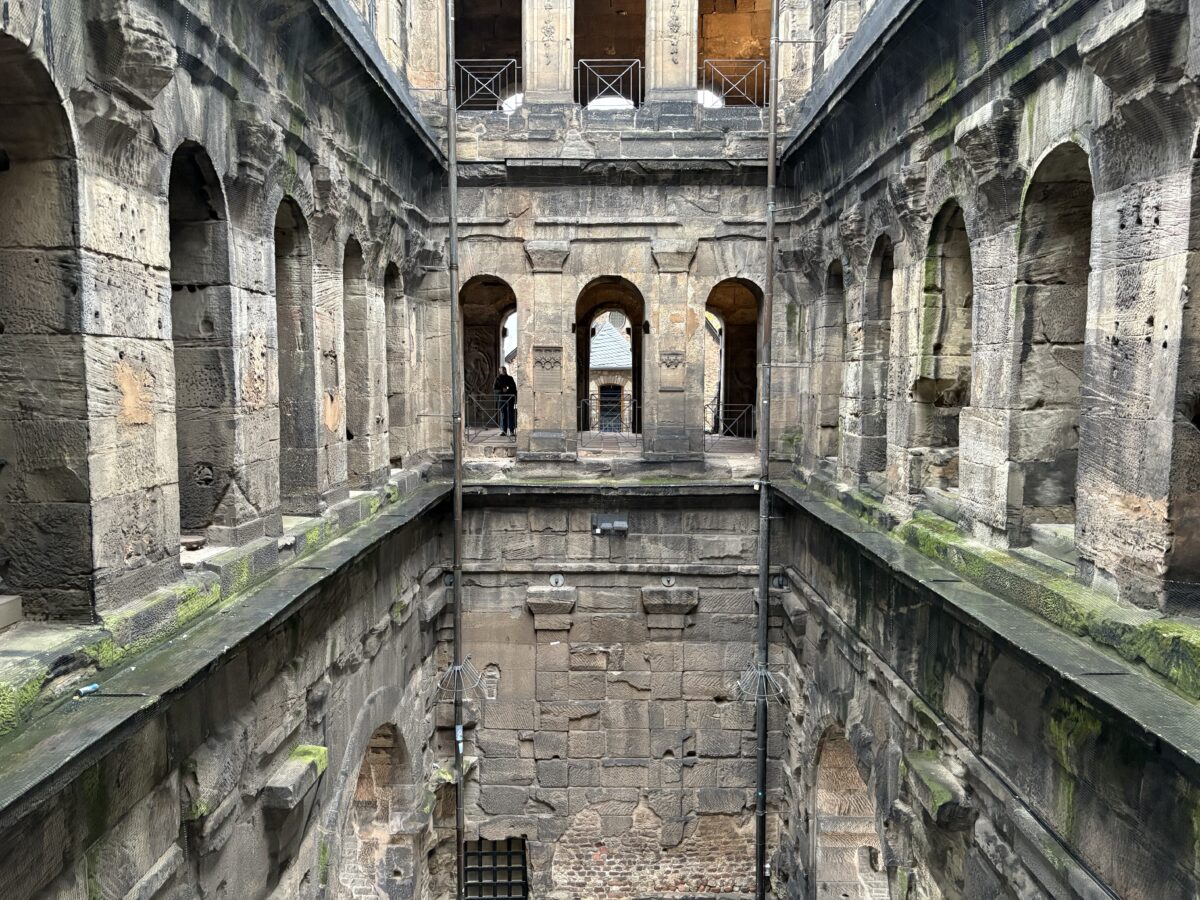
Trier, Germany’s oldest city, is home to a structure so stubbornly durable it makes IKEA furniture look like a house of cards. The Porta Nigra, or “Black Gate,” is a Roman city gate built around 170 AD. That’s right—this thing has been standing for nearly 1900 years, surviving wars, weather, and tourists with selfie sticks.
While most of us struggle to keep a potted plant alive for a month, the Romans built a gate that’s outlasted empires and world wars. How? Let’s break it down.
Roman Concrete: The Original Superglue
The secret to the Porta Nigra’s longevity isn’t magic. It’s Roman concrete. Unlike the flimsy stuff we use today, Roman concrete was a mix of volcanic ash, lime, and seawater. This cocktail didn’t just harden. It got stronger over time, especially when exposed to water. Modern scientists are still trying to reverse-engineer it, probably while muttering, “Why did we ever stop doing this?”
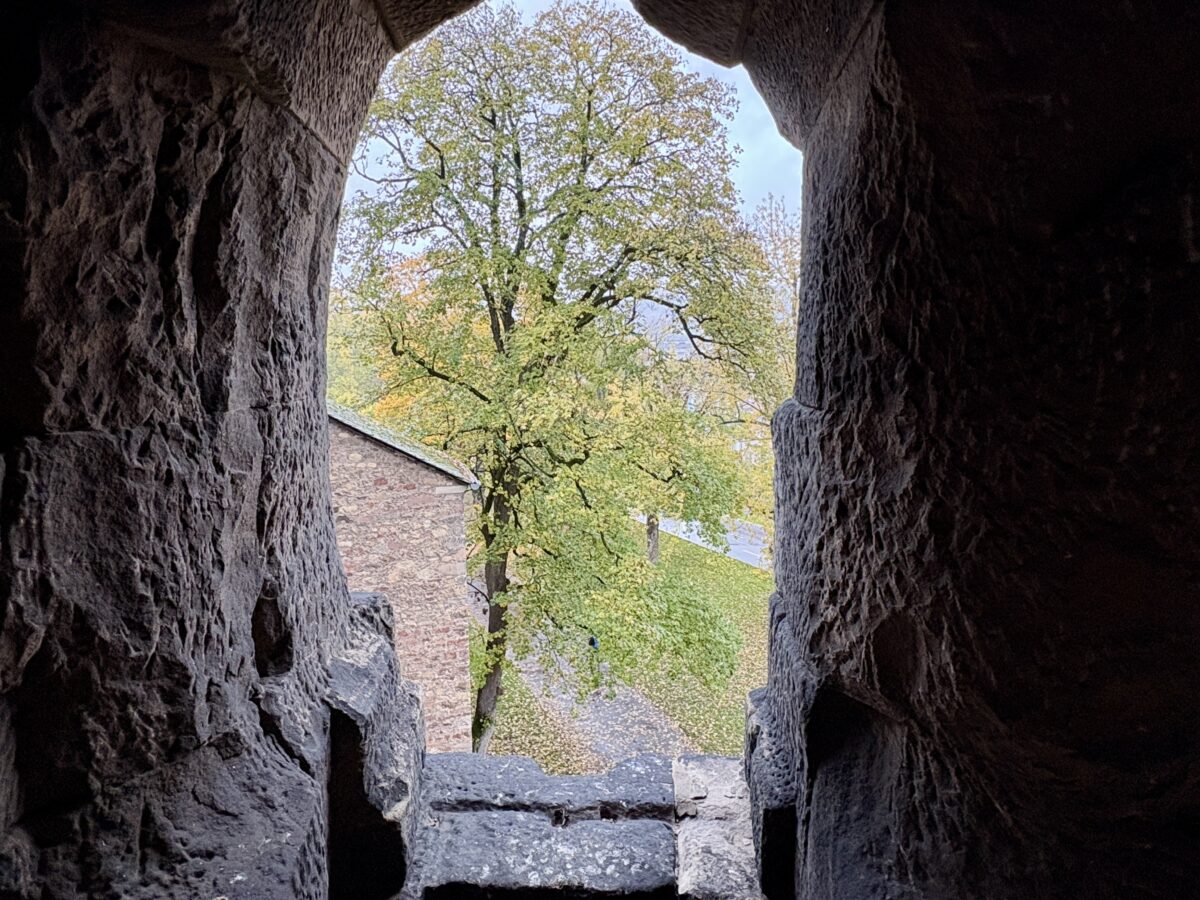
The Porta Nigra’s stones were held together with iron clamps, not just mortar. This meant the structure could flex slightly without collapsing, like a gymnastic grandma doing yoga. When earthquakes or invasions tried to knock it down, the Porta Nigra just shrugged and stayed put.
Built to Last (Unlike Modern “Luxury” Apartments)
The Romans didn’t believe in planned obsolescence. They built things to last forever, or at least until someone invented a better siege engine. The Porta Nigra was part of Trier’s city walls, designed to impress visitors and deter attackers. Its massive sandstone blocks, some weighing over six tons, were hauled into place without cranes or power tools. Just slaves, pulleys, and sheer Roman determination.
Today, we marvel at skyscrapers that start leaning after a decade. The Porta Nigra has been leaning slightly since the Middle Ages, and it’s still not bothered.
From Gate to Church to Tourist Magnet
The Porta Nigra hasn’t just survived. It’s adapted. In the 11th century, a Greek monk named Simeon moved into the gate and turned it into a church. The upper floors were converted into a chapel, and the gate was renamed “Porta Sancti Simeonis” (Gate of Saint Simeon).
By the 19th century, Napoleon ordered the Porta Nigra to be restored to its original Roman glory. The church additions were stripped away, and the gate became a symbol of Trier’s ancient past. Today, it’s a UNESCO World Heritage Site and a must-see for anyone who appreciates things that don’t fall apart after five years.
Why Can’t We Build Like This Anymore?
Good question. The short answer is money. Roman buildings were expensive, labour-intensive, and required materials we now consider “too much effort.” Modern construction prioritises speed and cost-cutting over durability. We’d rather build something cheap and replace it in 20 years than invest in a structure that lasts millennia.
There’s also the small matter of expertise. Roman engineers were masters of physics, materials, and sheer trial and error. Today, we outsource our engineering to algorithms and hope for the best. The Porta Nigra is a humbling reminder that sometimes, the old ways were better.