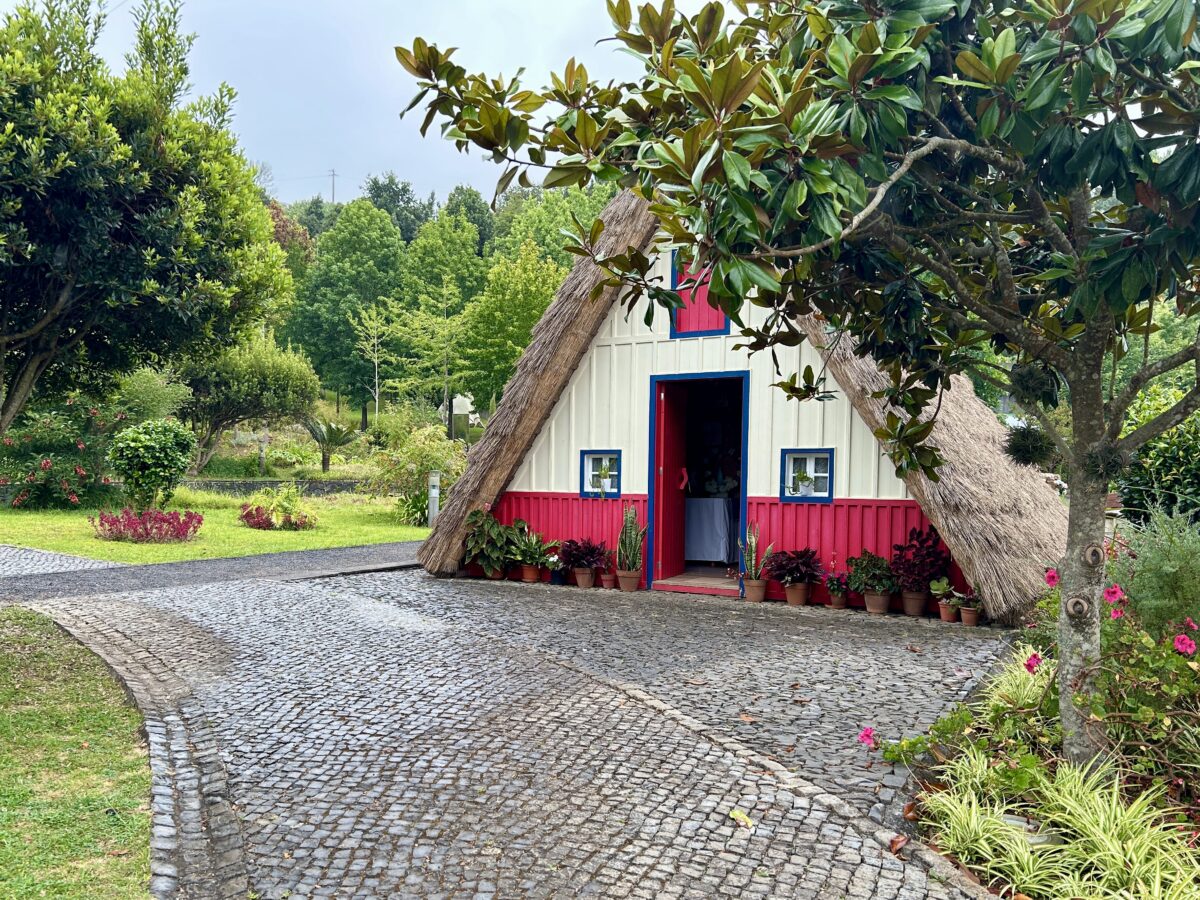
Nestled within the picturesque landscapes of Madeira, the triangular houses, also known as casas de colmo, are a symbol of the island’s rich cultural heritage. These charming structures have their unique architectural style that captivates visitors. Though prominently displayed in the Madeira Theme Park in Santana, these houses can be spotted in various locations across the island.
Architectural Structure and Design
The triangular houses of Madeira are easily recognisable by their steep, thatched roofs that form an A-frame. This simple yet robust design was traditionally constructed using natural materials readily available on the island, such as thatch for the roofing and local timber for the framework. The characteristic A-frame shape was not only aesthetically pleasing but also practical, as it facilitated the swift runoff of rainwater and offered protection against the island’s often harsh weather conditions.
Size and Space
Typically, these triangular homes were modest in size, reflecting the needs and resources of the Madeiran people in bygone days. With their compact design, these houses usually comprised two floors. The ground floor served as the main living area and kitchen, while the upper floor was often used as a sleeping space. Despite their limited size, these homes were ingeniously designed to maximise space and comfort, ensuring functionality within a small footprint.
Living Conditions in Historical Times
Living conditions in these traditional houses were simple and practical. Madeiran families adapted to the limited space by making the most of the multifunctional areas. The thatched roofs provided insulation against both heat and cold, offering a comfortable living environment throughout the year. The homes symbolised resilience and resourcefulness, as families crafted their furniture by hand and utilised every available space efficiently.
Modern Adaptations
In recent years, there has been a resurgence of interest in the traditional triangular houses of Madeira, leading to modern adaptations of their design. Some architects and homeowners have embraced the iconic A-frame structure, blending it with contemporary elements to meet modern living standards. These adaptations may include the use of sustainable materials, larger windows for increased natural light, and more spacious interiors to cater to modern needs. While preserving the traditional aesthetic, these homes often incorporate modern amenities and technologies, creating a harmonious blend of old and new. This revival not only helps in preserving Madeira’s architectural heritage but also promotes eco-friendly living solutions.