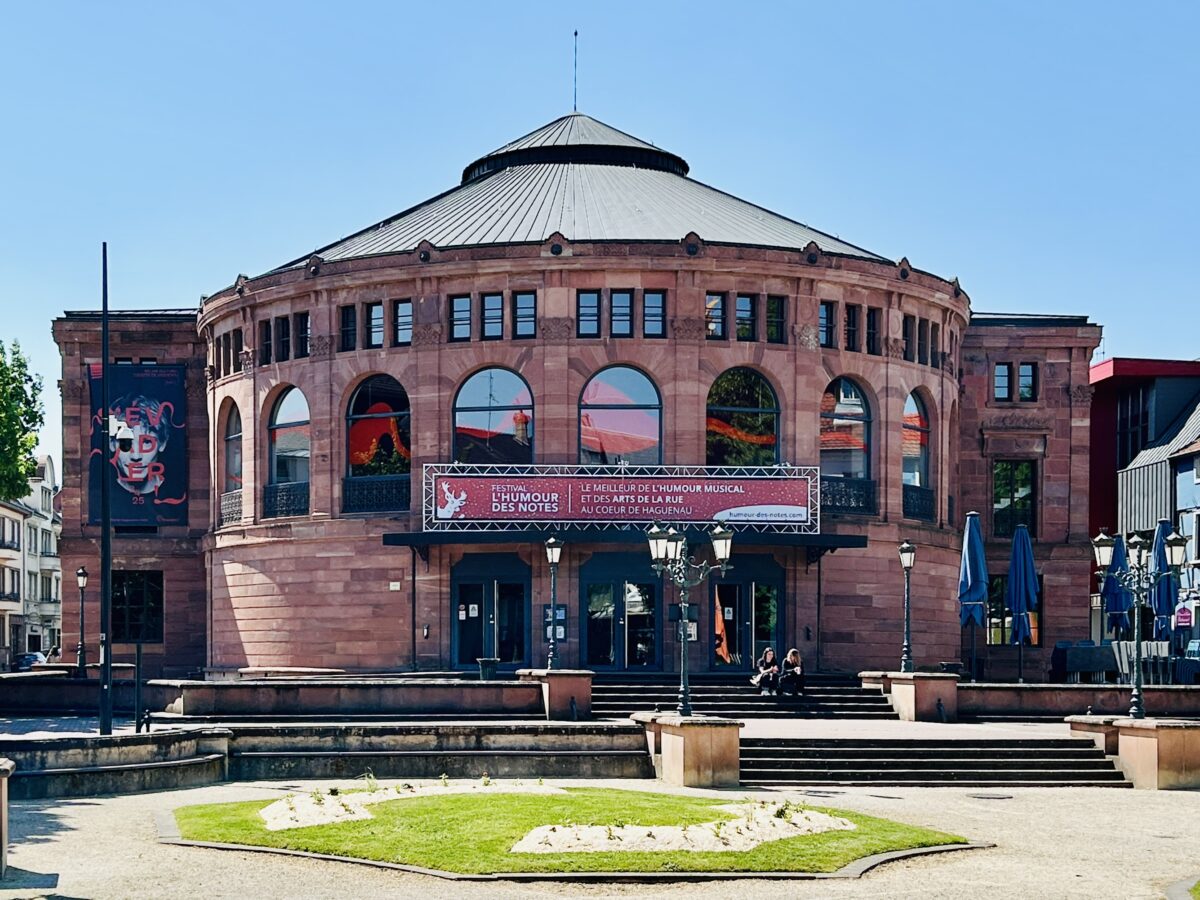
The Theatre of Haguenau is a remarkable example of architectural ingenuity and cultural dedication. Built between 1842 and 1846 by architect Charles Morin, this theatre is one of the few Italian-style theatres in Alsace, alongside those in Strasbourg, Colmar, and Mulhouse.
Its façade, crafted from Vosges sandstone, exudes a timeless elegance, while its metallic internal structure was revolutionary at the time, marking it as the first iron-framed building in Haguenau—constructed ten years before the arrival of the railway. The theatre’s rotonde design, inspired by classical amphitheatres, enhances acoustics and audience immersion, making it a true architectural masterpiece.
A Rich History
Following the French Revolution, Haguenau repurposed an old hospice into a performance venue. However, by 1838, the need for a dedicated theatre became evident, leading to the construction of the current building. The theatre underwent a major renovation in 2005, ensuring modern comfort while preserving its historic charm. It has been listed as a Monument Historique since 1995, cementing its status as a cultural landmark.
The Repertoire and Cultural Scene
The Theatre of Haguenau hosts around 100 performances annually, ranging from classical theatre and contemporary plays to concerts and family-friendly shows. It also serves as a venue for local associations, music schools, and festivals, including the renowned Festival du Houblon.
Compared to Strasbourg, Haguenau’s cultural scene is much smaller yet equally diverse. While Strasbourg boasts grand opera houses and international productions, Haguenau offers a community-driven artistic experience, fostering local talent and engaging audiences in a more personal setting. The theatre’s eclectic programming ensures that Haguenau remains a vibrant cultural hub, complementing the larger artistic landscape of Alsace.