Born into Grandeur
Prince Miklós Esterházy was born on 12 December 1765 into a life most people only dream of. His family owned one of Hungary’s most lavish estates, and he didn’t waste time playing modest. Fertőd Palace, often called the Hungarian Versailles, was his backdrop.
The Patron with a Taste for Greatness
Miklós wasn’t just a noble with a fancy title. He was a patron of the arts with proper commitment. He funded Joseph Haydn, which alone earns him endless applause and the odd music geek’s undying gratitude. The palace under his rule became a hotspot for creativity and high-society show-offs who pretended to understand sonata form.
Not Just Music, But Influence
Beyond music, Miklós dabbled in education, politics and probably a bit of aristocratic scheming, as tradition required. He kept the Esterházy name well polished, much like the furniture in his mansion. If there was a cultural initiative in Hungary, chances are he had a hand in it or at least someone on staff who did.
The Statue with a Story
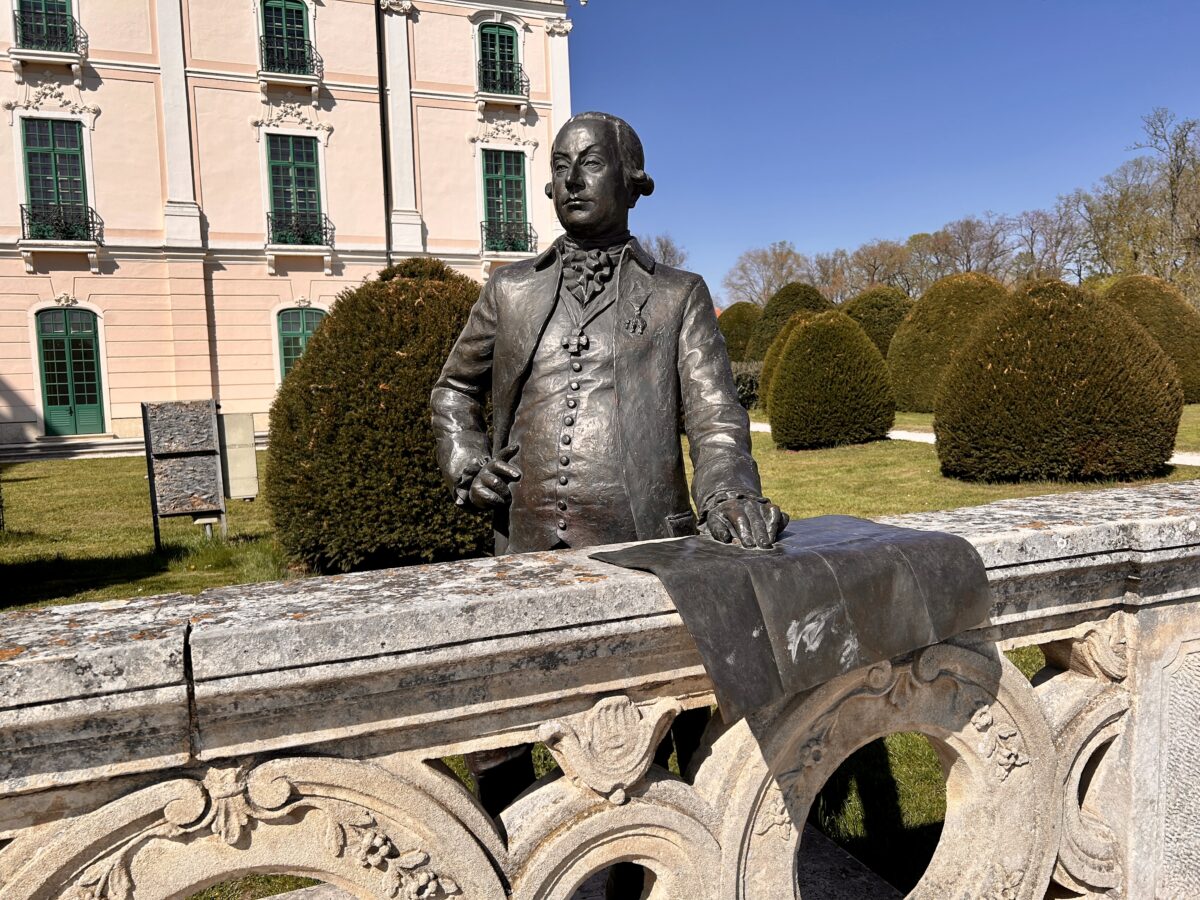
His statue now stands in the garden of Esterházy Palace. It’s a fitting tribute to someone who spent a lifetime making the place culturally iconic. You could say he earned his marble moment. Though if statues could speak, this one might request a better hat.
260 Years Later
On this 260th anniversary of his birth, it’s worth stopping to remember Miklós. Not just for the posh surroundings, but for the way he shaped Hungarian cultural life. He helped music flourish, made sure the palace was more than a pretty façade, and quite likely threw some excellent parties.