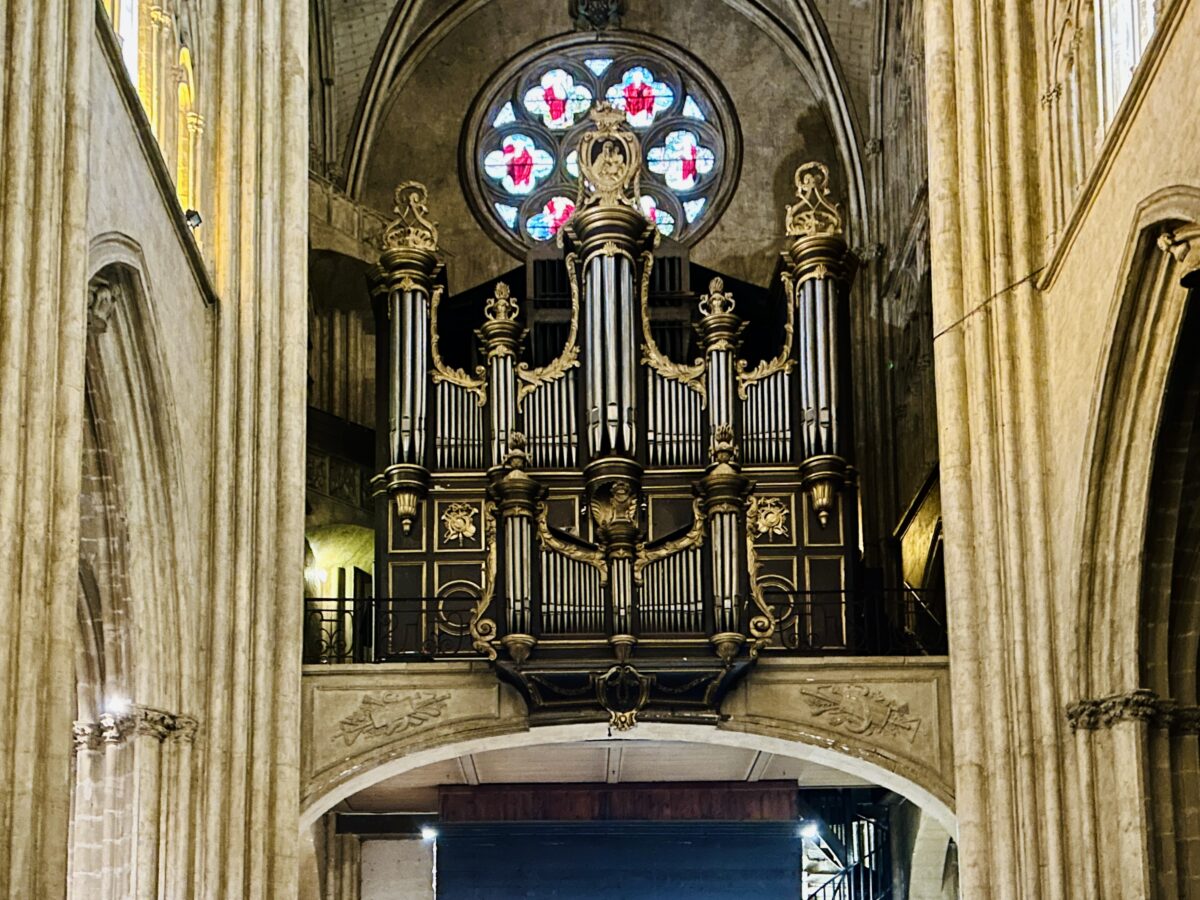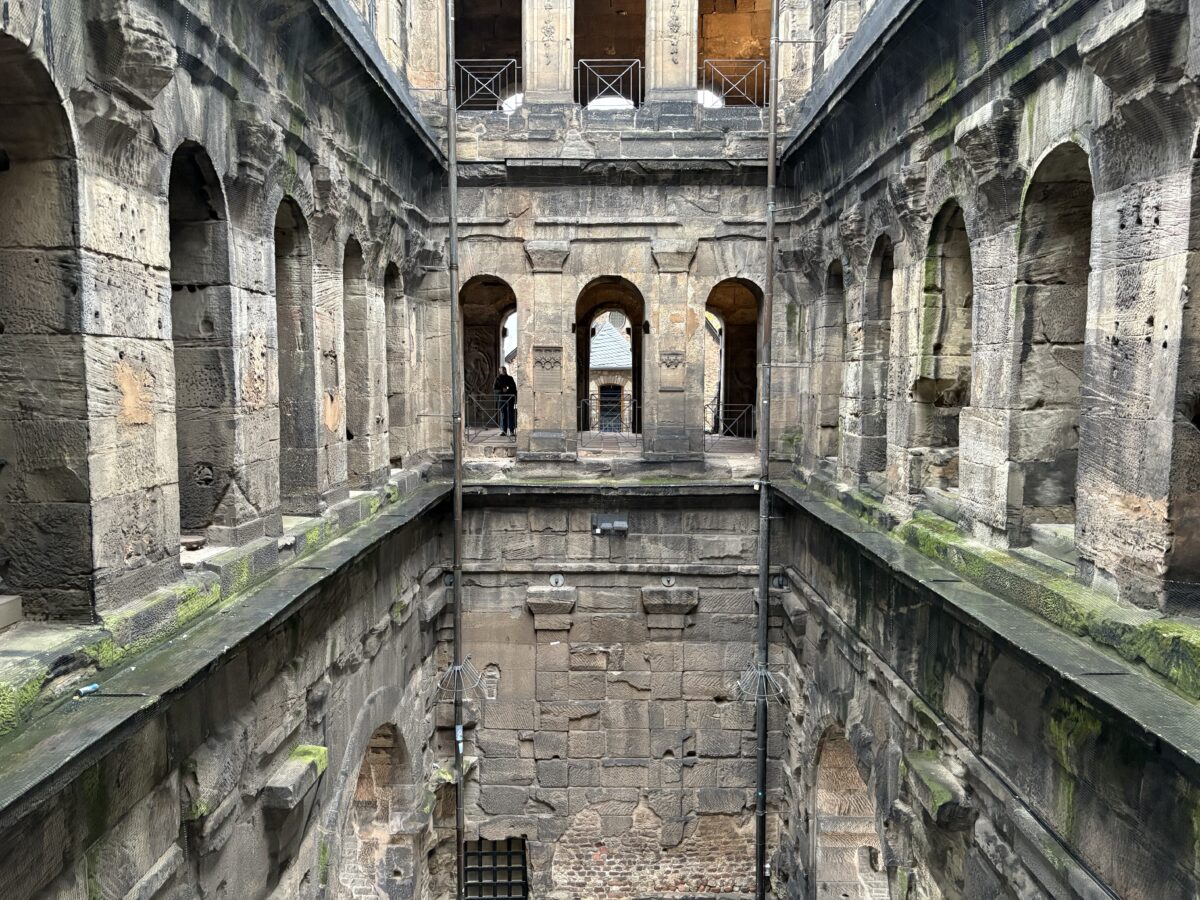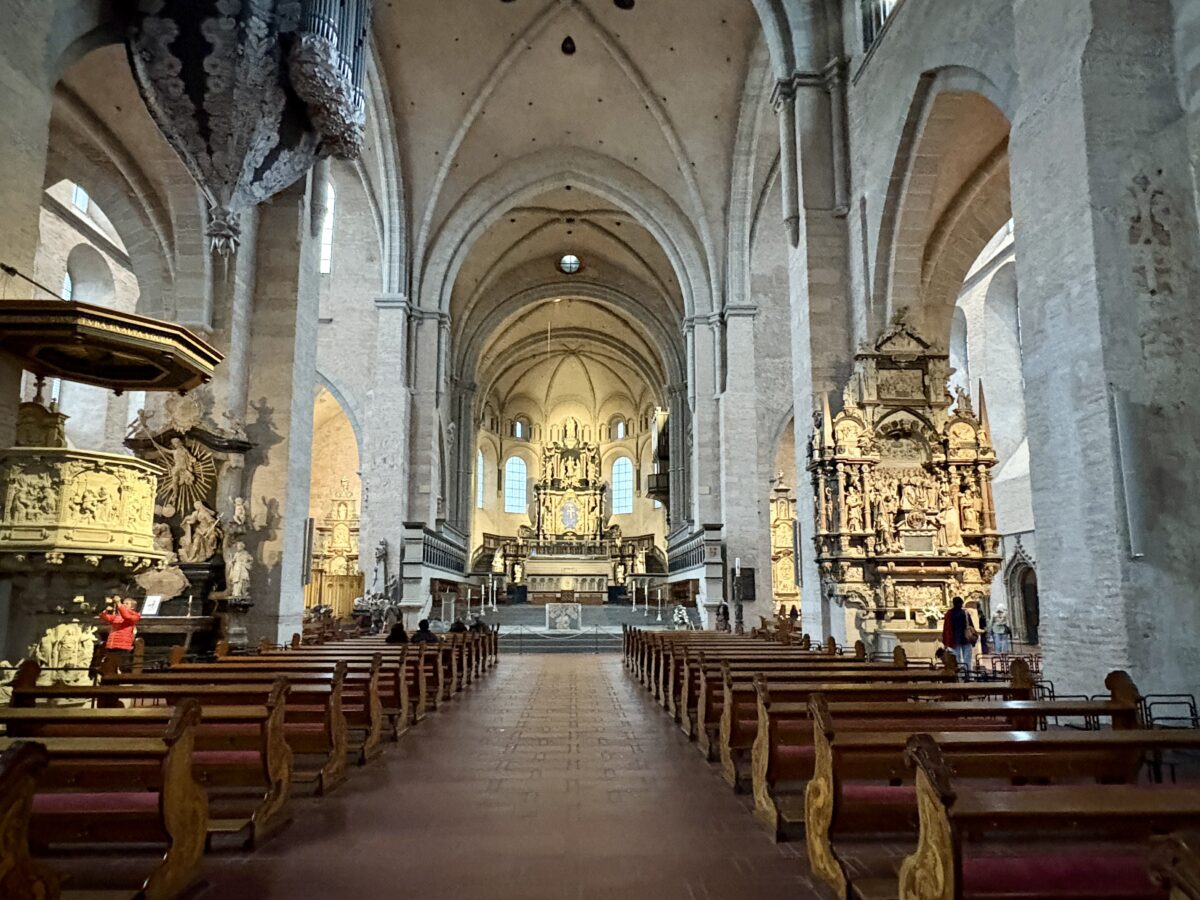
The interior of Trier Dom is a curious blend of styles that somehow manage to coexist without starting a medieval argument. The building is one of the oldest cathedrals in Germany and its inside reflects this long history. You walk in and immediately feel that the place has been rebuilt, expanded and reimagined more times than anyone cares to count.
The space is large and solemn. The stone pillars rise with confidence. The walls carry traces of Roman foundations, early medieval rebuilding and later baroque enthusiasm. It is a cathedral that never stopped evolving which is charming in its own slightly chaotic way.
A Roman core that refuses to disappear
The heart of the cathedral goes back to Roman times. The original structure was part of a huge church complex built in the fourth century. Much of that ancient stonework still forms the core of the building. You can see the massive walls and the heavy pillars that look like they were designed to survive an empire or two.
This Roman skeleton gives the interior a sense of weight and permanence. It also explains why the proportions feel different from later medieval cathedrals. The space is broader and more monumental. It is less about soaring height and more about solid presence.
Medieval rebuilding with ambition
After the fall of Rome the cathedral went through several rounds of rebuilding. Fires, wars and the usual medieval misfortunes forced the community to repair and expand the structure. The result is a mixture of Romanesque and early Gothic elements that blend into the older Roman core.
The arches became more pointed. The windows grew taller. The interior gained a rhythm that feels more medieval than antique. Yet the Roman massiveness never fully disappeared. The two styles sit together like distant relatives who tolerate each other at family gatherings.
Baroque enthusiasm enters the chat
In the seventeenth and eighteenth centuries the cathedral received a generous dose of baroque decoration. This included new chapels, sculptural elements and decorative details that brought a sense of theatricality to the interior.
The baroque additions soften the earlier austerity. They add curves, ornaments and a touch of drama. Some visitors love this contrast. Others wonder if the baroque architects got a bit carried away. Either way it gives the cathedral a layered personality that is hard to forget.
A structure built in layers
Walking through the interior feels like moving through time. Each section tells a different story. The Roman walls whisper about emperors. The medieval arches speak of bishops and pilgrims. The baroque chapels hint at a period when decoration was considered a spiritual duty.
The cathedral is not a single architectural statement. It is a collection of statements made over many centuries. This is what makes it fascinating. It is a building that grew with the city and adapted to every era without losing its identity.
Spaces that invite reflection
Despite the mixture of styles the interior has a calm atmosphere. The stone absorbs sound. The light enters softly through the windows. The side chapels offer quiet corners for reflection. The main nave feels both ancient and alive.
Visitors often pause to take in the scale of the place. The cathedral does not overwhelm with height but with history. You feel the weight of centuries in every pillar and arch.
The interior of Trier Dom is a journey through European architectural history. It is not perfect or uniform. It is better than that. It is honest. It shows how a sacred space can grow, adapt and survive through countless generations.