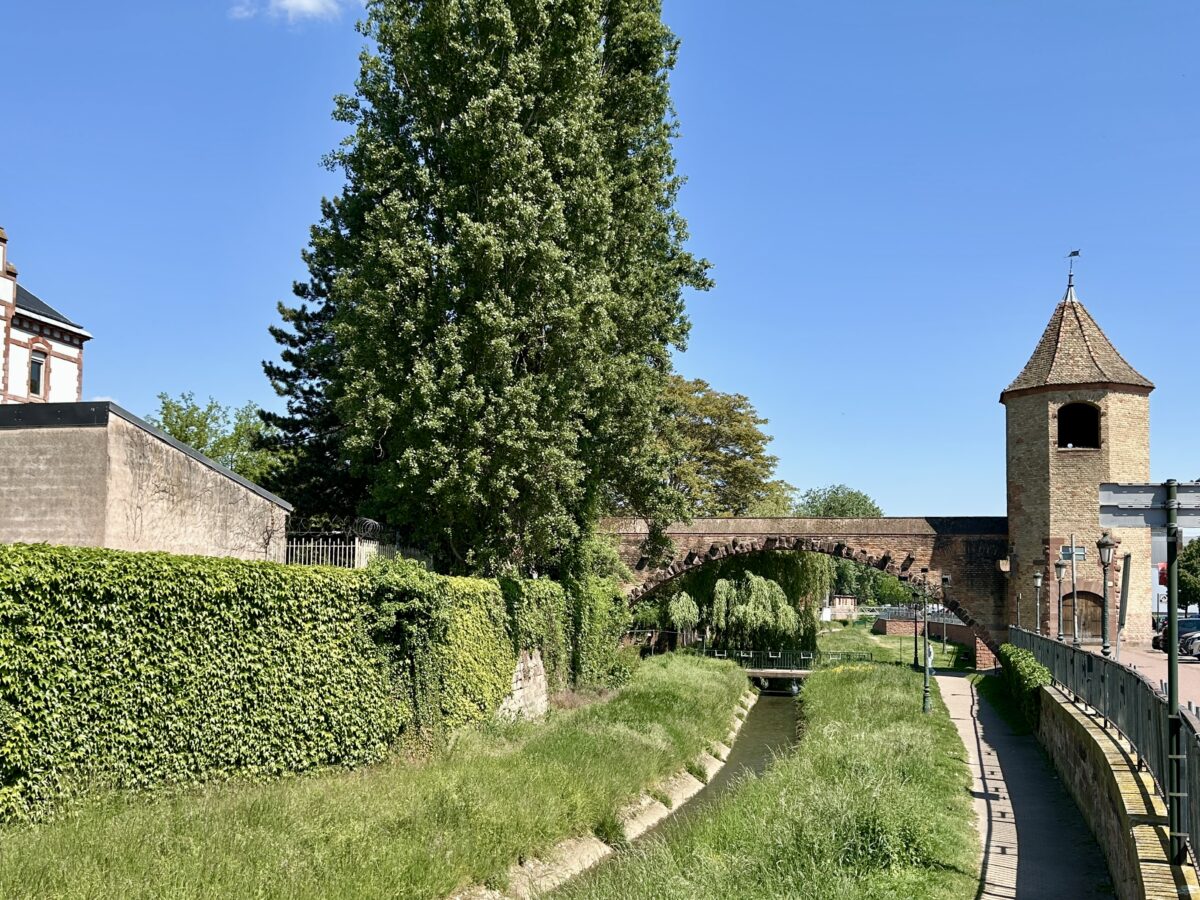
Nestled in the charming town of Haguenau, France, the Tour des Pêcheurs is a medieval tower. This historic monument, classified since 1923, stands as a testament to the town’s rich past and architectural heritage.
A Glimpse into History
The Tour des Pêcheurs was constructed between 1228 and 1235, during a period when Haguenau was a flourishing centre of commerce and defense. Originally built to regulate access to the town via the Moder river, the tower played a crucial role in securing the city’s waterways. Its distinctive octagonal shape and sturdy stonework reflect the craftsmanship of medieval builders, blending functionality with aesthetic appeal.
Over the centuries, the tower underwent several modifications, particularly in the 16th and 17th centuries, adapting to the evolving needs of the town. Despite these changes, it has retained its historical essence, making it a fascinating site for history.
Architectural Significance
One of the most remarkable features of the Tour des Pêcheurs is its arched passageway, which once served as a gateway controlling river access. The lower levels of the tower, built with brick and sandstone blocks, date back to the 13th century, while the upper sections were added later, showcasing a blend of medieval and Renaissance influences.
The tower’s strategic location on the Quai des Pêcheurs offers picturesque views of the Moder River, making it a perfect spot.
A Cultural Hub
Beyond its architectural splendour, the Tour des Pêcheurs has become a cultural landmark in Haguenau. During the summer months, the area around the tower hosts “Le Rendez-vous de la Tour”, an event featuring concerts, exhibitions, and interactive workshops. This initiative breathes new life into the historic site, allowing locals and tourists to engage with its legacy in a dynamic way.