Why Are Teddy Bears Suddenly Everywhere at Christmas
Teddy bears have quietly marched into the Christmas season like uninvited guests who somehow ended up on the family photo. They are cute. They are fluffy. They look innocent. Yet no one can clearly explain why they are now sitting next to Santa as if they have always been part of the tradition.
The truth is that teddy bears have no deep historical link to Christmas. They did not appear in the Nativity scene. They did not help the Three Kings. They did not even bring snacks. Their only real qualification is that they make people go aww which is apparently enough to earn them a seasonal contract.
Where Did This Trend Even Start
The rise of teddy bears in Christmas décor seems to come from a mix of toy shop marketing and the general human weakness for anything soft and photogenic. Department stores in the early twentieth century discovered that placing oversized plush animals in their winter displays made children drag their parents inside. This was excellent for business. So the bears stayed.
From there the idea spread. Shopping centres copied each other. Cities copied shopping centres. Soon teddy bears were everywhere. No ancient culture started this. No folklore demanded it. It was simply a clever commercial trick that worked a bit too well.
Famous Examples Around the World
If you think this trend is limited to small European shopping centres think again. Some of the biggest cities have embraced the teddy bear invasion with enthusiasm that borders on suspicious.
In New York giant teddy bears appear every year in the holiday windows of major department stores. Macy’s and Saks Fifth Avenue have both used plush animals in their displays. They usually sit next to elves and oversized sweets pretending they belong there. People queue to take photos which proves the marketing teams knew exactly what they were doing.
In London Harrods has turned the Christmas teddy bear into a minor celebrity. They release a special Christmas bear every year. See the 2025 version here. It costs the bagatelle of around 50 euros. Not bad for a bear roughly the height of an A4 sheet of paper. And it is by the way out of stock which shows that people will buy anything if it looks at them with big round eyes.
These examples show that teddy bears have become a global Christmas accessory. Not because of tradition but because they sell the dream of a cosy winter even if the weather is miserable and the shopping bill is not.
The Commercial Logic Behind the Cuteness
Teddy bears are safe. They offend no one. They do not require explanation. They do not melt like chocolate decorations. They do not break like glass baubles. They are also very good at appearing in photos which is the real currency of modern Christmas.
Marketers know that people love to take pictures with something adorable. A giant teddy bear is basically a guaranteed social media post. And every post is free advertising. So the bears keep multiplying like festive rabbits.
The Luxembourg Example at Belle Étoile
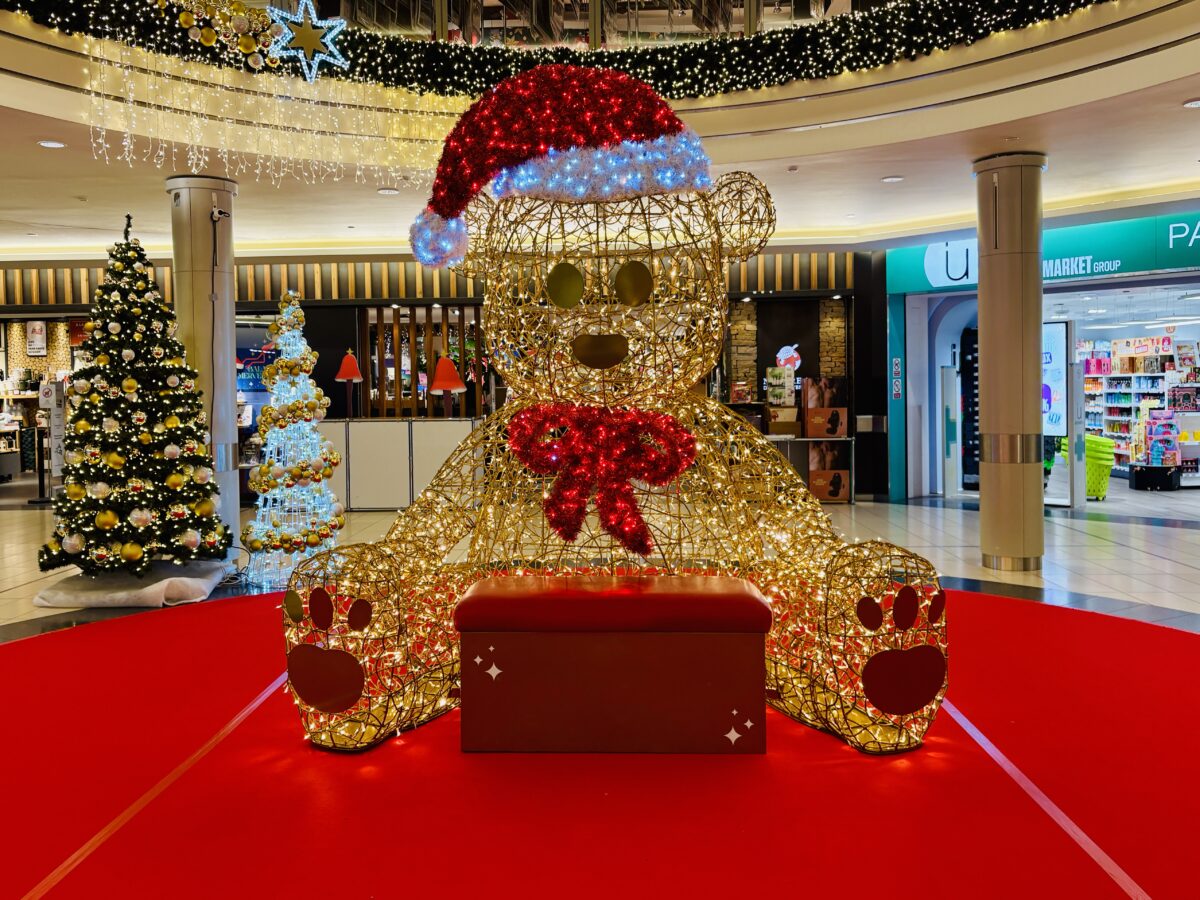
If you visit the Belle Étoile shopping centre in Luxembourg you will meet one of these seasonal celebrities. A giant teddy bear sits proudly in the corridor. It comes with a big box shaped bench where families can take pictures. It is charming in a slightly surreal way. You sit on a gift box next to a bear that looks like it is silently judging your Christmas jumper.
The bear has no story. It has no connection to Luxembourgish tradition. It is simply there to make people smile and to encourage them to stay a bit longer and maybe buy something. And to be fair it does its job very well.
Do Teddy Bears Belong to Christmas Now
Whether we like it or not teddy bears have become part of the modern Christmas landscape. They are not traditional but they are harmless. They bring a bit of warmth to the cold season. They also remind us that Christmas today is a mix of nostalgia and clever marketing.