A Small Car with Big Ambitions
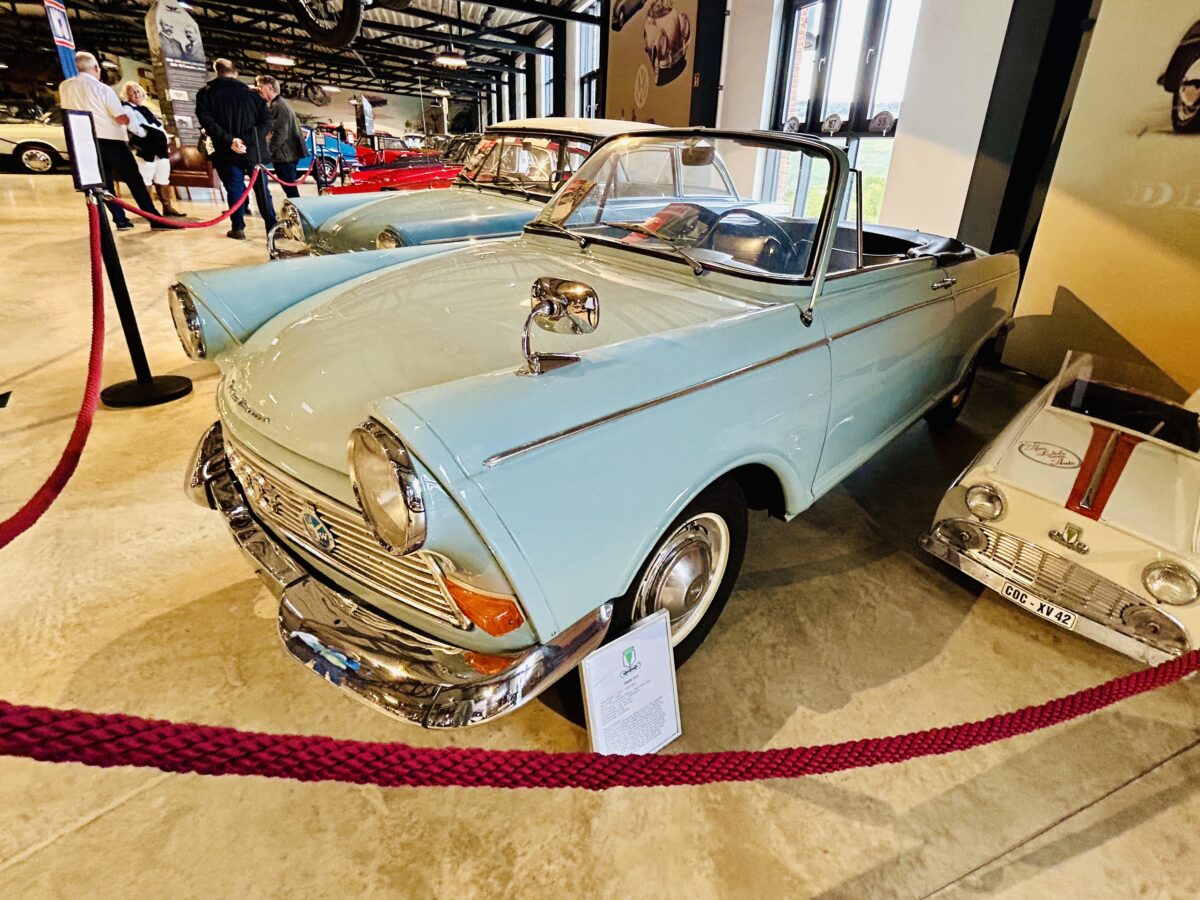
The DKW F 12 was built between 1963 and 1965 by Auto Union in Ingolstadt. It followed the DKW Junior and was designed to be a more refined version. At the time, it faced strong competition from the Opel Kadett, which had just entered the market.
The F12 stood out with a larger front grille, bigger windows at the front and back, and new rear lights. It also had a longer wheelbase—by 75 mm, which gave it a slightly more stable ride. Despite these changes, the basic frame and suspension were still based on the Junior.
Under the Bonnet
The F 12 came with a 3-cylinder two-stroke engine, producing either 40 or 45 horsepower from an 889 cc engine. It had a 4-speed gearbox operated from the steering column and could reach speeds of up to 130 km/h. It wasn’t a sports car, but it was quick enough for its size and time.
One special feature was its front disc brakes, which were mounted inside the wheels—a clever design for better braking performance.
The Cabriolet Version
In 1963, a small number of F 12 Cabriolets were made, with bodies built by Baur in Stuttgart. These open-top versions were stylish but rare. Only 6,640 were sold during their short production run.
A Fancy Image with a Smoky Tail
Back then, people called the F 12 the “Mercedes of small cars” because of its comfort and build quality. But its two-stroke engine left a trail of blue smoke, which didn’t quite match its classy image.
In early 1965, the F 12 got a slightly bigger 900 cc engine with 45 horsepower, making it a bit faster. Still, the end was near.
The End of the Line
By mid-1965, production of the F 12 and other small DKW models stopped. That same year, the Audi name was brought back. When Volkswagen took over Auto Union, they ended the production of two-stroke cars completely in March 1966 with the last DKW F 102.
See It at the Zylinderhaus
Today, you can admire the DKW F 12 at the Zylinderhaus museum in Bernkastel-Kues. The museum is known for its beautiful collection of classic German cars and offers a great chance to see this little piece of motoring history up close.