The story behind the column
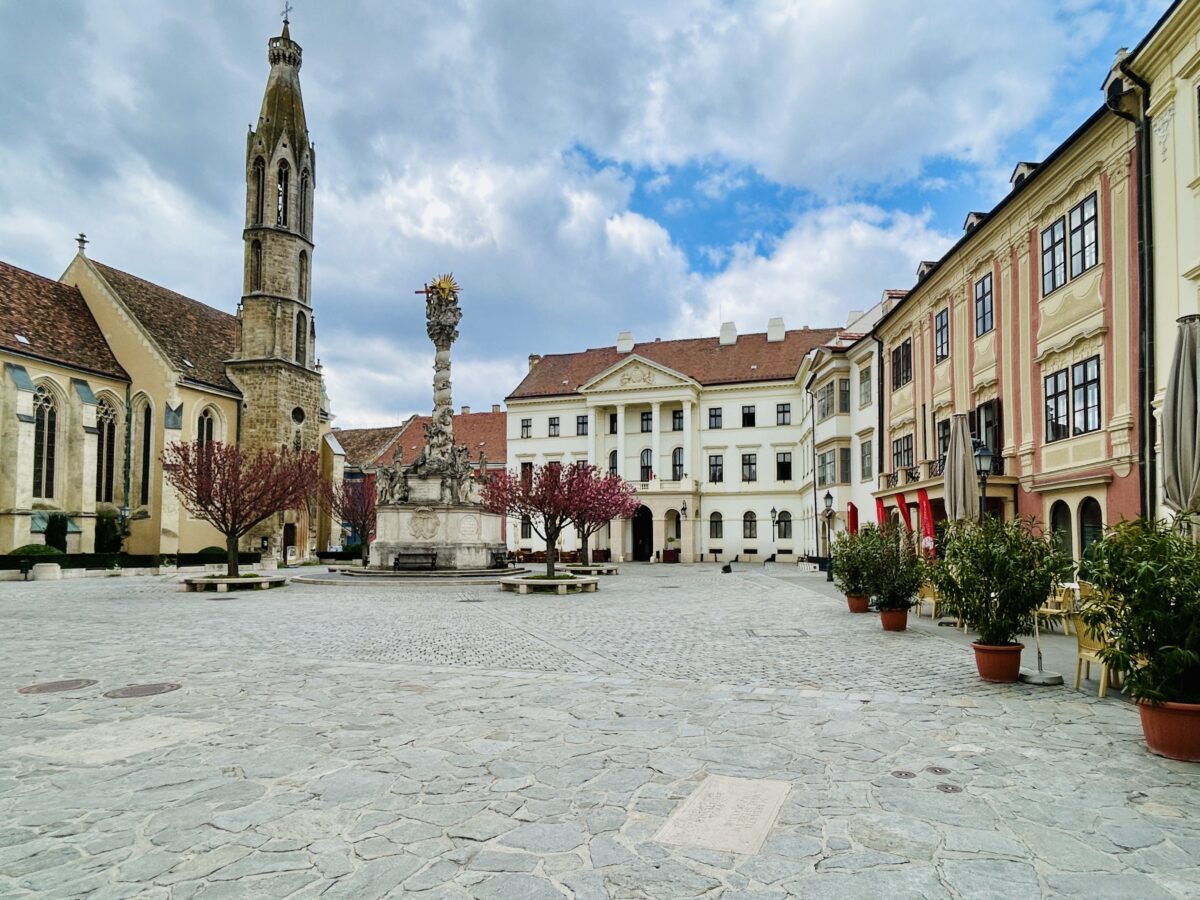
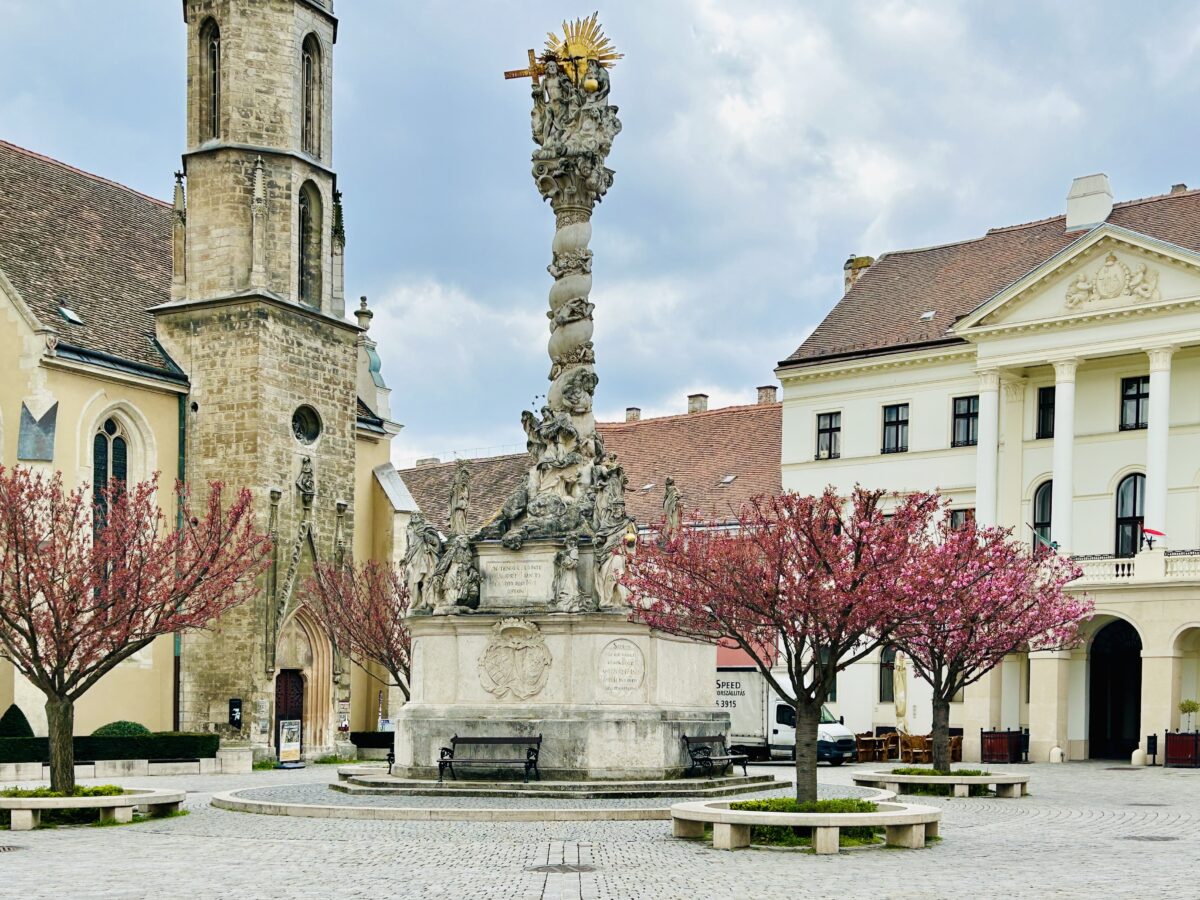
The Holy Trinity Column in Sopron is not just a pretty ornament in the Main Square. It was erected in 1701 as a votive monument after the town survived a devastating plague epidemic in the late 17th century. The idea came from Count Lipót Kollonich, Archbishop of Esztergom, who suggested that the citizens should express their gratitude in stone. The locals agreed, probably thinking that a giant sculpture was a safer bet than another round of prayers alone.
The patrons were Countess Katalin Thököly and her third husband, Count János Jakab Löwenburg. Their names are carved into the monument, along with a chronogram that cleverly hides the completion date in Roman numerals.
Architecture and design
The column is a twisted baroque masterpiece, one of the earliest of its kind in Hungary. It rises proudly in the centre of the square, surrounded by a crowd of saints and angels who look like they are permanently stuck in a celestial traffic jam. The pedestal is high and decorated with kneeling statues of the donors, which is a polite way of saying they wanted to be remembered forever.
The ensemble includes figures of St John of Nepomuk, St Anthony of Padua, St Anne with the child Mary, St Catherine of Alexandria, and several female martyrs. It is basically a who’s who of Catholic saints, all squeezed onto one monument. The sculptors clearly did not believe in minimalism.
Size and dimensions
The column is around 15 metres tall, which makes it hard to miss when you are wandering through Sopron’s historic centre. It dominates the square in a way that says “look at me, I am important” without needing neon lights. The twisted shaft and the crowded figures give it a sense of drama that would make any theatre director jealous.
Historical importance
This monument is more than just decoration. It was the first outdoor twisted column in Central Europe and set the tone for later plague columns across Hungary. It symbolises survival, faith, and the stubbornness of a town that refused to be erased by disease. It also shows how art and politics were intertwined, since the patrons made sure their names were carved into history along with the saints.
The column has been restored several times, including a major repair in the late 18th century. Each generation has felt obliged to keep it standing, which is proof that even sarcastic locals know when something deserves respect.