The walls that refused to crumble
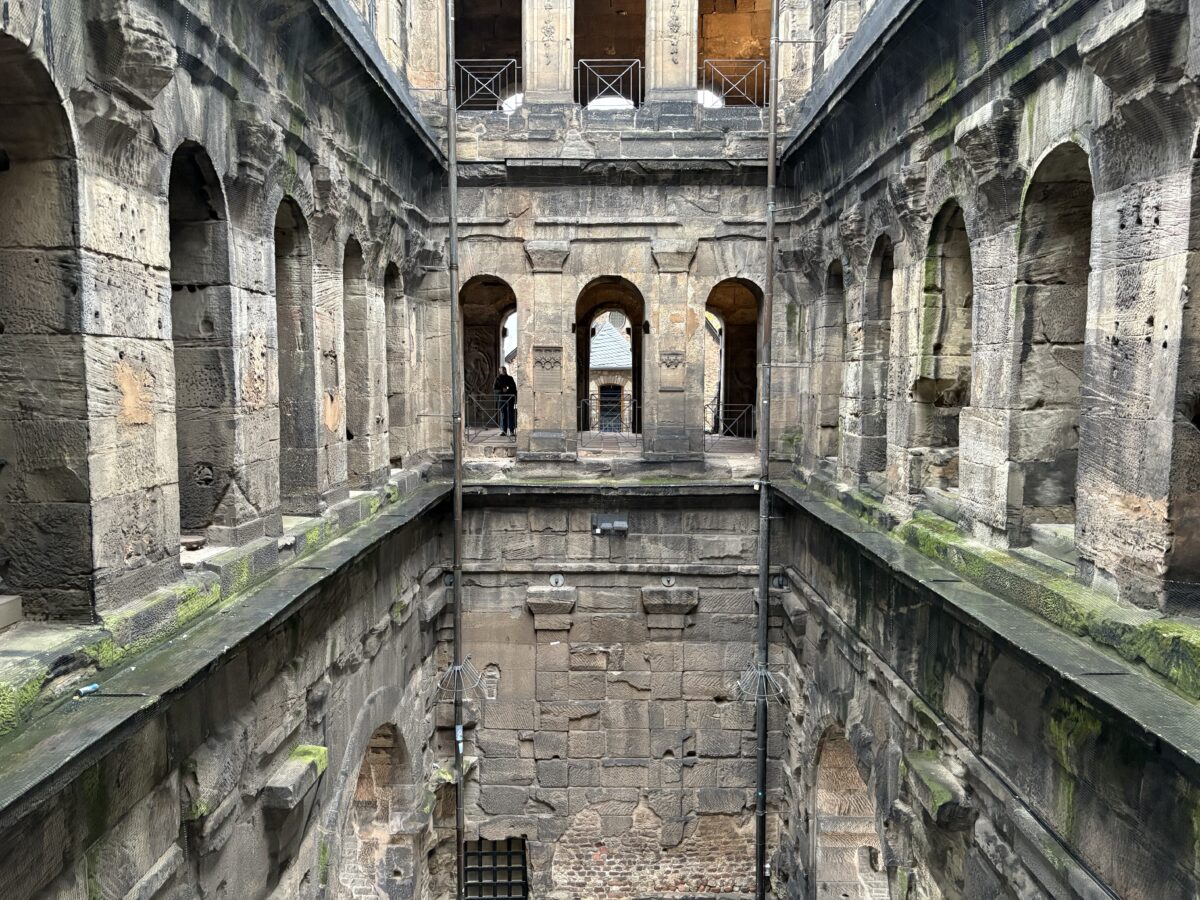
The interior of the Porta Nigra is not just old. It is ancient. Built around 170 AD, these Roman walls have stood firm for over 1,800 years. That is longer than most civilisations manage to stay organised. And they are still holding up, despite centuries of weather, war and questionable medieval renovations.
The walls are made of grey sandstone blocks, each weighing up to six tonnes. No mortar was used. Instead, the Romans relied on iron clamps to hold the stones together. It is like building a giant Lego set, but with rocks and a lot more risk of back injury.
A peek inside the roman mind
Walking through the interior, you get a sense of Roman engineering at its finest. The layout is practical, with two towers and a central courtyard. The arches are wide enough for wagons, and the upper levels were designed for soldiers to keep watch or shout at people trying to sneak in.
The walls are thick. Really thick. They were built to last, and clearly, they took that job seriously. Even after the iron clamps were stolen in the Middle Ages, the structure held together. Which is more than can be said for some modern buildings that start crumbling after a few years.
From fortress to church to tourist magnet
The Porta Nigra has had a colourful life. In the 11th century, a monk named Simeon moved in and turned part of it into a church. That probably saved it from being dismantled for spare parts. The church additions were later removed in the 19th century, restoring the gate to something closer to its Roman glory.
Inside, you can still see traces of all these phases. Bits of medieval plaster, church arches and Roman stonework all coexist in a slightly chaotic but charming mix. It is like history decided to layer itself just to confuse archaeologists.
Still standing, still impressive
Despite everything thrown at it, the Porta Nigra remains one of the best-preserved Roman gates north of the Alps. It has survived invasions, religious conversions, and even buses rumbling past just metres away. The fact that it is still standing is a testament to Roman stubbornness and very good stone-cutting.
Visitors today can climb through its levels, admire the views and wonder how on earth it has lasted this long. Spoiler: it is not magic. It is just really solid architecture.