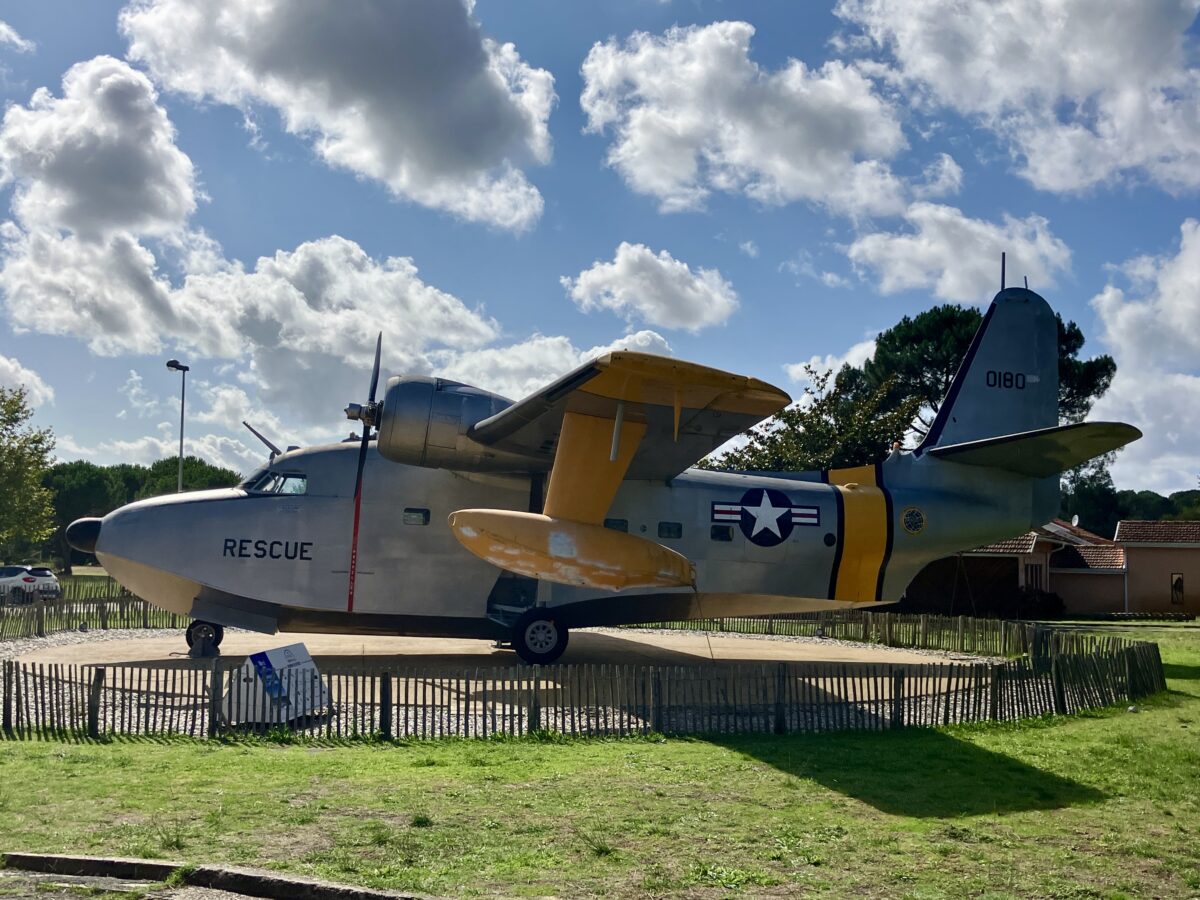
In the charming town of Biscarrosse, the Musée de l’Hydraviation stands as a testament to the rich history of seaplanes and their vital role in aviation. Among the impressive collection of aircraft, one hydroplane stands out for its remarkable history and significance: the Grumman HU-16A Albatross.
This majestic amphibious aircraft, prominently displayed in the museum’s courtyard, was originally built in the United States and took its first flight exactly 74 years ago, on 9 July 1951. The Albatross was primarily used by the US Air Force for reconnaissance missions and search and rescue operations at sea.
The Grumman Albatross gained a reputation for its ruggedness and seaworthiness during the Korean War (1950-1953), where it was extensively used to rescue downed pilots and other personnel from hostile waters. Its ability to land on rough seas made it an invaluable asset in these perilous missions. The aircraft continued to serve in the Vietnam War (1955-1975), where it played a crucial role in search and rescue operations, saving countless lives.
The Musée de l’Hydraviation acquired this historic plane after it was slated for scrapping in Italy. The museum saw an opportunity to preserve this iconic aircraft and showcase its legacy as a rescue plane. The Grumman Albatross, with its robust design and powerful engines, symbolizes the bravery and dedication of those who have conducted rescue missions in treacherous conditions.
Visitors to the museum can marvel at the Albatross and learn about its storied past, gaining a deeper appreciation for the crucial role seaplanes have played in saving lives. The Musée de l’Hydraviation in Biscarrosse offers a unique glimpse into the world of seaplanes and their contributions to aviation history.