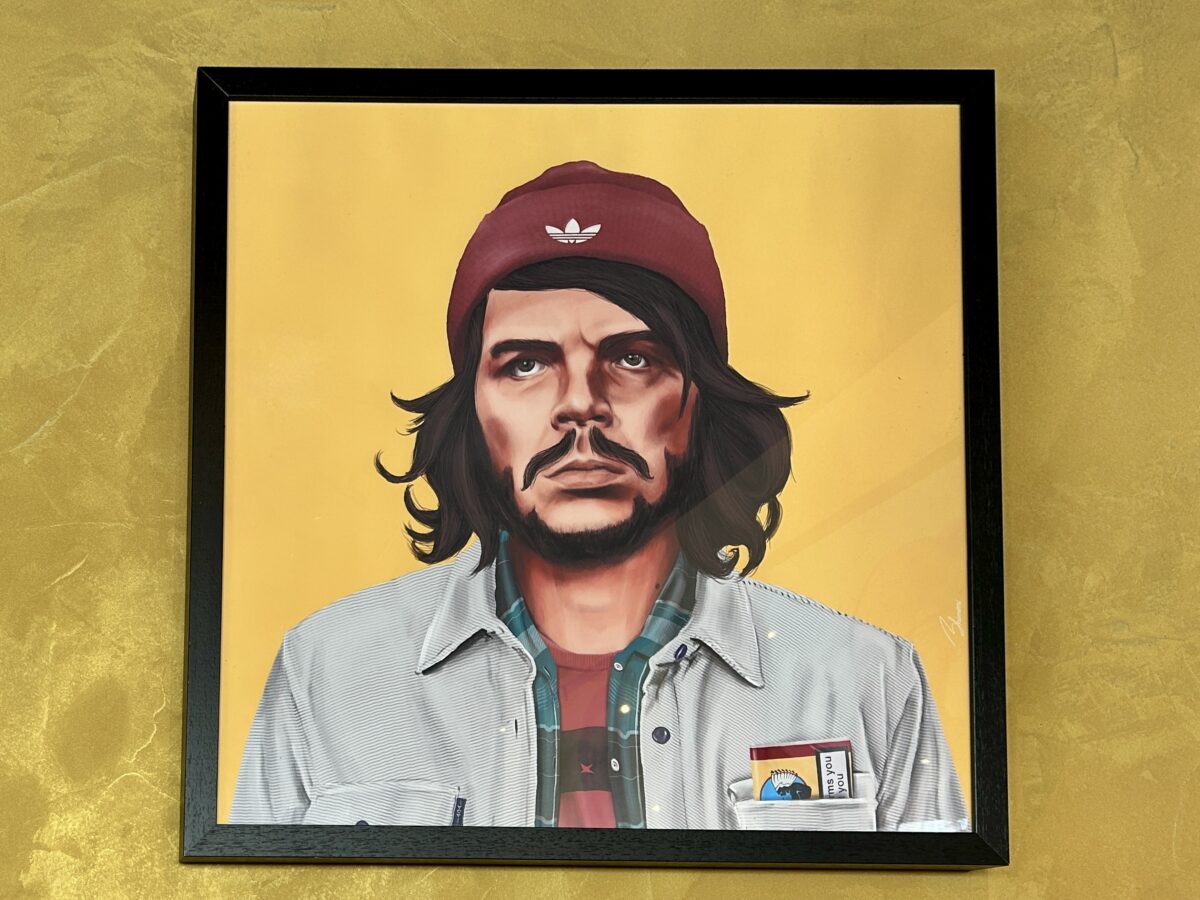
Che Guevara: From Medicine to Marxism
Ernesto “Che” Guevara was not your typical Latin American doctor. Born in Argentina in 1928, he ditched stethoscopes for rifles and rode a motorbike into the pages of global history. His political awakening came early, fuelled by the poverty he saw during his travels.
By the mid-1950s, he’d teamed up with Fidel Castro and joined the Cuban revolution. Fast forward a few guerrilla battles and a successful overthrow of dictator Batista, and Che was suddenly a minister with a beard that screamed rebellion.
But spreadsheets and boardrooms weren’t his style. Soon enough, he packed up again to ignite revolutions in the Congo and then Bolivia. That last one didn’t go so well. He was captured and executed by Bolivian forces on 9 October 1967. Cue the birth of the myth.
From Man to Myth: Viva la Icon
Che wasn’t just a revolutionary. He was a walking contradiction in military fatigues. He wanted global equality but had little patience for dissent. He inspired millions but also authorised firing squads. Still, the man had charisma for miles and a camera-friendly scowl that looked great on posters. And that’s exactly what happened. His face, frozen in a black beret and defiant stare, became the Mona Lisa of rebellion.
You’d struggle to find a university dorm in the 90s without his image glaring down at the pile of unread textbooks. Today, Che’s myth continues to live in a strange cocktail of ideology, fashion and the occasional coffee mug. Whether you see him as a champion of justice or a problematic icon depends on which biography you’re halfway through.
A Rebel Among the Fries
And now for the twist. If you stroll into Burger House in Trier, Germany, you might spot Che’s mug staring back at you from a wall. Right next to another famous face. Maybe Trump. Maybe Einstein. It’s unclear who decided to juxtapose global thinkers and strongmen with double cheeseburgers, but there’s something oddly perfect about it.
It’s not just decoration. It’s irony grilled to perfection. A Marxist revolutionary painted on the wall of a capitalist burger joint. Che probably wouldn’t have ordered the fries, but he might have appreciated the boldness.
Final Thoughts Over Ketchup
Che Guevara’s story is messy, complicated and packed with drama. He remains one of the most recognisable political figures of the 20th century. The fact that he’s now found a spot in a German burger bar only adds to his mystique. His image will likely keep turning up in places you least expect, reminding us all that myths, like good burgers, never really go out of style.