A chilli with a passport
Piment d’Espelette is not your average pepper. It comes with paperwork. Since 2000, it has held the Appellation d’origine contrôlée (AOC) status, and later the European Protected Designation of Origin (PDO). That means only peppers grown in ten specific communes around the village of Espelette can legally call themselves Piment d’Espelette.
From Mexico to the Basque hills
The pepper originally came from Mexico and it arrived in France in the 17th century. Probably via some adventurous Spaniards who thought black pepper was overrated.
Basque women took a liking to it and started growing it in their gardens. They used it to season food and preserve meat. Over time, they developed the Gorria variety, which is now the official Espelette pepper.
Drying with style
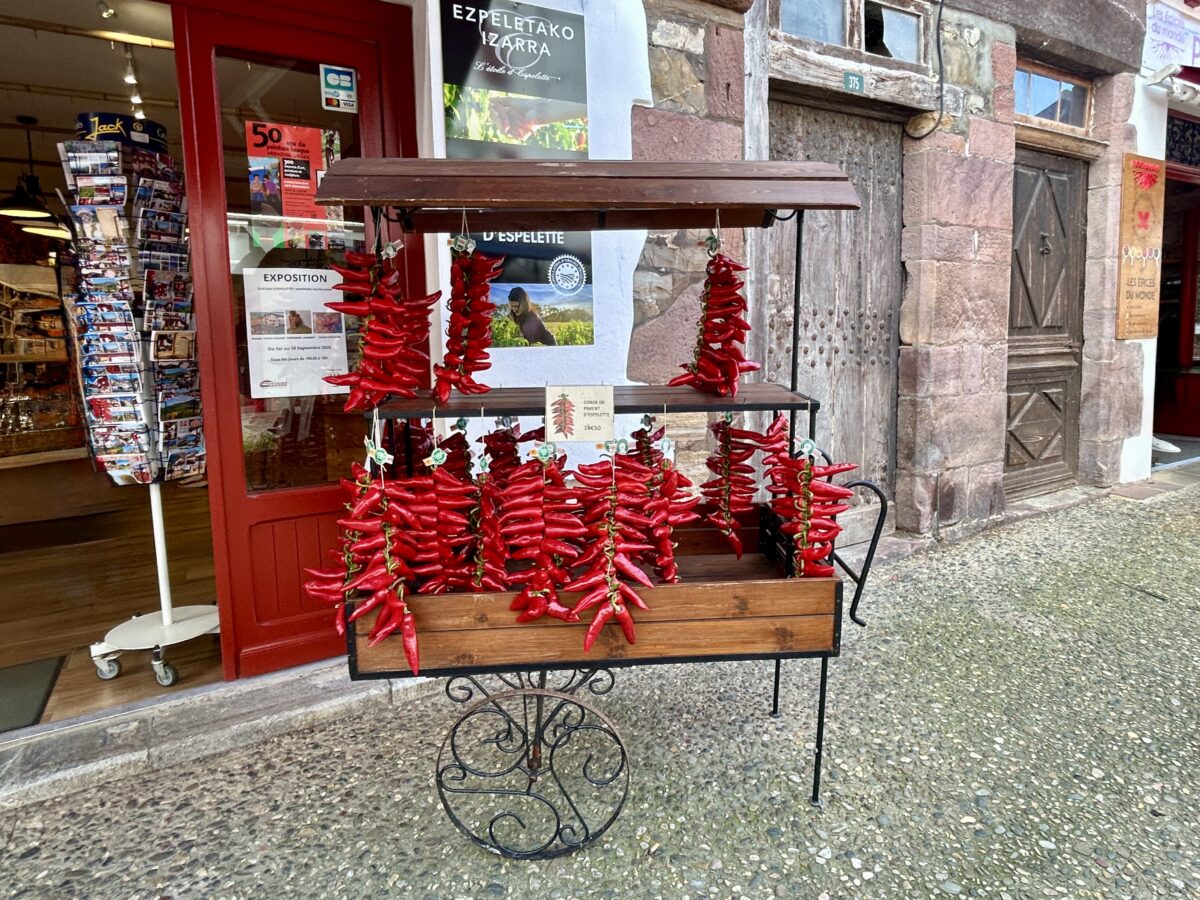
One of the most charming parts of Espelette pepper production is the drying process. After harvesting in late summer, the peppers are strung together and hung on walls, balconies or wooden frames.
It looks like the village is preparing for a spicy Christmas. These red garlands are not just for show. They dry naturally in the sun, and later get a final roast in the bread oven. The result is a deep red, aromatic pepper with a mild heat and a fruity flavour.
The numbers game
France produces around 1,300 tonnes of raw Espelette peppers each year, which results in about 200 tonnes of powder. That’s not bad for a niche product with strict rules and no irrigation allowed.
Now let’s compare. Mexico, the birthplace of chillies, produces hundreds of thousands of tonnes of various peppers annually. It’s like the chilli buffet of the world.
Hungary, famous for its paprika, produces around 90,000 tonnes of paprika powder each year. That’s seventy times more than Espelette.
A mild diva
On the Scoville scale, which measures chilli heat, Piment d’Espelette scores around 4,000 units. That’s mild compared to Mexican varieties like jalapeños or habaneros, which can go ten times higher.
But Espelette is not trying to burn your tongue off. It’s here to add elegance, not pain. It’s the chilli equivalent of a French wine—complex, refined and slightly snobby.