The cheap skydivers who refused to pay
Paragliding looks like a futuristic way to explore the skies but its origins are actually rooted in pure financial stubbornness. The sport officially started in 1978 in Mieussy in France. A group of French skydivers wanted to practice their landing precision techniques without paying for an expensive airplane ride every single time.
They looked at their regular square parachutes and wondered if they could just run down a steep mountain instead. It worked surprisingly well. They managed to launch themselves into the air directly from the grassy slopes.
The idea caught on instantly because human beings apparently love the concept of throwing themselves off high places. Manufacturers soon began designing wings specifically for gliding rather than just falling out of planes. The sport exploded in popularity across Europe throughout the following decades. Today thousands of people belong to clubs around the globe.
Why it is not just a gentle float
The colorful wings look very peaceful when you see them from the safety of a beach café. Yet make no mistake because this is classified as an extreme sport for very good reasons. You are hanging several hundred meters in the air from a piece of fabric held together by thin strings.
The biggest risk does not actually come from the equipment itself. Modern paragliders are very well engineered pieces of kit. The true danger comes from the invisible currents of the atmosphere.
A sudden shift in wind direction or an unexpected thermal column can deflate half of your wing in a second. If you do not know how to react instantly you can find yourself spinning toward the hard ground at terrifying speeds. It is an activity that demands absolute focus and a deep respect for the weather.
The sand fortress of the French coast
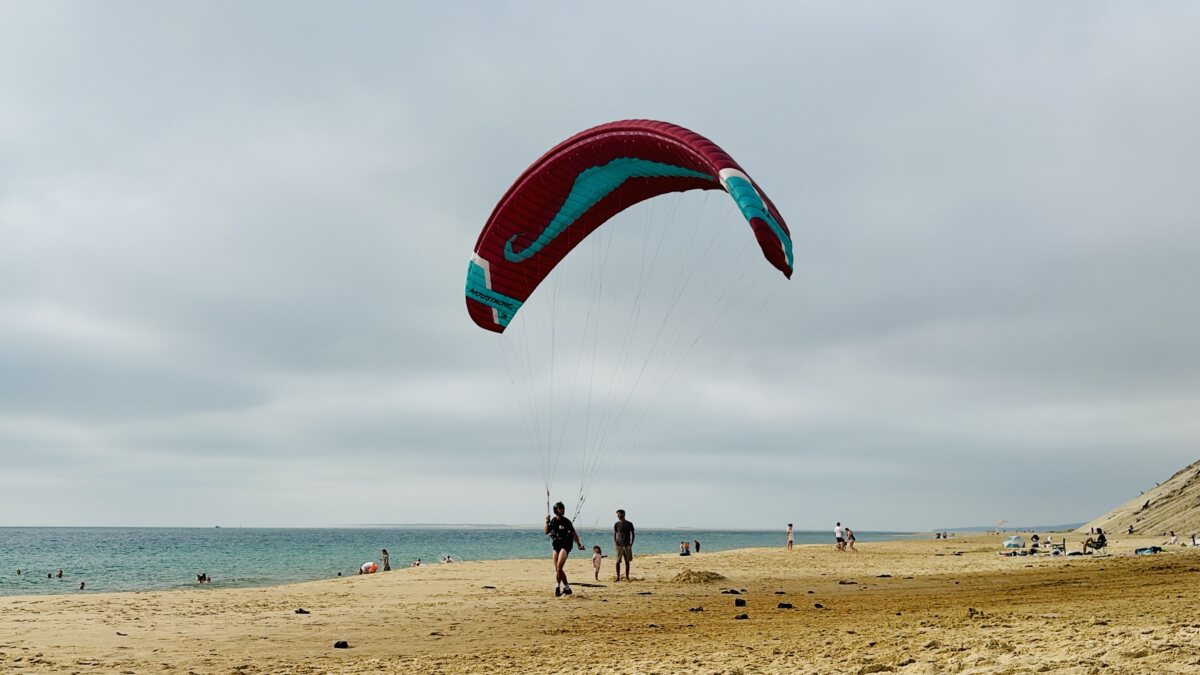
If you want to see this madness in full swing you need to visit the southwest coast of France. The area around the giant Dune de Pilat and the nearby Plage du Petit Nice is an absolute paradise for paragliders.
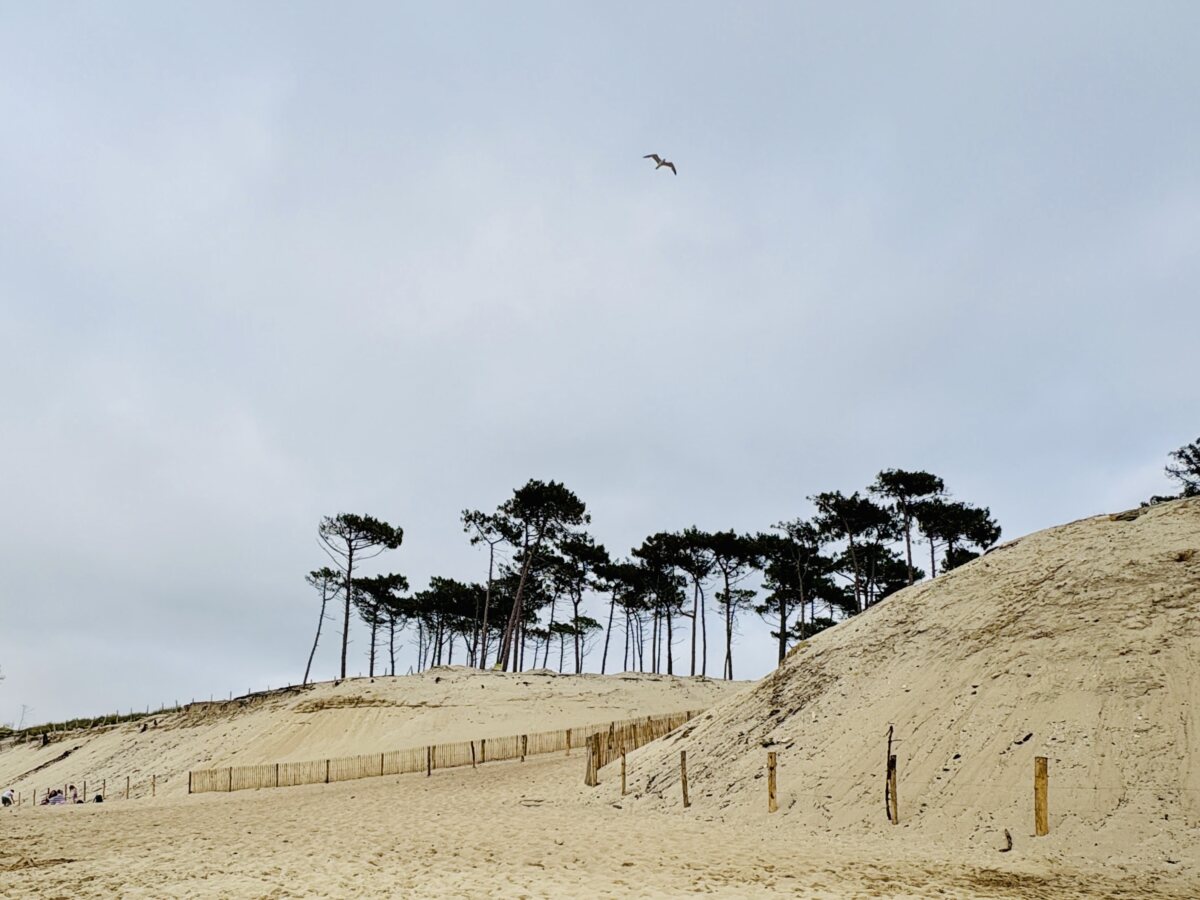
The geography here is completely unique. You have the tallest sand dune in Europe sitting right next to the Atlantic ocean. The wind hits this massive wall of sand and is forced upward which creates a permanent elevator of rising air.
On any warm summer day the sky above the Plage du Petit Nice is packed with colorful wings. Pilots spend hours hovering just a few meters above the tourists who are trying to sunbathe. It is a fantastic spectator sport if you do not mind someone occasionally landing on your picnic blanket.
The power of the sea breeze
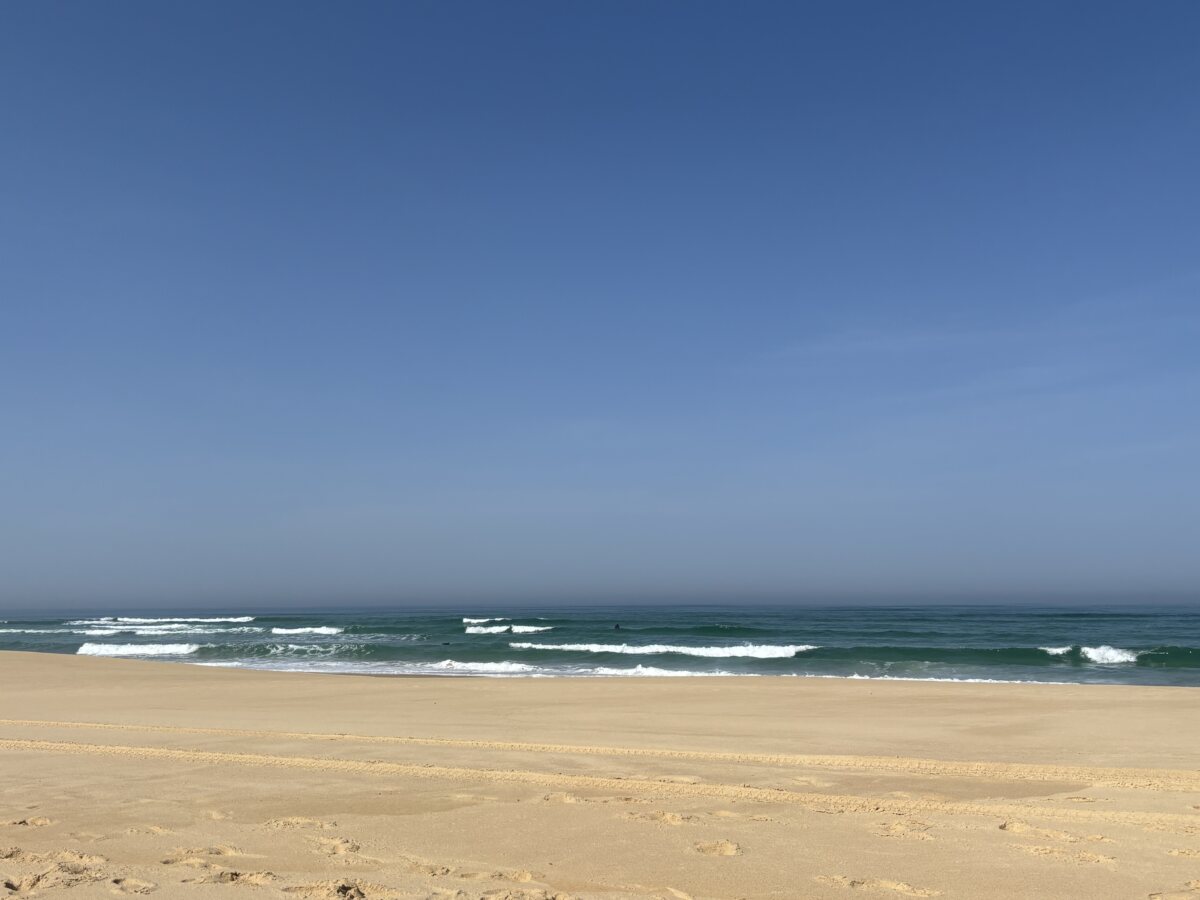
The coastal spots are popular because the maritime wind is incredibly consistent. The sea breeze provides a steady stream of lifting force that can carry a pilot a remarkably long distance along the coast.
You can catch the breeze near the Petit Nice beach and float miles away without ever touching the sand. It feels effortless until you realize that the same wind can easily drag you out into the open ocean if you lose control.
This brings us to the absolute necessity of safety gear. Wearing a proper certified helmet is arguably the most important rule of the sport. The sand at the Dune de Pilat looks soft from a distance but hitting it at forty kilometers per hour feels exactly like concrete. A helmet is the only thing standing between a great holiday story and a very long stay in a French hospital.