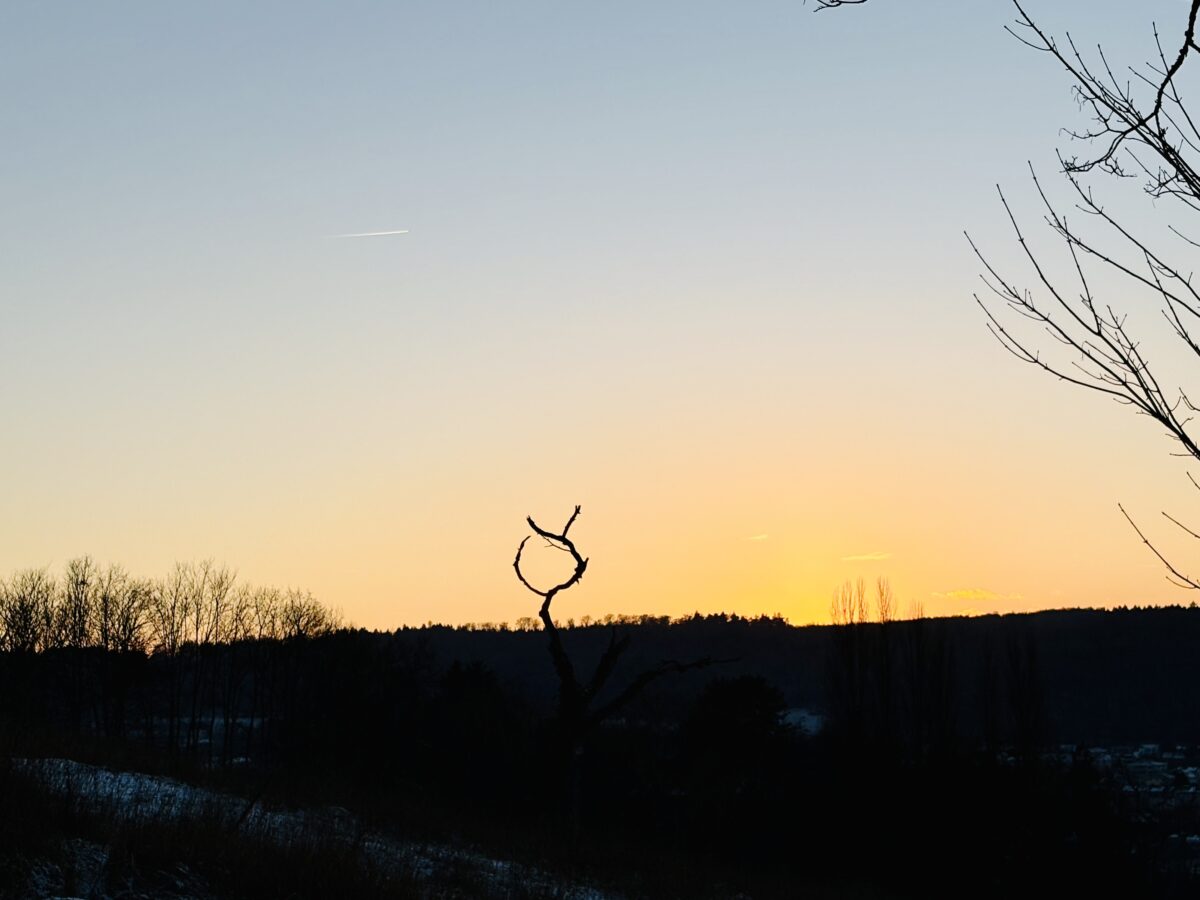
The tree that knows its classics
Luxembourg’s forests are full of surprises. There are towering oaks, whispering pines, and the occasional squirrel with delusions of grandeur. But hidden among the greenery, you might find a tree that looks like it’s been studying ancient rhetoric. Its branches curve into a perfect “O” shape, mimicking the “OK” sign, a gesture that dates back to at least the 5th century BCE.
While most trees are content with photosynthesis, this one seems to have taken a crash course in classical history. The “OK” gesture was used in ancient Greece as a symbol of love and perfection, often painted on vases with lovers touching fingertips. Meanwhile, in Rome, the rhetorician Quintilian used it to punctuate speeches, sealing arguments with a flourish. This tree isn’t just standing there; it’s delivering a silent lecture on the art of persuasion.
Why this tree is the forest’s resident historian
Forests can be intimidating. Roots trip you up, branches swat at your face, and there’s always the fear of disturbing a badger mid-nap. But then you stumble upon this tree, and suddenly, the forest feels a little more cultured. It’s as if it’s saying, “Relax, I’ve seen empires rise and fall. Your hiking boots are fine.”
This tree doesn’t care if you’re lost, if your picnic blanket is crooked, or if you’ve packed the wrong sandwich. It’s too busy channeling the wisdom of ancient philosophers. It’s the kind of tree that, if it could talk, would say, “Ah, yes, the ‘OK’ sign.
The science (and the sarcasm) behind the gesture
Of course, there’s a logical explanation for this arboreal oddity. Trees grow in response to their environment—wind, light, and the occasional overzealous woodpecker all play a role in shaping their branches. Sometimes, the result is a majestic canopy. Other times, it’s a tree that looks like it’s been practicing its hand signals for a debate club.
But why focus on the science when you’ve got a tree that’s clearly a history enthusiast? The “OK” gesture has been a symbol of approval, perfection, and even love for millennia. In Naples, it symbolized matrimony. In Buddhist and Hindu traditions, it represented inner perfection. And in 19th-century America, it became a political slogan for Martin Van Buren’s presidential campaign—because nothing says “vote for me” like a hand gesture with ancient roots.
A lesson in timeless approval
In a world that’s always rushing, always scheduling, and always stressing, there’s something refreshing about a tree that’s just vibing in the wisdom of the ages. It doesn’t worry about its branch angles or whether it’s Instagram-worthy. It just grows, bends, and occasionally looks like it’s delivering a silent lecture on the history of gestures.