A plate full of love
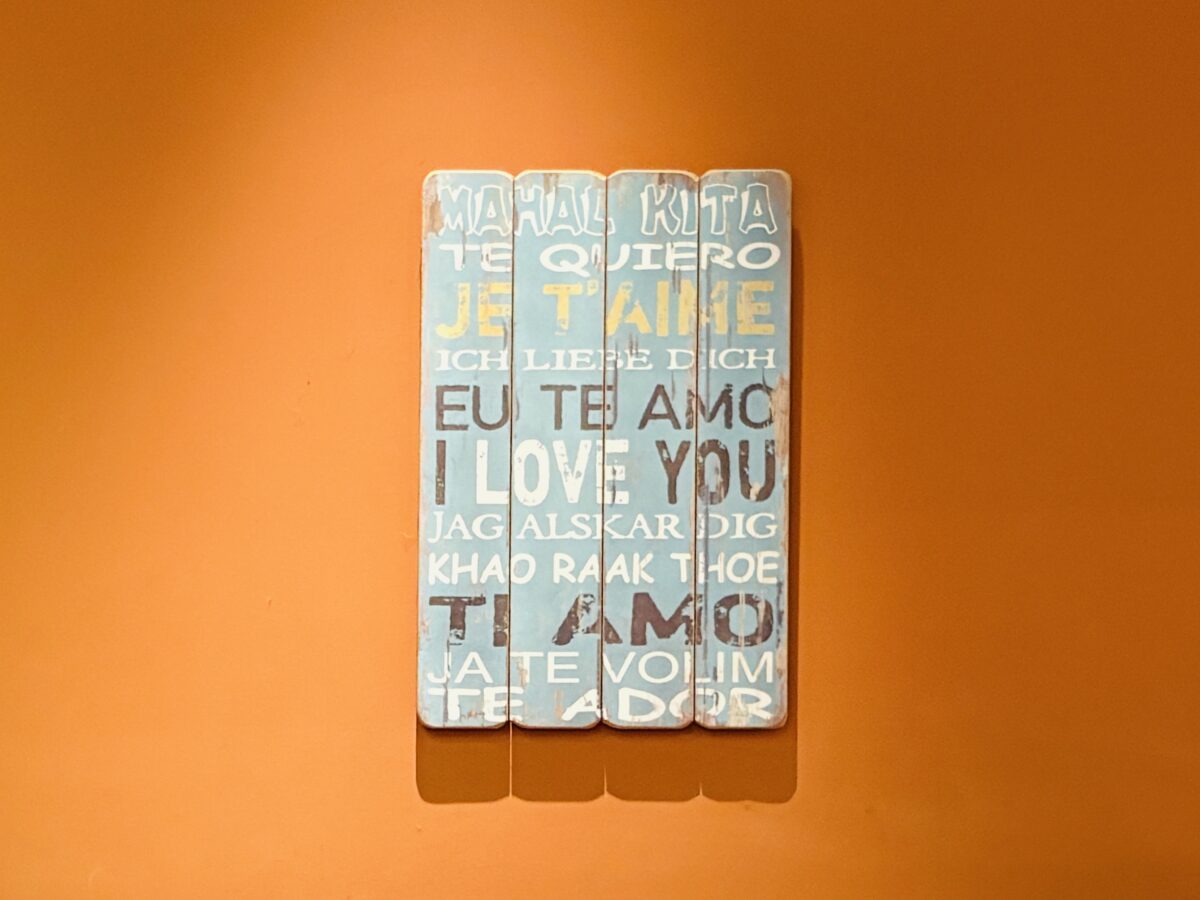
Központ Bisztró in Újpest, Budapest has a talent for charming details and it seems to enjoy Valentine’s Day as much as the rest of us. This time it is a plate that lists I love you in several languages which feels perfectly timed for a day dedicated to romance. It is the kind of plate that makes you smile before you even sit down. It also makes you test your memory of foreign languages which is brave behaviour before your first coffee of the day.
The languages on the plate
Here is the list as it appears and what it should look like.
MAHAL KITA
Correct Filipino or Tagalog. Simple and sweet.
TE QUIERO
Correct Spanish. Warm and familiar.
JE T’AIME
Correct French. The apostrophe survived which is already a victory.
ICH LIEBE DICH
Correct German. Clear and direct.
EU TE AMO
Correct Portuguese. Works in both European and Brazilian Portuguese.
I LOVE YOU
Correct English. No surprises here.
JAG ALSKAR DIG
Should be JAG ÄLSKAR DIG. Swedish needs the two dots. Without them it looks like the word forgot its Scandinavian identity.
KAO RAAK THOE
Intended as Thai. A better transliteration is KHAO RAK THOE. Thai is full of tones and soft consonants so transliterations often look like educated guesses.
TI AMO
Correct Italian. Short and romantic.
JA TE VOLIM
Correct in Bosnian, Croatian and Serbian. A very direct declaration.
TE ADOR
Incomplete. It should be TE ADORO in Spanish or Portuguese. Without the final O it sounds like someone ran out of ink.
Other interesting ways to express your love
Here are some extra ways to say I love you that tend to surprise people.
In Hawaiian: Aloha wau ia oe
This surprises people because Hawaiian uses very few consonants and has a musical rhythm. It sounds more like a gentle wave than a sentence.
In Quechua: Kuyayki
This surprises people because it comes from the Andes and has a sound system that feels ancient and earthy. It is short but full of character.
In Inuktitut: Nagligivagit
This surprises people because it comes from the Arctic and has long, flowing words that feel like they were designed to be spoken slowly in the cold.
These phrases are perfect if you want to impress someone or make them wonder if you have been secretly travelling the world.
The story of Központ Bisztró
Központ Bisztró has had quite a journey. It opened as a butcher shop in the 1950s when Újpest was still full of small family businesses. For decades it served the neighbourhood with meat and everyday essentials. In the early 2000s it transformed into a cosy city restaurant. It became a place where locals met for lunch, dinner or a glass of wine. The atmosphere was warm and unpretentious which made it popular very quickly.
Last year the bistro began shifting towards a more Italian style. The menu slowly added pasta, risotto and Mediterranean flavours. The interior also changed and became lighter and more modern. It was not a dramatic transformation. It was more like the place discovered that it enjoys Italian food as much as its guests.
In recent years Központ Bisztró has received several local awards. Food guides praised its friendly service and its honest cooking. It has been recognised for its neighbourhood charm and for keeping its identity while still evolving.