Welcome to the linguistic jungle
If you think you know German, Austria is here to test that confidence. The moment you cross the border, the language starts behaving like it’s had a few schnapps and decided to reinvent itself. What was once Hochdeutsch becomes a charming, confusing, and occasionally hilarious dialect soup.
It’s not just the accent. It’s the words, the grammar, and the general attitude. Austrian German is like standard German’s quirky cousin who shows up at family gatherings with homemade cheese and a goat.
The Bärger Lädili mystery
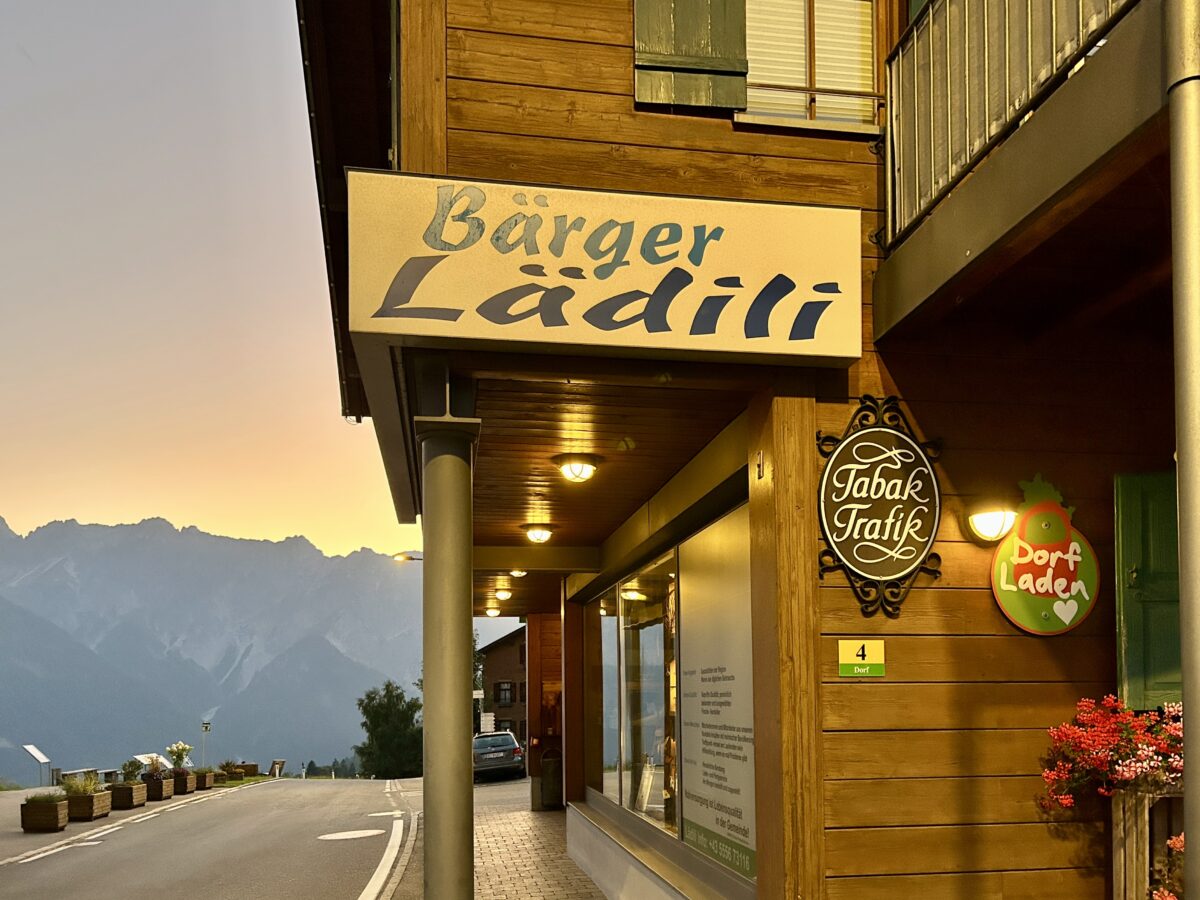
Let’s start with a real-life example from Bartholomäberg in Vorarlberg. There’s a tiny grocery shop there called the Bärger Lädili. Sounds cute, doesn’t it? But if you’re used to standard German, you might need a moment.
“Bärger” is a local twist on “Bartholomäberger”, meaning someone from Bartholomäberg. “Lädili” is a diminutive form of “Laden”, which means shop. So instead of “Dorf Laden” or “kleiner Supermarkt”, you get this delightful dialect cocktail. It’s like the language itself is winking at you.
Small shop, big personality. And yes, the sign is real. No, it’s not a typo. It’s just Austria doing Austria.
Some classic distortions
Austrian dialects love to play with vowels. “Klein” becomes “klåi”, “gut” turns into “guat”, and “gehen” might be “ganga” if the mood strikes. It’s not wrong. It’s just… locally enhanced.
Then there’s the grammar. Articles and endings get reshuffled like a deck of cards. You’ll hear “dem” where “den” should be, and “mir” doing suspicious things in sentences. It’s like the rules are optional, and everyone’s in on the joke except you.
And don’t get started on food. A “Marille” is an apricot. A “Topfen” is quark. “Erdäpfel” are potatoes. If you ask for “Kartoffeln”, they’ll understand, but they might raise an eyebrow or offer you a dictionary.
Why it’s brilliant (and mildly terrifying)
Austrian German is not just a dialect. It’s a lifestyle. It reflects the region, the humour, and the stubborn charm of the people. It’s warm, expressive, and occasionally baffling. But once you get used to it, you’ll find it oddly addictive.
It also makes you appreciate how flexible language can be. You start to realise that communication is not just about rules. It’s about rhythm, tone, and knowing when to throw the grammar book out the window.
Austrian German may twist your tongue and fry your brain, but it does so with style. And honestly, who wants boring language anyway?