A tiny country with a big twist
Liechtenstein is one of the smallest countries in the world. It has around 40,000 people, which is roughly the population of a mid-sized football stadium. Yet it manages to have a full-blown government, a parliament, and yes, a prince who still has veto powers. It’s like watching a medieval drama play out in a very well-organised Swiss-style setting.
The country is a constitutional monarchy. That means the prince doesn’t just wave from balconies. He can actually veto laws, dismiss the government, and even dissolve parliament. Not bad for someone who technically shares power with elected officials.
The Parliament, known as the Landtag, has 25 members. They are elected by the people and meet around eight to ten times a year. That’s fewer meetings than most office workers have in a month. But they do get things done, and they even allow the public to attend sessions. So if you’re ever in Vaduz and fancy watching democracy in action, you can just walk in.
The government is made up of five ministers, including the Prime Minister. They are proposed by the Parliament and appointed by the Prince. Ministers serve four-year terms and must represent both of Liechtenstein’s two districts. Yes, the country is so small it only has two districts. You could probably walk across both before lunch.
The Prince, currently Alois, has some serious powers. He can sign international treaties, appoint judges, and even pardon criminals. He also opens and closes parliamentary sessions with a speech from the throne. It’s all very regal, but surprisingly functional.
A building fit for a tiny kingdom
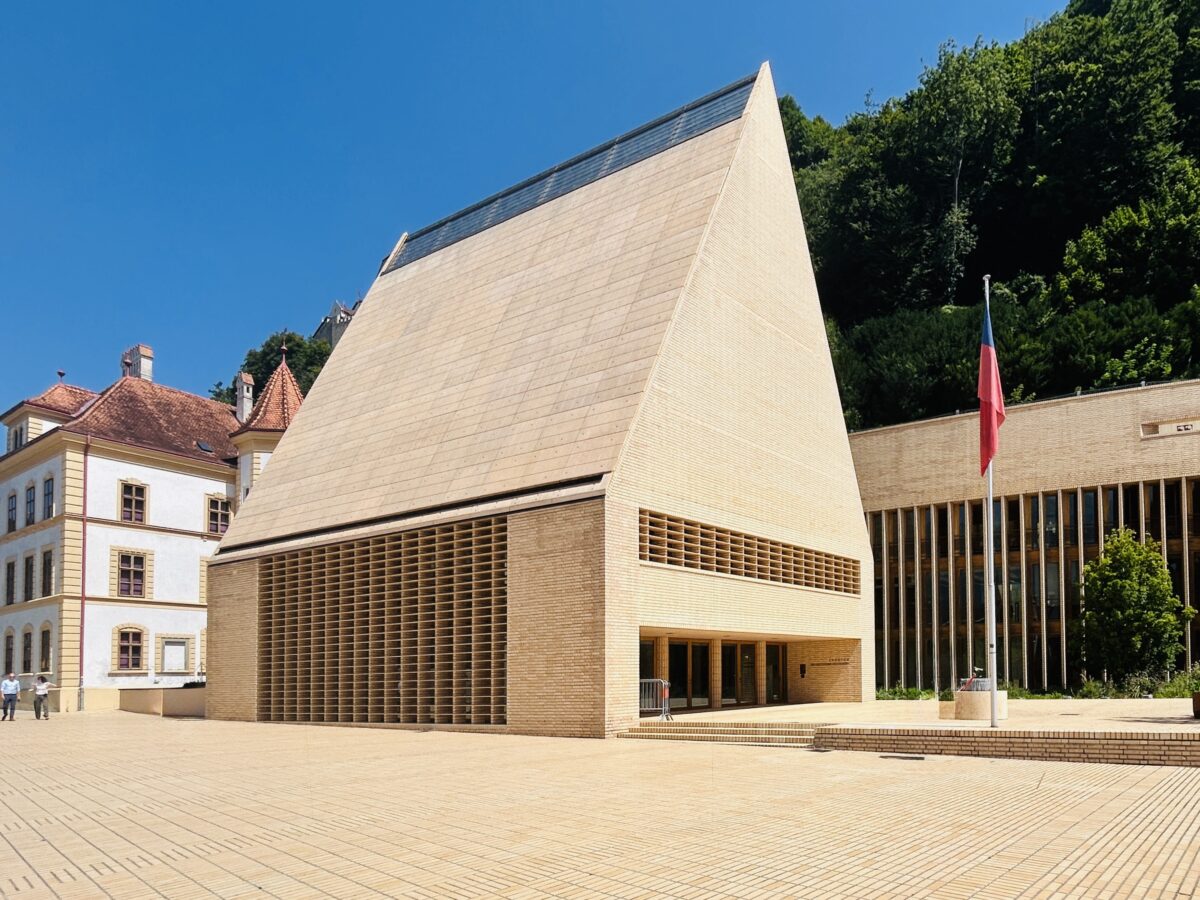
Now let’s talk about the Parliament building. It’s located in Vaduz, the capital, which is more like a charming village than a bustling city. The building itself is a modern structure, completed in 2008, and sits next to the older Government Building from 1905. The new Parliament building is sleek, minimalist, and looks like it was designed by someone who really loves triangles.
Before 2008, Parliament met in the old Government Building, which is a neo-Renaissance beauty designed by Gustav Ritter von Neumann. It had everything from state rooms to a prison. Yes, a prison. Because why not?
The old building had the country’s first central heating and telephone network. It was a big deal back then. The façade is decorated with mosaics, coats of arms, and statues of Justice and Administration. It’s like a political art gallery with a side of bureaucracy.
The new Parliament building is more understated. It’s made of pale stone and has a triangular roof that looks like it’s trying to be edgy. Inside, it’s all clean lines and efficient design. There’s a chamber for debates, offices for MPs, and even a public gallery. It’s democracy with a touch of Scandinavian chic.
A democracy with royal seasoning
Liechtenstein’s political system is a strange but effective mix. The people vote, the Parliament debates, and the Prince occasionally steps in like a referee with a crown. It’s democratic, but with a royal twist that makes it unique.
Despite the Prince’s powers, the system works. People vote in referendums, propose laws, and hold their leaders accountable. It’s not perfect, but it’s surprisingly robust for such a small country.
So next time someone says monarchy and democracy can’t mix, just point them to Liechtenstein. It’s proof that even the tiniest places can pull off the most unexpected political balancing acts. And they do it all with a smile, a sceptre, and a very stylish Parliament building.