A Fancy Home for Bureaucracy
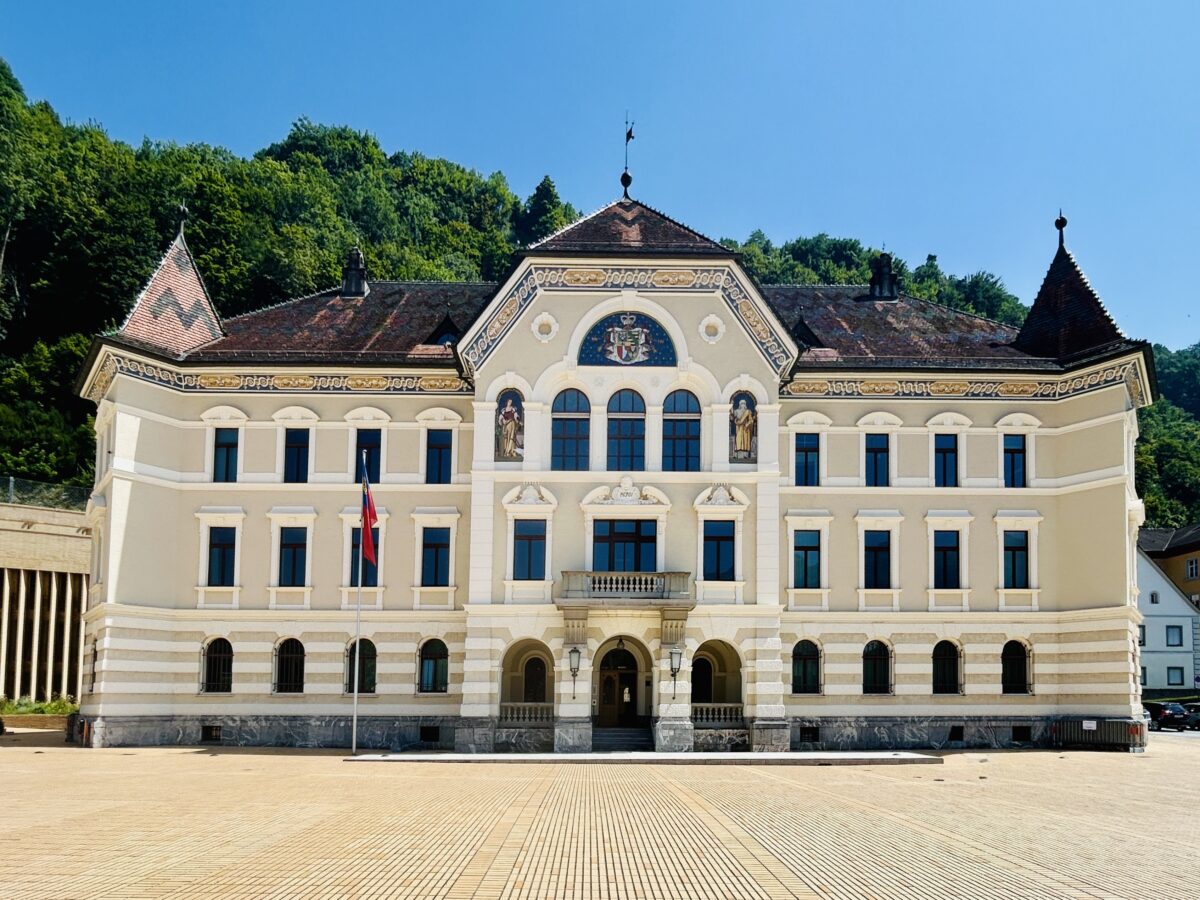
In the heart of Vaduz, right next to the Parliament Building, stands the Regierungsgebäude. That’s Liechtenstein’s Government Building, and yes, it’s as grand as it sounds. Built in 1905, it’s been the nerve centre of the country’s executive branch ever since. If buildings could wear tuxedos, this one would be strutting around in a top hat.
Designed by Austrian architect Gustav Ritter von Neumann, the building was a bit of a show-off from the start. It had central heating before most homes did and even boasted the country’s first telephone network. Clearly, Liechtenstein was not messing about when it came to modern governance.
What Happens Inside
The Regierungsgebäude is where the Prime Minister and government ministers do their thing. It also houses the Liechtenstein National Archives, which is where all the important paperwork goes to retire. Together with the Parliament Building and Peter-Kaiser-Platz, it forms the political triangle of Vaduz. If you’re looking for political power of this tiny country, this is where it lives.
The building used to host the Landtag, Liechtenstein’s Parliament, until 2008. Then the politicians got their own shiny new building next door, probably because they wanted more legroom and better coffee.
Liechtenstein’s Political Setup (Yes, It’s Complicated)
Liechtenstein is a constitutional monarchy, which means it has both a Prince and a Parliament. The Prince is not just a ceremonial figure. He can veto laws, dissolve Parliament, and generally remind everyone who’s boss. But don’t worry, there’s also a Prime Minister who runs the government and tries to keep things democratic.
The Parliament, or Landtag, is elected by the people and shares legislative power with the government. The judiciary is independent, which is always a good idea when you’ve got royals and politicians sharing a sandbox.
The current Prime Minister is Brigitte Haas, and she leads a coalition government. That’s because Liechtenstein likes to keep things balanced.
Public Administration in Numbers
There are exactly five ministers in the entire government, including the Prime Minister herself. That’s right: five people run the executive branch of a country. Each minister even has an alternate, just in case someone needs a day off or, you know, a vacation in the Alps.
The Landtag, Liechtenstein’s Parliament, consists of just 25 elected members. You could fit the entire legislative body into a modest conference room and still have space for coffee and croissants.
And the entire public administration? As of 2025, the Principality employs around 4,200 people across all sectors — including government, education, health, and public services. That’s fewer than the staff of a mid-sized hospital in most European countries.
Architecture That Means Business
The Regierungsgebäude is a neo-Renaissance masterpiece. It’s got sculptural details, stucco flourishes, and even glass mosaics made by artists in Innsbruck. The façade features allegorical figures of Justice and Administration, which is a polite way of saying “we take ourselves very seriously.”
Inside, the building once had a Parliament Chamber decked out with portraits, sculptures, and a chandelier so grand it could probably be seen from space.
A Building With Backbone
The construction wasn’t smooth sailing. The building commission wanted to cut costs, but von Neumann wasn’t having it. He threatened to walk away if they ruined his design. The Prince stepped in and paid the extra costs, proving that sometimes monarchy is just a very fancy way of saying “I’ll cover it.”
The building cost more than the country’s annual budget at the time. But hey, if you’re going to build a monument to governance, you might as well go all in.