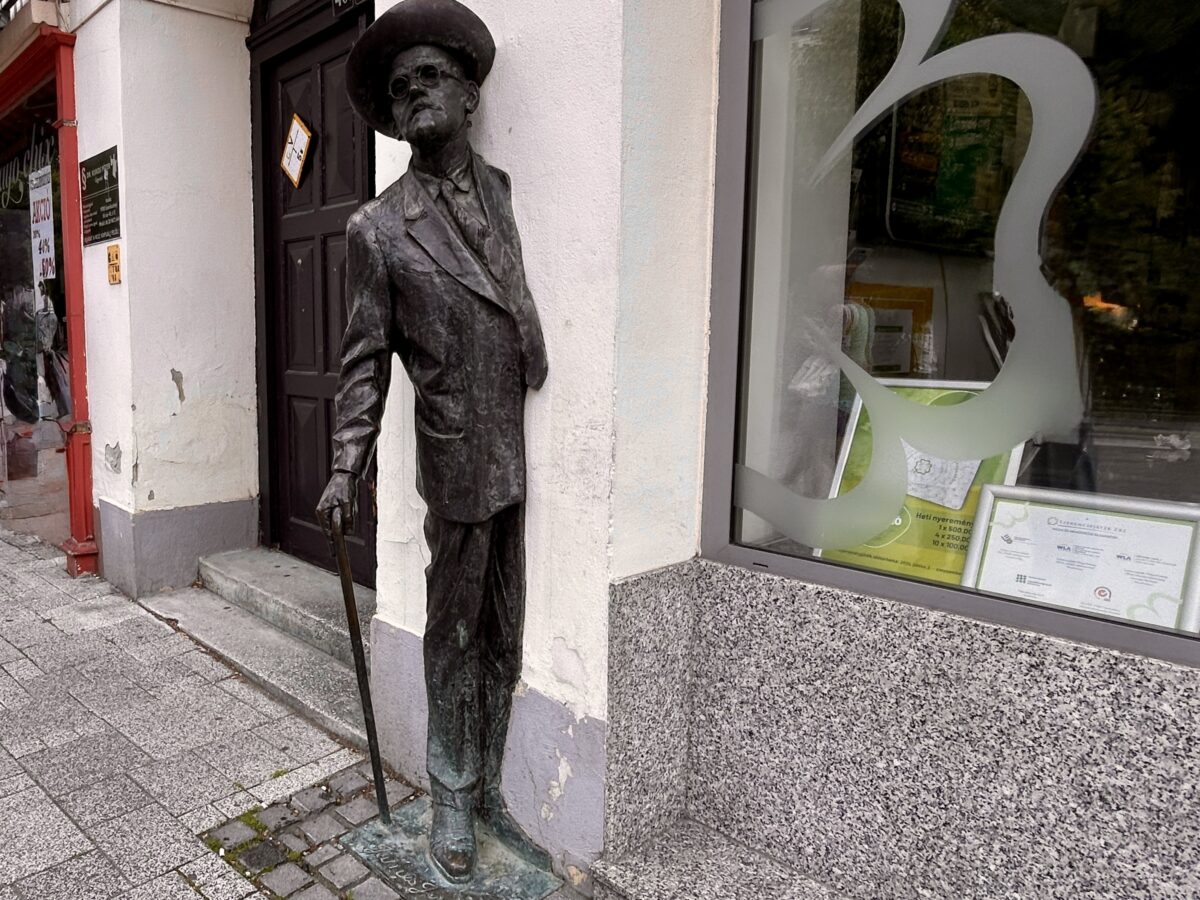
James Joyce, the Irish literary icon known for writing books that make even the most confident reader feel like they’ve forgotten how to read, has a statue in Szombathely, Hungary. And not just any statue. This one looks like he’s literally stepping out of a house. Not metaphorically. Not poetically. Physically. Out of a wall. Like he’s had enough of being indoors and is off to find a decent pint or a new stream of consciousness to scribble down.
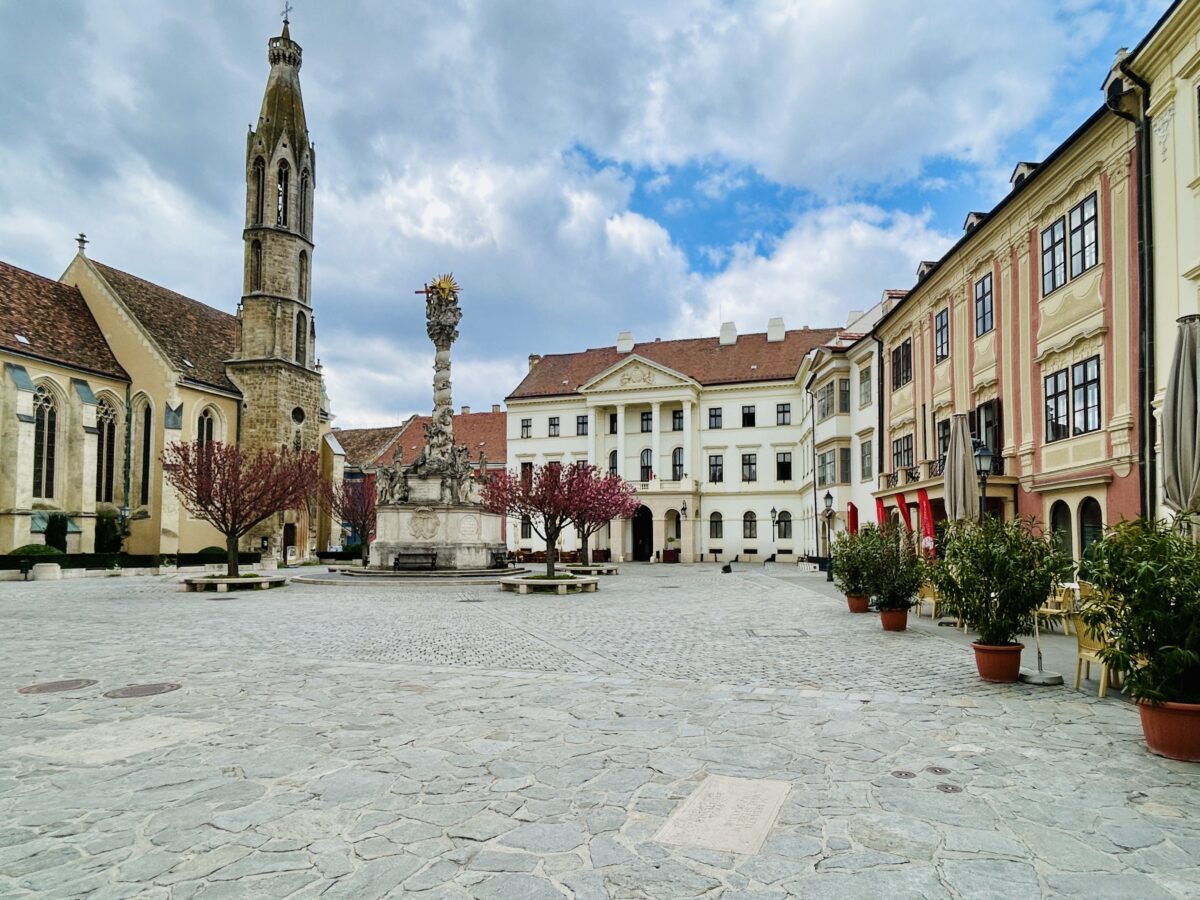
The statue is located on the main square of Szombathely, a city that most people outside Hungary would struggle to pronounce, let alone locate on a map. Joyce is captured mid-stride, emerging from the facade of a building as if he’s been trapped inside since 1904 and has finally decided to make a break for it. It’s both surreal and oddly fitting. After all, Joyce was never one to follow convention, so why should his statue?
Now, you might be wondering: why on earth is there a statue of James Joyce in Szombathely? Did he holiday there? Did he write Ulysses while sipping pálinka? Not quite. The connection is through his fictional alter ego, Leopold Bloom, the protagonist of Ulysses. Bloom’s father, Rudolf Virág, was born in Szombathely. That’s right. The city is the ancestral home of one of literature’s most famously confused characters. So naturally, Szombathely decided to honour Joyce with a statue. Because why not?
Joyce himself never lived in Szombathely. In fact, he probably never even visited. But that didn’t stop the city from embracing its tenuous link to literary greatness. And honestly, good for them. If you’ve got a connection to James Joyce, however flimsy, you milk it. Build a statue. Host a festival. Sell Bloom-branded paprika. The possibilities are endless.
James Joyce was born in Dublin in 1882 and died in Zurich on 13 January 1941. He spent most of his life in self-imposed exile, wandering through Europe and writing books that would later be hailed as masterpieces and simultaneously used as doorstoppers. His most famous works include Dubliners, A Portrait of the Artist as a Young Man, Ulysses, and Finnegans Wake. The last one is so dense that even seasoned academics have been known to cry into their footnotes.
Joyce’s writing style was revolutionary. He pioneered stream-of-consciousness narration, which basically means the reader gets to experience every single thought, distraction, and existential crisis the character has. It’s brilliant, maddening, and occasionally feels like being trapped in someone’s head during a very long bus ride.
So on this anniversary of his death, we remember James Joyce not just for his literary genius, but for the way he continues to pop up in unexpected places. Like Szombathely. Like a statue stepping out of a wall. Like a ghost who refuses to be forgotten.
If you ever find yourself in western Hungary, go see the statue. It’s weird. It’s wonderful. And it’s probably the only time you’ll see James Joyce looking like he’s late for something.