Tourist Signs in the Lővérek and Western Hungary
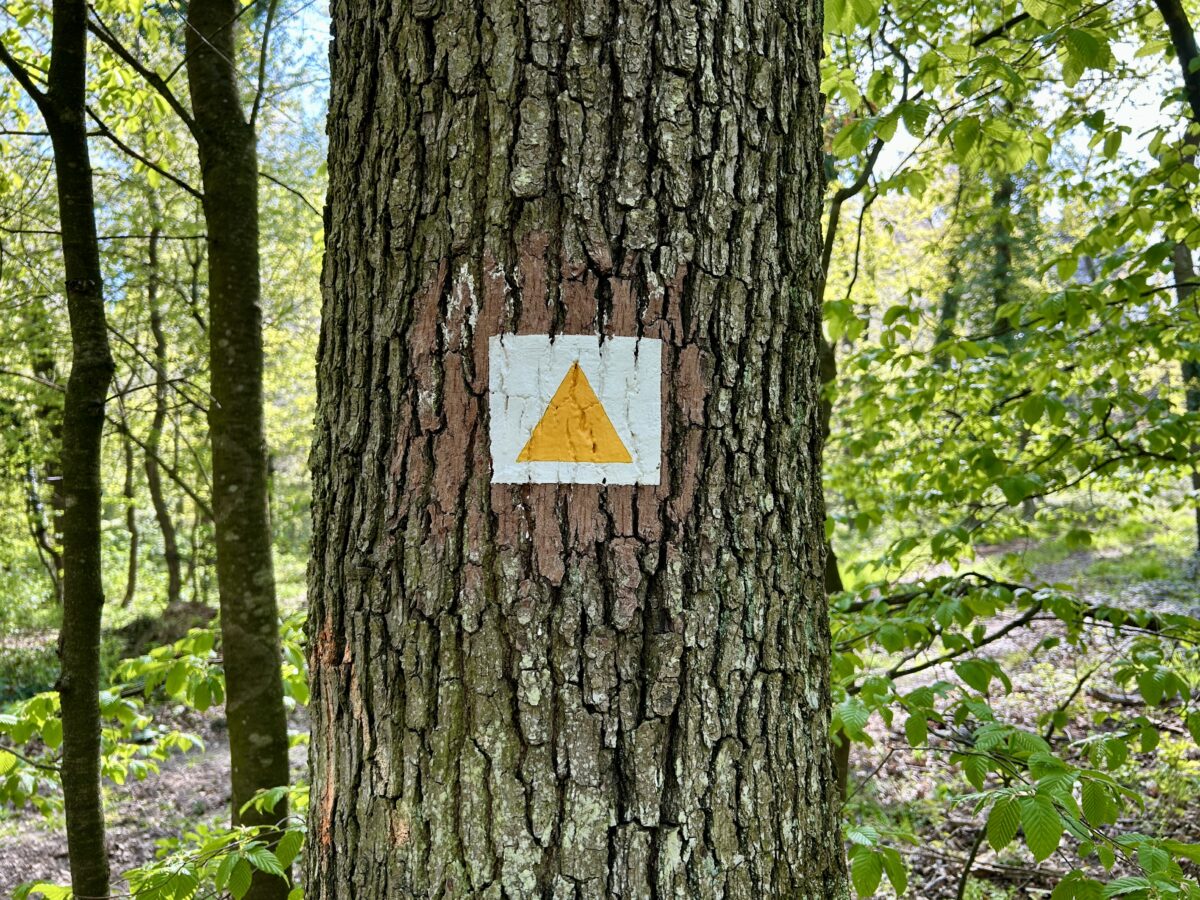
Hungary has a charming habit of painting stripes on trees, rocks and lamp posts. These are not graffiti from bored teenagers but official tourist trail markers. Across Hungary, these signs guide hikers through forests, vineyards and suspiciously steep paths.
The system is clever. Colours indicate the type of route. Blue is for long-distance trails, red for regional ones, green for local paths and yellow for connecting routes. Shapes also matter. A stripe means a main trail, a cross is a side trip, and a triangle usually leads uphill. If you see a circle, it might be a lookout point or just a cruel joke.
Hungarian Tourist Routes
Hungary has thousands of kilometres of marked hiking trails. They are maintained by volunteers who apparently enjoy painting trees and walking absurd distances. The signs are standardised and surprisingly reliable, unless someone’s dog chewed off the bark.
The routes vary from gentle strolls to full-on leg torture. You can walk through national parks, sleepy villages, and fields that look suspiciously like they haven’t changed since 1972. The signs are your best friends, unless you ignore them and end up in someone’s backyard.
The Blue Trail (Kéktúra)
The crown jewel of Hungarian hiking is the National Blue Trail, or Kéktúra. It’s the oldest long-distance hiking route in Europe. It stretches over 1,100 kilometres from Írott-kő near the Austrian border to Hollóháza in the northeast.
The trail crosses mountains, rivers, wine regions and places where your phone signal goes to die. It’s divided into sections, each with its own stamp stations. Yes, you collect stamps like a hiking nerd. Complete all sections and you get a certificate, eternal glory and very tired legs.
One and a Half Million Steps in Hungary
This brings us to the documentary “One and a Half Million Steps in Hungary”. It follows a group of hikers who walk the entire Blue Trail. That’s roughly 1,100 kilometres or, as the title suggests, about 1.5 million steps.
The film became a cult classic. It aired in the 1970s and showed Hungary in all its muddy, scenic glory. People loved it. It was like a national hiking advert, minus the influencers and drone shots. The documentary inspired generations to put on boots and follow the blue stripe into the wild.
It’s still popular today. Nostalgic viewers rewatch it, hikers quote it, and some even try to recreate the journey. Though most give up after the third hill and settle for a lángos and a beer.