The Rise of the German Petrol Station
Germany’s love affair with the automobile sparked a parallel evolution in its fuel supply infrastructure. In the early 20th century, as cars became more common, petrol had to be dispensed from simple cans at general stores or garages. There were no formal fuel stations, and motorists often had to plan ahead or rely on local mechanics.
The first proper petrol stations appeared in Germany in the 1920s. These were basic, often one-pump operations, but they signalled the beginning of a network tailored to serve a growing number of drivers. Over time, roadside stations sprang up along popular routes, often featuring attendants in crisp uniforms and small shops offering snacks and maps.
Aral: A Blue Giant on the Road
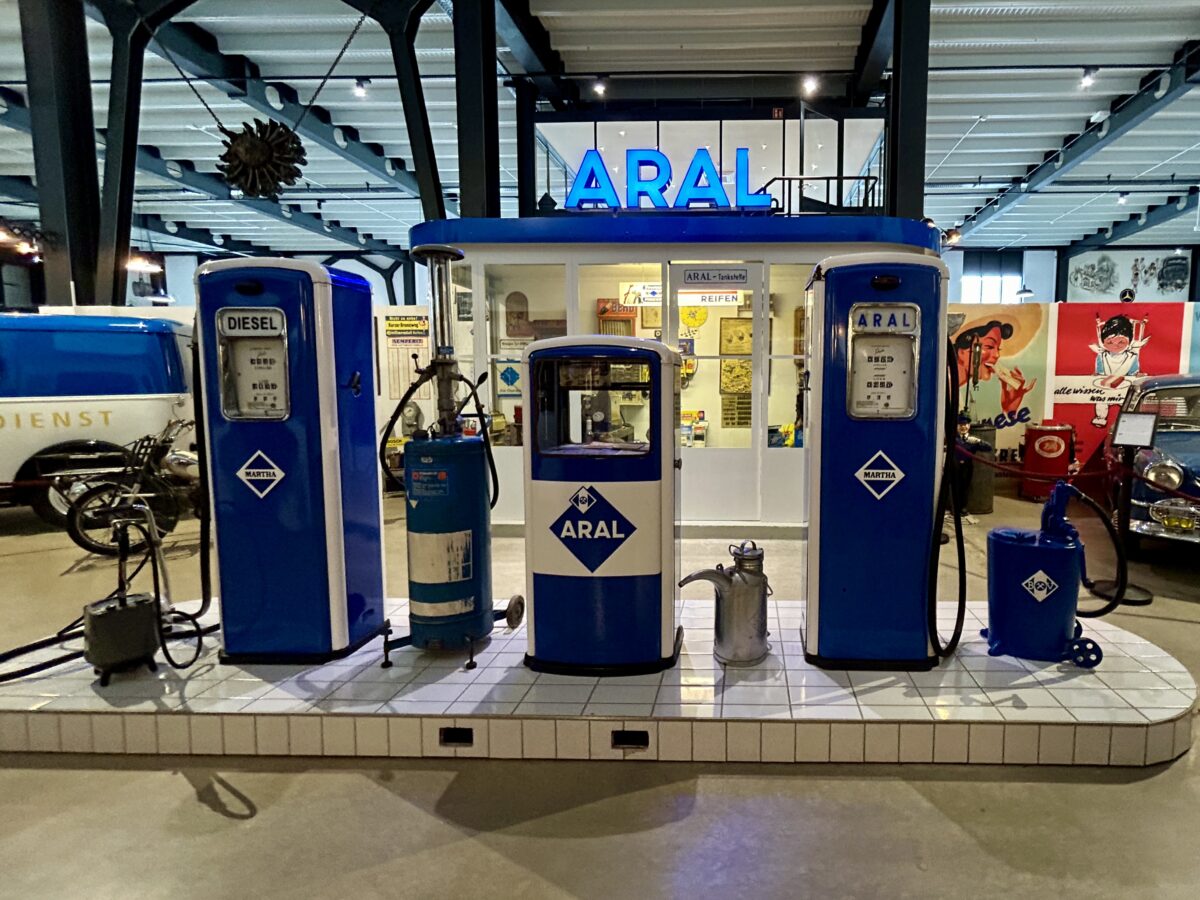
One of the most recognisable names in German motoring history is Aral. Founded in 1924, Aral took its name from the fusion of “aromatics” and “aliphatics”, chemical components of fuel. With its signature blue branding, Aral quickly became synonymous with service, quality, and innovation.
Through the post-war boom of the 1950s and 1960s, Aral stations spread rapidly. They weren’t just places to refuel, but hubs for travellers, offering amenities, guidance and a sense of modernity. Aral played a major role in shaping the look and function of fuel stations in Germany, and it remains a key player in the market today.
Zylinderhaus: Preserving Petrol Station Charm
For those who want to step back into the golden age of motoring, the Zylinderhaus Museum offers a nostalgic journey. Located in Bernkastel-Kues, this automotive museum showcases vintage vehicles and, notably, a wonderfully recreated historical petrol station.
With original pumps, signage, and an authentic forecourt, the Zylinderhaus exhibits how filling stations once looked and operated. It reflects the aesthetic of an era when getting petrol was almost ceremonial.