A column that never left
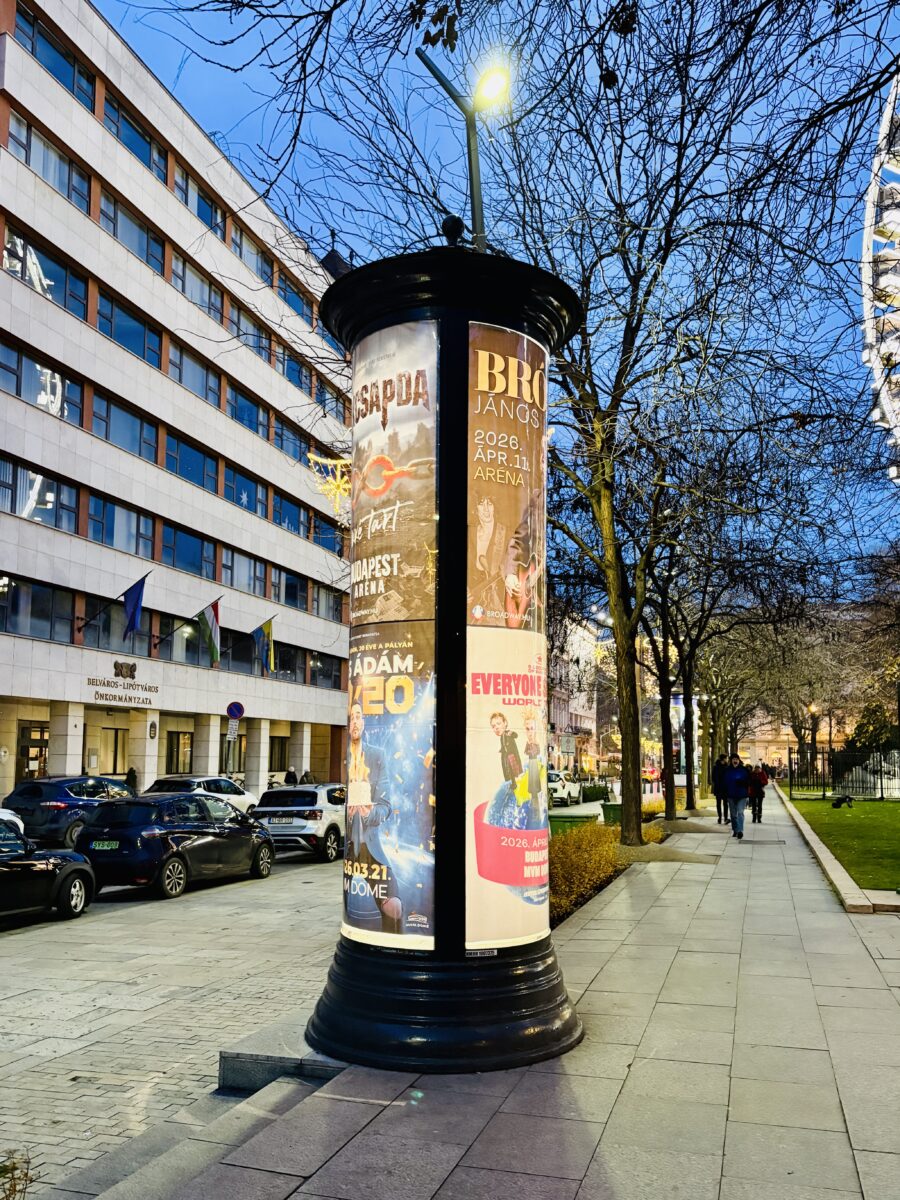
Budapest’s cylindrical advertising columns look like relics from another century because they truly are. They have been part of the city for so long that most people walk past them without thinking. Yet these old cylinders have a richer backstory than many modern buildings that try far too hard to look important.
Where they came from
The idea of these columns started in 19th century Europe. Paris and Berlin used them widely and Budapest followed the trend as the city modernised. By the early 1900s they were already a normal part of the streetscape. Old photographs from 1912 show them standing proudly next to trams and ornate buildings. They were built for posters, theatre announcements, cultural events and commercial ads. Before digital screens this was the most efficient way to spread information in a busy city.
Why they are cylindrical
The cylinder shape was not chosen by accident. Posters could be glued around the entire surface. The round shape resisted wind and weather better than flat boards. It also made it harder for people to tear posters off which was a small victory for advertisers. The column was visible from all directions which made it the perfect analogue advertising machine. Simple and effective without any blinking lights.
Their golden age
Photos from the 1930s to the 1960s show these columns everywhere in Budapest. They were covered with posters for theatre plays, political events, fairs and consumer goods. They became part of the visual identity of the city just like trams and cafés. During the socialist era they continued to be used heavily. They often displayed state campaigns, cultural programmes and film posters. They appear in many archive photos from the 1950s and 60s which shows how common they were.
Why they survived
Many European cities removed their old columns but Budapest kept a large number of them. They are practical for local advertising. They are cheap to maintain. They have become part of the city’s nostalgic charm. They also fit Budapest’s architectural style better than modern digital screens that try to look futuristic but mostly look confused. Today the columns are still used for posters, concerts, theatre, exhibitions and political ads. They are a small piece of urban heritage that quietly refuses to disappear.
A small piece of Budapest’s personality
These columns look old because they are old. They are one of the few physical advertising formats that survived the digital age without becoming ironic or embarrassing. They still do their job. They still look good in photos. They still tell you what is happening in the city. They are a reminder that sometimes the simplest ideas last the longest.