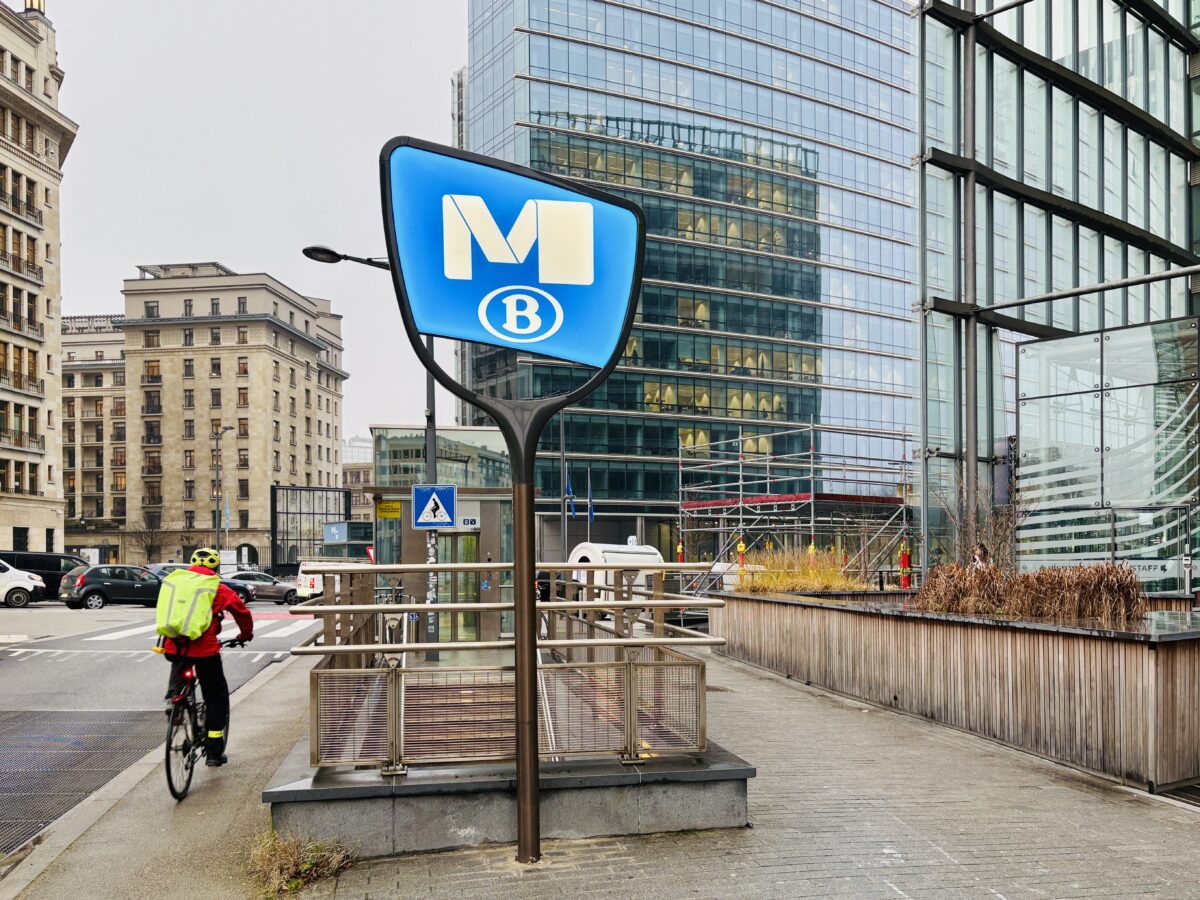
Brussels has many surprises. Some are pleasant. Some involve paperwork. The metro system fortunately belongs to the pleasant category. It is efficient. It is compact. It carries hundreds of thousands of people every day.
A network that punches above its weight
The Brussels metro is not the largest in Europe. It is not the oldest. It is not the most glamorous. But it works. It covers the key parts of the city and connects neighbourhoods that would otherwise require heroic walking efforts or a strong love for traffic jams.
The Brussels Metro boasts a grand total of four actual metro lines. Yet, in a stroke of bureaucratic genius, they’re numbered up to six. That’s right: lines 3 and 4 are just glorified trams running in tunnels, because why let logic or consistency get in the way of a good numbering system? The network is so simple even a sleep-deprived commuter could navigate it blindfolded, and the gaps in coverage are heroically filled by a sprawling tram and bus network.
How many people use it
The metro carries around three hundred thousand passengers on an average weekday. That is a lot of people who avoid sitting in endless queues on the small ring. It is also a sign that the system is trusted. Brussels residents may complain about many things but they do use their metro.
Compared to cities like Vienna or Munich the numbers are modest. Those cities have larger networks and more passengers. But Brussels still performs well for its population. It is a compact city with a metro that fits its scale.
A short history of the underground
The Brussels metro is not ancient. It did not start with steam engines or heroic Victorian engineers. It began in 1976 when the first true metro line opened. Before that the city had pre metro tunnels where trams ran underground. These tunnels later became part of the metro system.
Line 1 was the first to open. It connected the east and west of the city. Line 2 followed and created a loop around the centre. Line 5 extended the east west axis. Line 6 completed the circle and reached the northern districts. Over time the network grew slowly but steadily. Brussels does not rush. It prefers to take its time and then hold a press conference.
How it compares to other European cities
Brussels metro is smaller than the networks in Paris, Berlin or Madrid. Those cities have dozens of lines and stations that seem to multiply overnight. Brussels is more modest. It has fewer lines but they are well used and well integrated with trams.
Compared to cities of similar size like Prague or Lisbon Brussels holds its own. It is not the cheapest system but it is reliable. It is also cleaner than many visitors expect. The trains are modern. The stations are decorated with art. Some of the art is beautiful. Some is confusing. This is normal in Brussels.