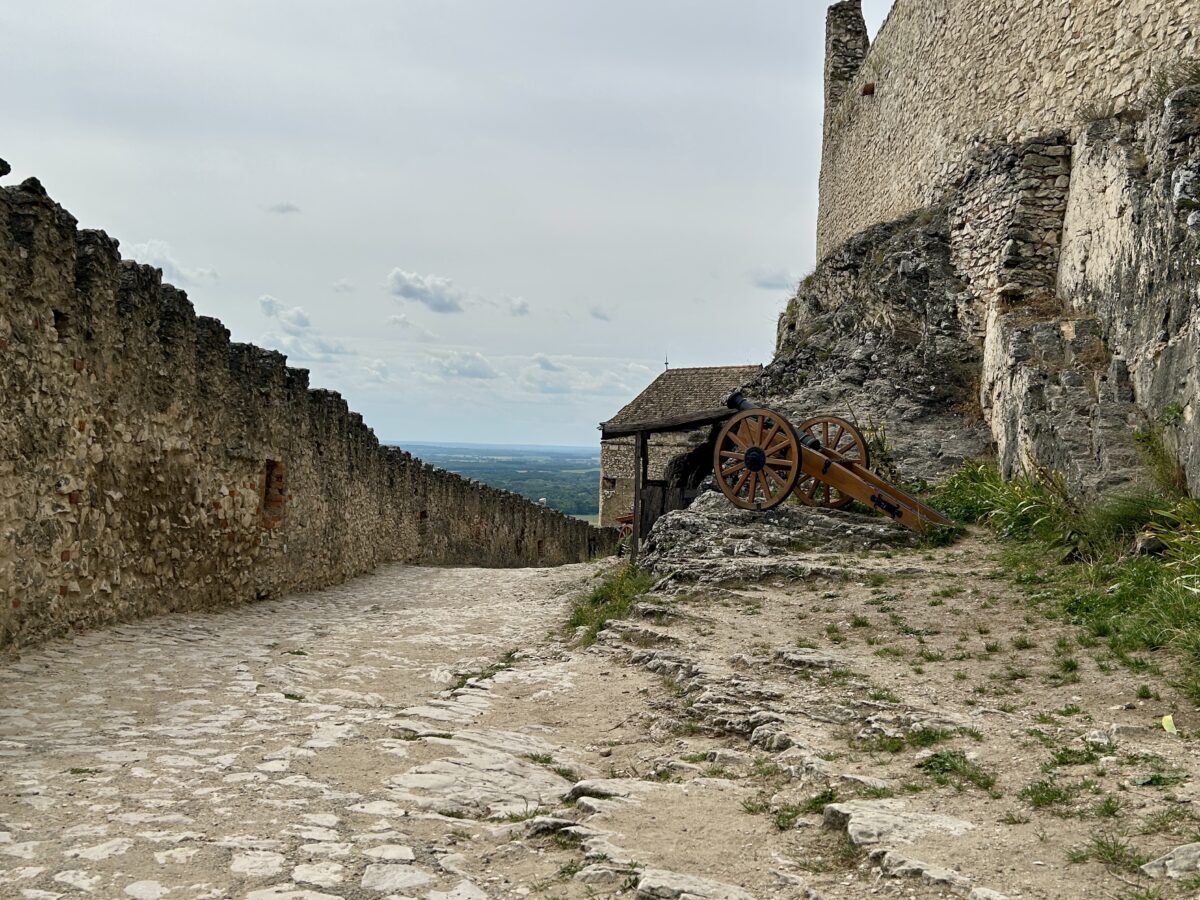
The castle with a cannon and a cause
Sümeg Castle sits proudly on a hill in western Hungary. It’s got towers, thick walls, and a view that screams “strategic advantage”. Built in the 13th century, it was never just a pretty pile of stones. It was a fortress, a bishop’s stronghold, and occasionally, a very dramatic backdrop for battles.
And in the middle of its inner court stands a cannon. Not just any cannon. This one has seen things. It’s the kind of weapon that once made invaders think twice and now makes tourists say “ooh, let’s take a picture”.
The cannon’s job description
Back in the 16th century, Sümeg Castle had a serious problem. The Ottoman Empire was getting a bit too close for comfort. Nearby Veszprém had already been taken, so Sümeg had to step up its game. That meant fortifications, thicker walls, and yes, cannons.
This particular cannon was likely part of those upgrades. It was stationed in the inner court, ready to blast anything that dared come too close. It didn’t have wheels for scenic strolls. It had one job: defend the castle. Loudly.
The Kövesi Bastion and its boomstick
The cannon probably belonged to the Kövesi Bastion, a chunky artillery tower built under Bishop András Kövesi. He wasn’t messing about. He knew Sümeg needed serious firepower. So he gave it cannons, thicker walls, and a reputation for being hard to conquer.
The cannon in the courtyard might not be the original one from the bastion, but it represents that era. It’s a symbol of the castle’s military past. And let’s be honest, it looks great in photos.
From war machine to museum piece
After centuries of sieges, fires, and general medieval drama, Sümeg Castle eventually retired from active duty. The cannon did too. No more blasting enemies or scaring off rebels. It now enjoys a peaceful life as part of the castle’s exhibition.
Visitors can admire it, pose next to it, and wonder how anyone ever moved the thing. It’s heavy, it’s old, and it’s got more historical value than your average souvenir mug.
Why it still matters
The cannon is more than just a lump of metal. It’s a reminder of Hungary’s turbulent past. It tells stories of bishops who doubled as military strategists, of Ottoman sieges, and of a castle that refused to fall easily.